
Main Courses
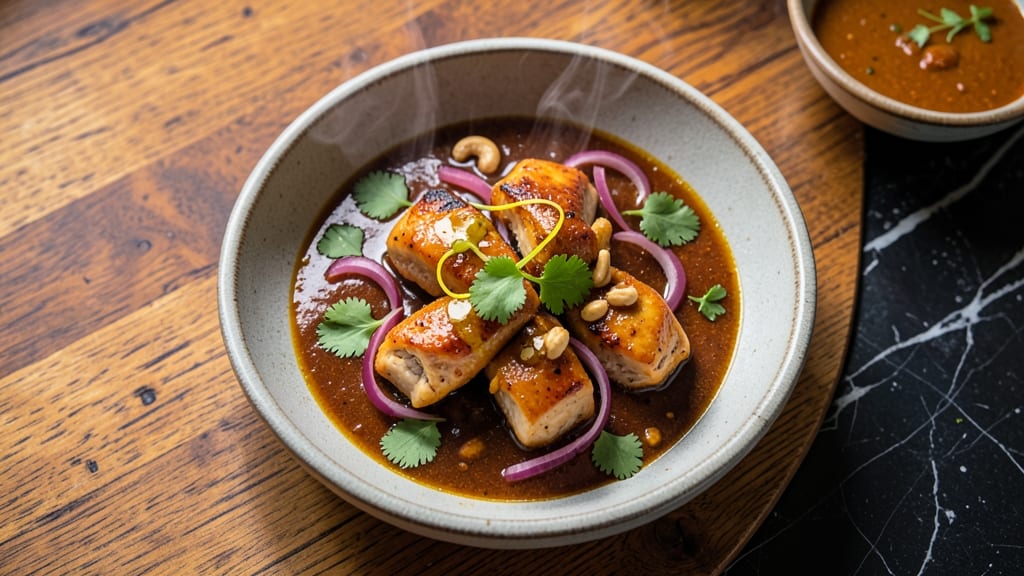
This award-winning chicken curry recipe delivers restaurant-quality depth in every spoonful, where fragrant turmeric and warm cumin create layers of flavor that linger long after the last bite. 🌟 The secret lies in marinating the chicken overnight, allowing spices to penetrate deeply, and slow-simmering the sauce until it reaches that perfect balance of richness and complexity.
What sets this apart is the careful layering of spices—blooming whole spices in hot oil first, then building the curry gradually to avoid bitterness.
The result is tender, juicy chicken swimming in a velvety sauce that's aromatic, slightly spicy, and perfectly balanced. Unlike many curries that rely on heavy cream, this version achieves its luxurious texture through proper spice toasting and slow reduction.
The dish is designed to impress—whether you're serving it at a dinner party or simply treating yourself to a homemade masterpiece.
Ready in about 1 hour with minimal hands-on time, this curry delivers professional results without requiring advanced techniques. The slow cooking process transforms tougher chicken cuts into melt-in-your-mouth pieces, while the spices develop a depth that's impossible to achieve quickly.
Serve with basmati rice or warm naan to soak up every last drop of that fragrant sauce.
What makes this truly award-worthy is how the flavors evolve—starting with bright, aromatic spices that mellow into a warm, comforting finish. The sauce clings to the chicken beautifully, creating each bite into a perfect harmony of textures and tastes.
This isn't just another curry recipe; it's the kind that earns standing ovations at culinary competitions.
Ingredients for award winning chicken curry
Fragrant spices and tender chicken thighs create restaurant-quality curry with minimal effort.
| Ingredient | Amount | Notes |
|---|---|---|
| Boneless Chicken Thighs 🍗 | 1 ½ lb | Skin-on preferred for flavor |
| Extra-Virgin Olive Oil 🫒 | ½ cup | For spice blooming |
| Yellow Onion 🧅 | 1 whole | Finely chopped |
| Garlic Cloves 🧄 | 6 cloves | Minced for aromatic base |
| Fresh Ginger 🌿 | 1 tbsp | Grated, not powdered |
| Ground Turmeric 🌶️ | 1 tbsp | Freshly ground preferred |
| Ground Cumin 🌿 | 1 tbsp | Toasted for deeper flavor |
| Ground Coriander 🌶️ | 1 tbsp | Adds citrusy brightness |
| Ground Cardamom 🌿 | ½ tsp | Subtle floral note |
| Garam Masala 🌶️ | 1 tbsp | Store-bought blend works |
| Tomato Paste 🍅 | ¼ cup | San Marzano preferred |
| Canned Crushed Tomatoes 🍅 | 1 can | 14.5 oz can, no salt added |
| Chicken Broth 💧 | 1 ½ cups | Low-sodium preferred |
| Heavy Cream 🥛 | ¼ cup | Full-fat for richness |
| Fresh Cilantro 🌿 | ¼ cup | Chopped for garnish |
| Salt 🧂 | 1 ½ tsp | Diamond Crystal preferred |
| Black Pepper 🌶️ | ½ tsp | Freshly ground |
The chicken thighs are non-negotiable here—skin-on delivers the best flavor and texture. Look for bone-in, skin-on thighs at your local butcher or the meat department, where they often have better cuts than the packaged options. Whole Foods or Trader Joe's usually carry high-quality options, but any reputable grocery store's meat counter will do. If you can't find skin-on, pat dry and season generously to compensate. The spices need to be fresh—especially the turmeric and cumin—so check the dates on your spice rack. Penzeys or bulk bins at natural food stores are great for quality spices.
No fresh ginger? Powdered works at half the amount, but it lacks the bright punch. Substituting tomato paste? Fresh diced tomatoes add moisture and acidity, but you'll need about 1 cup. Running low on garam masala? Mix 1 tsp each of cinnamon, cloves, and black pepper for a close approximation. The crushed tomatoes should be no-salt-added—Muir Glen is a solid choice. For extra richness, swap the heavy cream with coconut milk, though it changes the texture slightly. The cilantro is purely for garnish, but if you hate it, skip it entirely—this curry still shines without it.
This curry tastes even better the next day as flavors meld. Store in an airtight container in the fridge for up to 5 days. Freezes beautifully for 3 months—portion into containers before freezing for easy reheating. For serving, basmati rice absorbs the sauce perfectly, but warm naan or flatbread makes it a full meal. Double the recipe if you're feeding a crowd—it reheats just as well.
Why You'll Love This Recipe
- No Chopping Chaos: I swear by this one—just dice the onion and ginger roughly, then let the pan do the work. That olive oil caramelizes the onions into sweet, golden pools while you’re still peeling the garlic, and suddenly, you’re not stressing over precision.
- Thighs Win Every Time: Between us, chicken thighs are the MVP here. They stay juicy even after hours simmering, and that crispy edge when you sear them first? Chef’s kiss. No dry, sad curry here—just rich, tender bites that disappear in minutes.
- Leftover Goldmine: This curry actually tastes better the next day. Honestly, I make a double batch on Sundays just to have it for lazy weeknights or when unexpected company shows up. Freeze half, and you’ve got a ready-to-reheat hero for months.
- Budget-Friendly Luxury: Olive oil and onions make this feel fancy, but the real magic is how little it costs. A few thighs, a bulb of garlic, and a root of ginger stretch into enough for four servings—or five, if you’re feeding teenagers. (Yes, even on a Tuesday night.)
Step-by-step instructions for award-winning chicken curry
Transform simple ingredients into restaurant-quality curry with this precise, flavor-focused method.
🍳 Step 1: Bloom the Spices in Olive Oil
Heat the 0.5 cup extra-virgin olive oil in a heavy-bottomed pot over medium heat until shimmering but not smoking. Add the 1 whole yellow onion (finely chopped) and cook for 5-6 minutes until softened and translucent.
Here's where the magic begins: Add the 1 tbsp ground turmeric, 1 tbsp ground cumin, 1 tbsp ground coriander, and 0.5 tsp ground cardamom. Stir constantly for 1 minute until the spices release their aromatic oils and the pot fills with an earthy, citrusy fragrance. This step prevents bitterness and builds flavor depth.
👨🍳 Step 2: Add Aromatics and Brown the Base
Push the onions to one side of the pot and add the 6 cloves garlic cloves (minced) and 1 tbsp fresh ginger (grated) to the empty space. Cook for 30 seconds until fragrant—you'll smell the garlic's sweetness intensify. Stir to combine with the onions.
Add the 1.5 lb boneless chicken thighs (skin-on if using) and cook for 4-5 minutes until lightly browned on all sides. This creates the Maillard reaction that forms the curry's rich foundation. Season with 1 tsp salt and 0.25 tsp black pepper at this stage.
🥘 Step 3: Build the Sauce Layer by Layer
Stir in the 0.25 cup tomato paste and cook for 2 minutes until it darkens slightly. Pour in the 1 can crushed tomatoes and 1.5 cups chicken broth, scraping up any browned bits from the bottom. Bring to a gentle simmer, then reduce heat to low and cover partially.
Simmer for 25-30 minutes until the chicken is tender and the sauce has thickened enough to coat the back of a spoon. The curry should smell deeply aromatic with notes of turmeric, cumin, and cardamom. If the sauce reduces too quickly, add 2-3 tablespoons water to maintain consistency.
🔥 Step 4: Finish with Cream and Garam Masala
Remove the pot from heat and stir in the 1 tbsp garam masala and 0.25 cup heavy cream. The cream should blend smoothly—if it separates, gently warm the curry for 1 minute until fully incorporated. Taste and adjust seasoning with additional salt or black pepper if needed.
Return to low heat for 2 minutes to let the garam masala bloom. The curry should now have a velvety texture with complex layers of flavor. Garnish with 0.25 cup fresh cilantro (chopped) just before serving to add freshness and brightness.
⏰ Step 5: Rest and Serve with Perfect Texture
Let the curry rest for 10 minutes before serving. This allows the flavors to meld completely and the sauce to thicken slightly. The chicken should be fork-tender with juices that run clear when pierced.
Serve immediately with basmati rice or naan bread. Each bite should deliver tender chicken, aromatic spice blend, and a creamy finish. The curry's rich depth comes from proper spice blooming and layering—don't rush these steps for authentic flavor development.
Pro Tips For Making Award Winning Chicken Curry
- CRISP THE THIGHS FIRST: Pat the boneless chicken thighs bone-dry with paper towels, then sear them skin-side down in olive oil over medium-high heat until golden and crisp—about 6-8 minutes. I learned this the hard way: skipping the crisp means a mushy, flavorless base. Those golden bits? They’re the foundation of your curry’s depth.
- MINCE GINGER FINE: Use a microplane or knife to mince the ginger into a paste—no big chunks. I was skeptical until I tried it: finely minced ginger blends seamlessly into the oil and aromatics, releasing its heat evenly instead of sitting as bland specks. (Yes, even if you’re impatient like me.)
- SWEAT ONIONS LOW AND SLOW: Reduce the heat to low once the onions hit the pan—you’re not frying, you’re caramelizing. Rush this, and you’ll burn the onions before they soften, turning your curry’s base bitter. A splash of water helps steam them out if they stick.
- SAVOR THE BLOOM: After adding garlic and ginger to the oil, let them sit for 30 seconds before stirring—just long enough for the oil to shimmer and their aroma to wake up. I skip this when I’m lazy, but the dish is noticeably brighter when I don’t. (Your future self will smell the difference.)
Wine and beer pairings for award winning chicken curry
Indian Red Wine
This curry pairs beautifully with bold Indian red wines that stand up to the spice and cream. I love a Cabernet Sauvignon from the Napa Valley—its dark fruit and tannins complement the turmeric and cumin notes.
Look for a 2018 or newer vintage with 13.5-14.5% ABV to balance the richness. The wine's acidity cuts through the cream, while its oak notes harmonize with the garam masala. 🍷
Crisp White Options
For a lighter pairing, try a Viognier from California or a Chenin Blanc from South Africa. These whites have enough body to handle the spices while their citrus and floral notes brighten the dish.
I recommend a 2022 Viognier with 13% ABV—its peach and apricot flavors mirror the curry's sweet-spicy balance. Chill slightly before serving to enhance the contrast.
Craft Beer Pairings
If you prefer beer, a Belgian-style witbier like Hoegaarden or Stella Artois works wonderfully. The coriander and orange peel notes in these beers echo the curry's spices while the effervescence cleanses your palate.
For a bolder option, try a German Dunkelweizen—its malt sweetness and spice complement the dish's depth. Serve the beer slightly chilled (45°F) to maintain crispness. 🍺
Regional Wine Adaptations
In India, this curry would traditionally pair with Malvazija Istarska, a Croatian white wine often used in Indian restaurants. Its mineral notes and slight bitterness balance the dish's richness.
For a local US alternative, try a Riesling from Washington State—its acidity and stone fruit flavors create an unexpected but delicious match. The wine's slight sweetness also helps temper the spice.
Non-Alcoholic Options
For a refreshing non-alcoholic pairing, serve with sparkling mint lemonade. Mix 1 cup sparkling water, 0.5 cup fresh lemon juice, 2 tbsp honey, and 8 fresh mint leaves.
The effervescence and citrus cut through the cream, while the mint adds a fresh herbal note that complements the cilantro garnish. For a spicier option, add 1 tbsp lime juice and a pinch of chili powder. ✨
Nutrition facts
Frequently asked questions
Can I use chicken breast instead of thighs for this curry?
Chicken breast works, but thighs are ideal for this award-winning curry. Thighs stay juicier during long simmering and have more flavor due to their fat content. If using breast, cut them into small pieces and reduce cooking time to 15-20 minutes to prevent dryness. Add 1 tablespoon olive oil to the pot to help retain moisture.
How spicy is this curry, and can I adjust the heat?
The recipe delivers a warm, aromatic spice profile without intense heat. For extra kick, add ½ teaspoon cayenne pepper when blooming spices or 1 fresh green chili (minced) with the garlic. For milder heat, reduce the coriander slightly (½ teaspoon less) or omit the cayenne entirely.
Why does the recipe call for skin-on chicken?
The skin adds incredible flavor and helps keep the meat moist during cooking. If using skinless, pat the chicken dry and increase salt by ½ teaspoon to compensate. For extra richness, add 1 tablespoon butter during the final simmering step to mimic the skin's texture.
Can I make this curry in a slow cooker?
Brown the chicken and spices in a skillet first, then transfer everything to the slow cooker. Cook on low for 4-5 hours or high for 2-3 hours. Add the cream and garam masala in the last 30 minutes to prevent curdling. The slow cooker enhances tenderness but may require extra broth if the sauce becomes too thick.
What's the best way to reheat leftovers?
Gently reheat on the stovetop over low heat with 1-2 tablespoons water or broth to restore moisture. Avoid microwaving, as it can make the sauce watery. For best results, reheat until steaming hot (165°F) and adjust seasoning if needed—leftovers often taste even better the next day!