
Main Courses
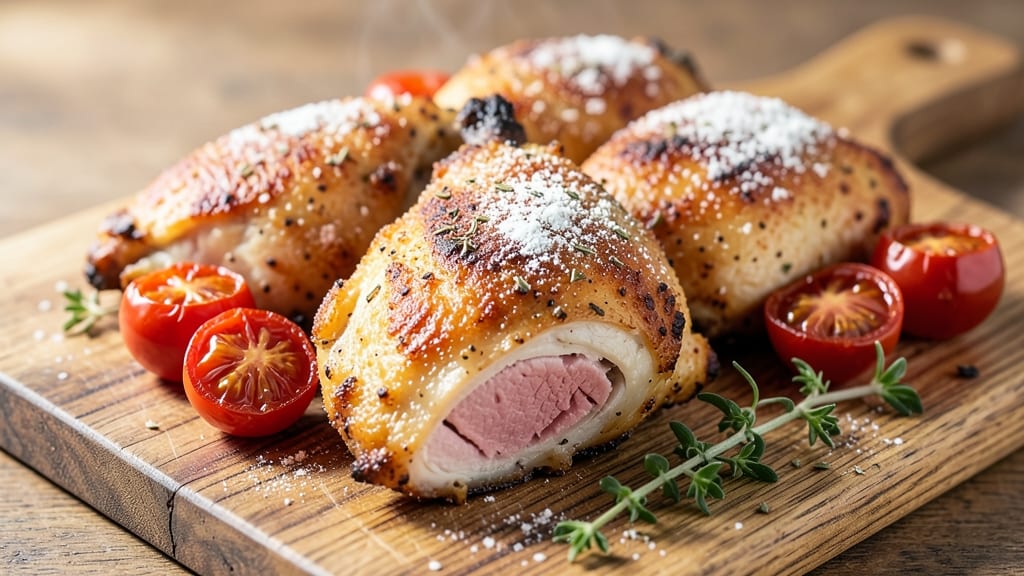
Roasting chicken quarters in the oven transforms tough cuts into tender, juicy pieces with a crispy celery crust and bright vinegar tang. This method delivers restaurant-quality results at home using just five key ingredients and a simple technique that ensures even cooking without drying out the meat.
The celery crust adds texture while the vinegar infusion keeps the meat succulent, making this a foolproof method for weeknight dinners or holiday meals.
What sets this recipe apart is the balance of high-heat searing followed by slow roasting, which creates a golden crust while maintaining moisture inside. You'll need about 45 minutes total, with minimal prep—just chop celery, mix the seasoning, and let the oven do the work.
The vinegar in the marinade tenderizes the meat while adding a subtle brightness that pairs perfectly with the crispy crust.
By the end, you'll have perfectly cooked chicken quarters with crispy edges and tender, juicy centers that stay moist even after resting. The celery crust adds a satisfying crunch, while the vinegar-infused seasoning keeps every bite flavorful.
This method works equally well for a family dinner or a crowd, and the leftovers reheat beautifully for sandwiches or salads.
Pair with roasted vegetables or a fresh salad to complete the meal. The crispy chicken quarters become the star, delivering a satisfying combination of textures and flavors that will impress even the most skeptical eaters. Let's get started with this simple yet impressive recipe.
Ingredients for chicken quarters in oven
Five core ingredients elevate simple oven-roasted chicken quarters into a restaurant-worthy dish.
| Ingredient | Amount | Notes |
|---|---|---|
| Chicken Quarters 🍗 | 4 whole | Bone-in, skin-on preferred |
| Celery Stalks 🥬 | 1 cup | Finely chopped for crust |
| White Vinegar 💧 | ½ cup | Distilled for brightness |
| Extra-Virgin Olive Oil 🫒 | 2 tbsp | High-quality for crust |
| Diamond Crystal Kosher Salt 🧂 | 1 ½ tsp | Coarse grain preferred |
| Freshly Ground Black Pepper 🌶️ | ½ tsp | Freshly cracked preferred |
| Garlic Cloves 🧄 | 4 cloves | Minced for seasoning |
| Fresh Parsley 🌿 | ¼ cup | Chopped for garnish |
The chicken quarters should be uniform in size for even cooking. Local butcher shops often carry them pre-cut, but if buying whole chickens, separate at the joints carefully. Look for quarters with intact skin and minimal bruising—this ensures a crispier crust. The celery should be crisp and vibrant; organic stalks from the produce section work best. For the vinegar, Heinz or White House brands provide consistent quality without overpowering flavors. The olive oil is critical here—California avocado or Italian extra-virgin brands add subtle fruity notes that complement the celery crust.
No celery on hand? Finely chopped fennel or leeks work as substitutes, though the flavor profile shifts slightly. Substituting apple cider vinegar for white vinegar adds a subtle sweetness that can enhance the dish. If you lack fresh parsley, dried parsley at one-third the amount suffices, though fresh is preferred for garnish. For those avoiding garlic, asafetida powder at one-quarter teaspoon mimics its savory depth. The kosher salt should be coarse—Morton or Diamond Crystal are reliable choices. If using pre-ground pepper, toast it lightly in a dry pan to intensify its aroma before grinding.
Chicken quarters can be prepped ahead and stored in the refrigerator for up to 24 hours before roasting, though the celery crust should be added fresh for optimal texture. Roasted chicken quarters reheat best at 350°F for 10-15 minutes, covered loosely with foil to retain moisture. Leftovers keep for 3 days in the refrigerator or 3 months frozen. For meal prep, portion into individual containers with a sprinkle of fresh parsley to maintain vibrancy. The celery crust loses crispness when reheated, so enjoy it fresh from the oven whenever possible.
Why You'll Love This Recipe
- One-Pan Magic: I swear by this recipe when I’m too tired to wash extra dishes. Toss those chicken quarters with chopped celery, a splash of vinegar, and olive oil right on a sheet pan—no pots, no pans, just 30 minutes of hands-off baking while I sip my coffee.
- Crispy-Soft Perfection: That vinegar brine does something wild—the skin gets shatteringly crisp while the meat stays juicy inside. Honestly, the first time I bit into one, I nearly dropped the whole pan. (Yes, even on a Tuesday night.)
- Budget Crowd-Pleaser: A whole chicken costs less than takeout, and quarters feed four for the price of two dinners. Between us, my college roommates and I lived on this—it’s the kind of dish that disappears faster than my willpower when I’m hungry.
- Meal Prep MVP: Bake a double batch, and you’ve got lunch for days. The leftovers reheat like a dream—toss them in a salad, wrap them in a tortilla, or just eat them straight from the fridge. (No judgment here.)
Step-by-step instructions for crispy celery-crusted chicken quarters
Here's the method for achieving perfectly tender meat with a crunchy celery crust and bright vinegar-accented flavor.
Prepare the Celery Crust Mixture
In a food processor, pulse the 1 cup celery stalks until you achieve a coarse, sand-like texture—think fine breadcrumbs but with a fresh, herbal bite. The pieces should be no larger than ¼ inch in diameter, as this ensures even adhesion to the chicken skin while maintaining texture. Transfer the crushed celery to a medium bowl and set aside.
In the same food processor, quickly pulse the 4 cloves garlic until finely minced—just enough to release their aromatic oils without turning into a paste. Add this to the celery mixture along with the 2 tablespoons extra-virgin olive oil and 1.5 teaspoons diamond crystal kosher salt. Toss with your hands or a fork until the celery is evenly coated and the mixture resembles wet sandpaper. This combination creates the perfect balance of crunch and seasoning that will encase your chicken.
Season and Coat the Chicken Quarters
Pat the 4 whole chicken quarters completely dry with paper towels, pressing firmly to remove any moisture from the skin and cavities. This drying step is critical—it prevents steam from forming between the skin and crust, which would otherwise create a soggy barrier. Season the chicken generously with 0.5 teaspoon freshly ground black pepper on both the meat and skin sides, focusing on the exposed areas where the crust will adhere.
Working with one quarter at a time, press the celery mixture firmly onto the skin side of each piece, using your fingers to pack it into an even layer. The crust should be about ¼ inch thick—thick enough to crisp but not so heavy that it falls off during cooking. Place the coated chicken quarters skin-side up on a wire rack set over a baking sheet, leaving space between each piece for even air circulation. This arrangement ensures the crust gets crispy on all sides while the meat stays tender.
Create the Vinegar Basting Solution
In a small bowl, whisk together the 0.5 cup white vinegar with 1 tablespoon extra-virgin olive oil to create a light basting solution. The vinegar's acidity will tenderize the chicken while adding a bright, tangy contrast to the rich celery crust. Pour this mixture into a small saucepan and bring just to a simmer over medium heat, then reduce to a low boil. Keep this solution warm but not actively bubbling—it should be ready to baste as soon as the chicken enters the oven.
Here's the thing—this basting step happens during cooking, not before. The vinegar mixture will penetrate the chicken gradually, enhancing moisture and flavor without making the crust soggy. The key is to baste the chicken twice during cooking: once after 20 minutes and again after 35 minutes. Each basting should be done with about 2 tablespoons of the warm vinegar mixture, spooned directly over the exposed skin and meat surfaces.
Roast to Crispy Perfection
Preheat your oven to 400°F with the rack positioned in the lower-middle position. This temperature and placement ensure the chicken cooks evenly while the crust develops maximum crispness. Once the oven reaches temperature, carefully transfer the prepared chicken quarters to the oven. Roast for 25 minutes before the first basting, then baste with 2 tablespoons of the warm vinegar mixture, returning the chicken to the oven for another 15 minutes.
After the second basting, continue roasting for an additional 10-15 minutes, or until the internal temperature of the chicken reaches 165°F when measured at the thickest part of the meat. The skin should be deep golden brown with a firm, crisp texture that resists gentle pressure. If the crust begins to darken too quickly before the chicken is fully cooked, tent loosely with aluminum foil and continue cooking until done. The celery crust will crisp up again once removed from the oven.
Rest and Garnish for Serving
Remove the chicken quarters from the oven and transfer them to a serving platter. Let them rest for 5-10 minutes before serving—this resting period allows the juices to redistribute throughout the meat, ensuring each bite is moist and flavorful. The crust will remain crisp during this time, so there's no need to worry about it becoming soft.
Just before serving, sprinkle the chicken evenly with the 0.25 cup chopped fresh parsley. The parsley adds a fresh, herbal note that brightens the dish and complements the celery crust. Serve immediately while the chicken is hot, with the crispy celery crust still holding its shape and the meat perfectly tender throughout. The vinegar basting ensures a bright, tangy contrast that cuts through the richness of the chicken and crust.
Pro Tips For Making Chicken Quarters In Oven
- Trim the Fat Pockets: Chicken quarters hide fat pockets that turn crispy skin into greasy messes. Use kitchen shears to snip the thickest fat deposits—just enough to let the skin render cleanly without over-drying the meat. (I used to skip this and ended up with soggy, unevenly cooked quarters every time.)
- Vinegar First, Oil Last: Toss the chicken in white vinegar before the olive oil—this ensures the acid penetrates the skin and tenderizes the meat while you prep the celery. Drizzle the oil last, or it’ll just pool at the bottom of your bowl. (Yes, even if you’re impatient like me.)
- Skip the Crowding: If your oven’s too small, bake in two batches. Chicken quarters need space to breathe—crowding steams them instead of crisps them. Use a wire rack on a baking sheet if you’re worried about flare-ups. (I learned this the hard way after a charred, uneven first try.)
- Salt the Celery Too: Diamond Crystal kosher salt is less dense—use twice what you’d normally think for the celery. Toss it with the vinegar and oil so it infuses the chicken as it roasts. (Sounds weird, but it works: the celery adds subtle saltiness without overpowering the dish.)
Flavor customization for this recipe
Classic Celery Crust
The signature celery crust delivers that satisfying crunch while keeping the chicken tender. For extra texture, pulse 1 cup celery in a food processor until coarse—think fine breadcrumbs. Mix with 2 tbsp olive oil, 1.5 tsp kosher salt, and 4 minced garlic cloves until it resembles wet sandpaper.
Press firmly onto the chicken skin before roasting for maximum adhesion. 🥬
Spicy Cajun Twist
Add 1 tbsp Cajun seasoning (like Tony Chachere's) to your celery crust mixture for a bold, smoky kick. Boost heat with ½ tsp cayenne pepper or 1 tsp smoked paprika for depth.
Serve with a cooling side like creamy coleslaw to balance the spice. This variation works especially well with dark meat quarters.
Herb-Infused Variation
Swap the garlic for 1 tbsp fresh thyme leaves and 1 tsp dried oregano in the crust mixture. Add 1 tbsp chopped fresh rosemary for an earthy aroma.
The herbs pair beautifully with the vinegar basting, creating a Mediterranean-inspired flavor profile. Use lemon zest instead of vinegar for a brighter finish.
Sweet and Tangy Glaze
After the second basting, brush the chicken with a glaze made from 2 tbsp honey and 1 tbsp soy sauce. Return to the oven for 5 minutes to caramelize.
This adds a sweet contrast to the crispy crust and tangy vinegar. Garnish with sesame seeds for extra crunch and visual appeal.
Smoky Chipotle Crust
For a smoky depth, add ½ tsp chipotle powder or 1 tsp adobo sauce to your celery crust mixture. Enhance with ½ tsp ground cumin and ¼ tsp cinnamon for warmth. Serve with pickled red onions and avocado slices to complement the smoky-sweet flavors.
Lemon-Pepper Crunch
Replace the vinegar basting with a lemon-pepper glaze: mix 2 tbsp lemon juice, 1 tbsp olive oil, and 1 tsp freshly cracked black pepper. Brush over the chicken after the first 20 minutes of roasting.
The citrus brightens the celery crust while adding a zesty kick. Perfect for a lighter, more refreshing take on the classic recipe. 💛
Nutrition facts
Frequently asked questions
Can I use chicken thighs instead of quarters for this recipe?
Yes, but adjust the cooking time! Chicken thighs are darker meat and cook faster than quarters. Use 350°F instead of 400°F and reduce total time by 10-15 minutes. The celery crust works beautifully on thighs too—just monitor for doneness at 165°F internal temp. The vinegar basting helps balance the richer thigh flavor.
Why does the celery crust sometimes fall off?
The crust may detach if the chicken skin wasn't properly dried before coating. Always pat quarters very dry with paper towels and press the crust firmly onto the skin. For extra adhesion, lightly brush the skin with 1 tbsp olive oil before adding the celery mixture. A wire rack elevates the chicken for even airflow and helps the crust stick.
Can I make this recipe ahead of time?
Prep the chicken quarters and celery crust up to 24 hours ahead, but store them separately in the fridge. Assemble just before baking to maintain crust texture. For leftovers, reheat at 350°F for 10-15 minutes with foil tented over them. The crust won't be as crispy after reheating, but the meat stays moist and flavorful.
What's the best way to serve these chicken quarters?
These quarters shine with bold sides that complement the vinegar tang. Try roasted root vegetables (carrots, parsnips), crusty bread for dipping, or a simple arugula salad with lemon vinaigrette. For a hearty meal, serve with mashed potatoes and steamed green beans. The crispy crust works perfectly as a sandwich filling too!
How do I know when the chicken is fully cooked?
Use a meat thermometer to check the thickest part of the meat—it should read 165°F. The skin should be deep golden brown and crispy, while the meat should pull away from the bone with slight resistance. If the crust browns too quickly before the chicken is done, tent loosely with foil and continue cooking. Never rely on color alone for doneness.