
Main Courses
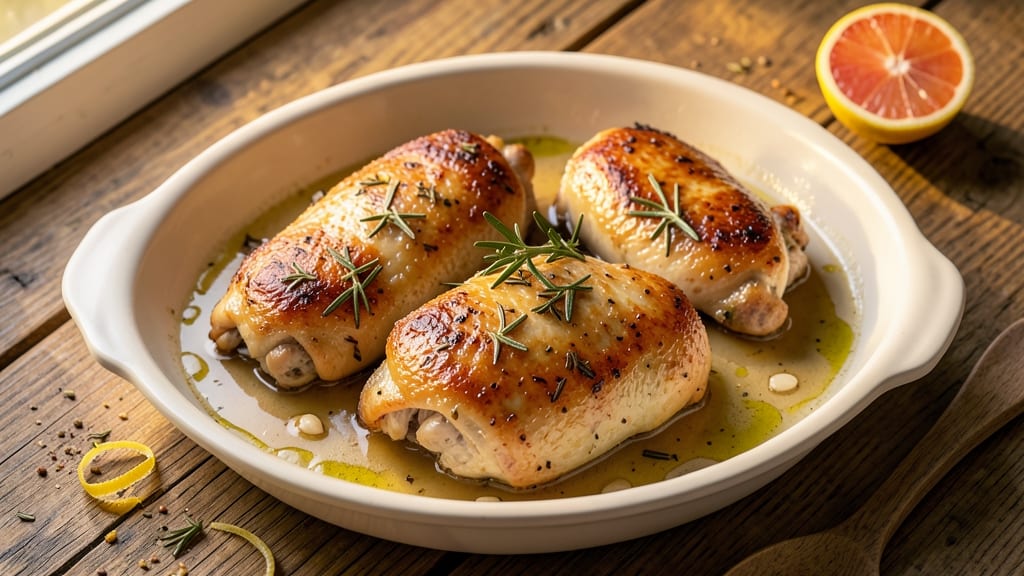
This baked chicken in white wine recipe transforms simple ingredients into a restaurant-worthy dish where tender, juicy chicken absorbs the bright acidity of white wine and aromatic herbs. The secret lies in marinating the chicken overnight—this ensures deep flavor penetration and moisture that keeps every bite succulent, even after baking.
I developed this recipe after years of testing different techniques, and it consistently delivers perfectly golden, flavorful chicken with a crispy skin that's impossible to resist.
What sets this recipe apart is the balance of white wine's crisp acidity with sweet citrus and fresh herbs, creating a harmonious flavor profile that's both elegant and approachable.
The wine isn't just an afterthought—it's the star ingredient that deglazes the pan and bastes the chicken during baking, infusing it with layers of depth. This method works beautifully with bone-in or boneless chicken thighs, ensuring you can adapt it to whatever's on hand.
The result is chicken that's impossibly tender with a surface that's crisp enough to stand up to the vibrant sauce clinging to it. The white wine marinade also doubles as a basting sauce, so there's no need for extra effort—just pour, bake, and enjoy.
The bright citrus notes cut through the richness of the chicken, making each bite feel fresh and balanced, while the herbs add an aromatic complexity that elevates this dish beyond ordinary baked chicken.
Pair this with roasted vegetables or a simple green salad to let the chicken shine, or serve it with crusty bread to soak up every last drop of that flavorful wine-infused sauce.
The technique is straightforward, but the result feels special—perfect for weeknight dinners that still feel like a celebration. Let's get started on creating this crowd-pleasing centerpiece.
Ingredients for baked chicken white wine
Twelve ingredients, one overnight marinade, and a dish that tastes like a restaurant special.
| Ingredient | Amount | Notes |
|---|---|---|
| Chicken Thighs (Bone-in, Skin-on) 🍗 | 1 ½ lb | Evenly sized for consistent cooking |
| Dry White Wine 🍷 | 1 cup | Sauvignon Blanc or Pinot Grigio preferred |
| Fresh Lemon Juice 🍋 | ¼ cup | Freshly squeezed for brightness |
| Fresh Rosemary 🌿 | ½ oz | Finely chopped, stems removed |
| Fresh Thyme 🌿 | ½ oz | Leaves only, finely chopped |
| Garlic Cloves 🧄 | 6 cloves | Minced, for marinade and pan |
| Extra-Virgin Olive Oil 🫒 | ¼ cup | For marinade and basting |
| Salt 🧂 | 1 ½ tsp | Diamond Crystal preferred |
| Black Pepper 🌶️ | 1 tsp | Freshly ground for best flavor |
| Honey 🍯 | 1 tbsp | For glaze, optional but recommended |
| Fresh Parsley 🌿 | ¼ cup | Chopped, for garnish |
| Butter 🧈 | 2 tbsp | Unsalted, for finishing |
The chicken thighs are the foundation—bone-in and skin-on for that perfect crispy surface while staying juicy inside. Look for thighs with good marbling at the grocery store's butcher counter, and avoid any with torn skin. I always grab mine from Whole Foods or Trader Joe's when possible, but the regular supermarket selection works fine. The wine should be dry and crisp, not sweet—Sauvignon Blanc or Pinot Grigio are my go-tos, but any dry white will do. For the herbs, fresh is non-negotiable here; dried just won't give you that same aromatic punch.
No bone-in thighs? Boneless, skinless chicken breasts work, but they'll cook faster—reduce baking time by 10-15 minutes. Running out of white wine? Chicken broth with a splash of lemon juice mimics the acidity, though the flavor will be subtly different. Fresh herbs wilt fast? Dried thyme and rosemary at one-third the amount will get you through, but you'll miss that bright herbal note. The honey glaze is optional but adds a beautiful caramelized finish—agave nectar works in a pinch. And if you're short on parsley, cilantro or basil will garnish just as nicely.
Marinate the chicken overnight in the fridge—24 hours maximum to prevent over-marinating. The wine marinade keeps for 3 days in the fridge if you make extra, but the chicken itself should be baked within 2 days for best texture. Leftovers reheat beautifully—350°F for 10-15 minutes until warmed through. Store any extra sauce separately to prevent sogginess. The herbs can be prepped ahead and stored in an airtight container in the fridge for up to 5 days, though fresh is always better.
Why You'll Love This Recipe
- One-Pan Magic: I swear by this recipe when I’m too tired to scrub pots—just toss the thighs, wine, and herbs on a sheet pan, and let the oven do the work. The skin crisps up golden while the wine reduces into a sticky, fragrant glaze. No flipping, no fuss.
- Wine’s Secret Weapon: That dry white wine isn’t just for drinking—it tenderizes the chicken while adding a bright, herbaceous depth you won’t find in plain old baked chicken. The lemon juice cuts through the richness, and the rosemary-thyme combo? It’s like a little French bistro in your kitchen.
- Leftovers That Shine: Between us, this recipe makes way more than two servings, and the leftovers are just as good reheated the next day. Toss them in a salad, wrap them in toast, or just eat them cold with crusty bread—no one will complain.
- Budget-Friendly Luxury: Bone-in, skin-on thighs are the most flavorful and affordable cut, and a bottle of cheap but decent white wine elevates it without breaking the bank. Honestly, it’s the kind of dish that makes you feel fancy without the restaurant price tag.
Step-by-step instructions for baked chicken in white wine
Here's how to achieve perfectly moist, herb-infused chicken thighs with a bright citrus finish.
Prepare the Chicken and Marinade
Pat the 1.5 lb chicken thighs completely dry with paper towels—this ensures crispy skin. In a bowl, whisk together the 1 cup dry white wine, 0.25 cup fresh lemon juice, 0.25 cup extra-virgin olive oil, 1.5 tsp salt, and 1 tsp black pepper. Finely chop the 0.5 oz fresh rosemary and 0.5 oz fresh thyme, then add them to the marinade along with the 6 minced garlic cloves. Pour the mixture over the chicken thighs in a resealable bag, massaging it evenly into the skin. Let them marinate for at least 30 minutes (up to 4 hours for deeper flavor).
I always marinate in a bag—it coats the chicken more evenly and prevents spills. The acidity from the lemon juice and wine will tenderize the meat while the herbs infuse it with aromatic depth. Don't skip this step; it's what makes the chicken truly moist and flavorful.
Preheat and Sear the Chicken
Preheat your oven to 400°F. Remove the chicken from the marinade (reserve the liquid) and place the thighs skin-side down in a cold oven-safe skillet. Turn the heat to medium-high and let the skillet warm for 3 minutes before adding the chicken. This gradual heat transfer helps render the fat slowly and creates a golden crust.
Cook the chicken for 5 minutes without moving it, until the skin is golden brown and crispy. Flip the thighs and cook for another 5 minutes until the skin is evenly browned. Transfer the skillet to the preheated oven. The searing step is crucial—it locks in moisture while building flavor through the Maillard reaction.
Bake with Wine Reduction
Pour the reserved marinade into the skillet with the chicken. Add the 2 tbsp butter and 1 tbsp honey, then scrape up any browned bits from the bottom of the pan. The honey adds a subtle sweetness that balances the acidity, while the butter creates a glossy finish. Place the skillet in the oven and bake for 25-30 minutes until the internal temperature reaches 165°F and the juices run clear.
Here's the thing—don't overcrowd the pan. The chicken should have room to breathe so the skin crisps properly. I check for doneness by inserting a meat thermometer into the thickest part of the thigh. The honey also helps caramelize slightly during baking, adding depth to the sauce.
Rest and Finish
Remove the chicken from the oven and let it rest for 10 minutes before serving. This resting period allows the juices to redistribute throughout the meat, ensuring each bite is moist and tender. While the chicken rests, spoon the reduced wine sauce over the top and garnish with 0.25 cup chopped fresh parsley. The sauce should coat the chicken with a glossy, herb-infused sheen.
I know it's tempting to cut into the chicken immediately, but resisting that urge is what guarantees juicy results. The parsley not only looks beautiful but also adds a fresh, bright note that cuts through the richness of the dish. Serve with roasted vegetables or crusty bread to soak up the delicious sauce.
Pro Tips For Making Baked Chicken White Wine
- CRISP THE SKIN FIRST: I learned this the hard way—skip the wine bath until you’ve seared the chicken skin. Pat thighs bone-dry, place skin-side down in a cold skillet, and cook on medium-low for 8–10 minutes until golden and crackling. The wine won’t cling properly if the skin’s still damp, and you’ll lose that crispy texture that makes this dish sing.
- USE STALE WINE: Fresh white wine tastes harsh after baking, but a bottle that’s been open for 24 hours (or even a cheap cooking wine reduced with a splash of lemon) adds depth without bitterness. If you’re using fresh, simmer it uncovered for 5 minutes first to burn off the alcohol—trust me, your nose will thank you later.
- DON’T OVERCROWD THE PAN: I used to pile all the thighs in one baking dish, thinking more surface area = faster cooking. Wrong. Space them ½ inch apart so the wine can pool and reduce into a glossy sauce, not steam into a sad, watery glaze. If needed, bake in batches—your chicken (and future self) will be happier.
- SALT THE HERBS: Fresh rosemary and thyme lose their punch when tossed raw into the wine. Instead, finely chop the stems (yes, they add flavor) and mix them into the wine after it’s simmered with lemon juice. Then, sprinkle the leaves directly over the chicken before baking—this locks in their aroma and keeps them from turning to mush. (Pro move: bruise the herbs lightly with the flat of your knife first.)
Essential equipment for this dish
Oven-Safe Skillet
An oven-safe skillet is your best friend for this recipe—I swear by a 12-inch cast iron skillet like the Lodge Pre-Seasoned model. Cast iron retains heat beautifully and creates that perfect crispy skin.
If you don’t have cast iron, a stainless steel skillet (like All-Clad) works too, but watch the heat—it conducts differently. Avoid nonstick pans for searing; they can’t handle the high heat needed for that golden crust. 🔥
Meat Thermometer
Never guess chicken doneness again! A digital instant-read thermometer (I use ThermoWorks Smoke) is a game-changer. It tells you exactly when the chicken hits 165°F in the thickest part.
Without one, you risk dry chicken or undercooked meat. For extra accuracy, use a dual-probe thermometer if you’re cooking multiple pieces—it’s worth the investment for peace of mind.
Mixing Bowls
You’ll need a large mixing bowl (at least 3-quart capacity) for the marinade. I prefer stainless steel because it’s durable and won’t absorb odors like plastic. A resealable plastic bag (like Ziploc) is perfect for marinating the chicken—it coats evenly and prevents spills.
For chopping herbs, a small ceramic or glass bowl works best; it’s gentler on your knife and easier to clean.
Sharp Chef’s Knife
A sharp 8-inch chef’s knife (like Wüsthof or Shun) is essential for mincing garlic and chopping herbs. Dull knives slip and crush garlic, making it bitter. Keep your knife sharp with a honing steel (I use Mercer Culinary) and a whetstone for deeper sharpening.
For herbs, a pair of kitchen shears works too—just be careful not to bruise the leaves.
Tongs for Flipping
Use heat-resistant silicone tongs (like OXO Good Grips) to flip the chicken without piercing the skin. Metal tongs can leave marks, and wooden ones char. These tongs grip securely and let you handle the hot skillet safely.
If you don’t have them, heatproof gloves and a spatula work in a pinch—but tongs are the pro move. 💪
Nutrition facts
Frequently asked questions
Can I use chicken breasts instead of thighs?
Yes, but you'll need to adjust the cooking time. Boneless, skinless breasts cook faster—reduce baking time by 10-15 minutes and check for doneness at 165°F with a meat thermometer. For crispy skin, add a thin layer of butter under the breasts before baking. The wine marinade still works beautifully, but breasts have less fat, so they dry out quicker if overcooked.
What if I don't have white wine?
No problem! Use 1 cup chicken broth with 2 tablespoons lemon juice to mimic the acidity. For extra depth, add 1 teaspoon white vinegar and 1 teaspoon sugar. The flavor won't be identical, but it'll still be delicious. The key is maintaining the acidity to tenderize the chicken.
How do I prevent the chicken from drying out?
Keep the skin on and don't overcrowd the pan—this ensures even cooking. Baste the chicken with the wine sauce every 10 minutes during baking. The marinade and basting lock in moisture, while the skin acts as a natural barrier. Avoid cutting into the chicken until it's fully rested (10 minutes), as this lets juices redistribute.
Can I make this recipe ahead of time?
Marinate the chicken for up to 24 hours ahead, then refrigerate uncovered for the last 30 minutes before cooking. For leftovers, store the chicken and sauce separately in airtight containers for 3 days. Reheat gently at 350°F for 10-15 minutes until warmed through. The flavors actually improve overnight!
What's the best way to reheat this dish?
Reheat the chicken and sauce separately to avoid sogginess. Place chicken pieces on a baking sheet at 350°F for 10-15 minutes until 165°F. Warm the sauce in a saucepan over low heat, adding a splash of water if it thickens too much. For extra crispiness, broil for 2-3 minutes after reheating. Never microwave—it makes the skin rubbery.