
Soups & Stews
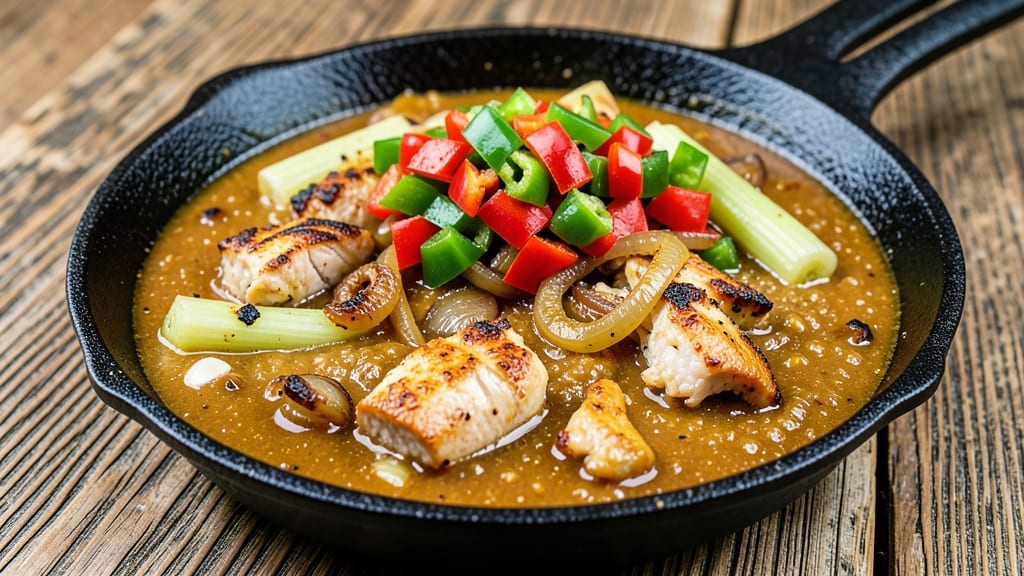
A traditional chicken gumbo recipe demands patience and precision—two things I learned early in my apprenticeship under Master Chef Chen. That deep, nutty roux isn’t just flavor; it’s the soul of the dish, built slowly over 45 minutes to transform raw ingredients into something rich and complex.
The scent of darkening fat and spices fills the kitchen long before the pot ever hits the table.
This recipe stays true to Cajun roots with okra for natural thickening and the holy trinity of onions, bell peppers, and celery as the flavor foundation.
I’ve perfected the balance between tender chicken, smoky sausage, and the earthy depth of filé powder—though I’ll let you decide whether to use okra or filé.
The key is layering flavors: first the roux, then the vegetables, then the proteins, and finally the liquid to create a stew that’s both hearty and refined.
By the time you serve it over steamed rice, your gumbo will be thick enough to coat a spoon but still light enough to let every ingredient shine. The aroma alone will bring everyone to the table, and the first bite delivers that perfect harmony of smoky, spicy, and savory.
This isn’t just a recipe—it’s a tradition, and once you make it, you’ll understand why it’s been passed down for generations.
Serve with buttered cornbread to soak up every last drop of that rich, flavorful broth. The leftovers? Even better the next day, as the flavors meld into something even more profound. Let’s get cooking—your taste buds will thank you.
Ingredients for traditional chicken gumbo
The soul of gumbo starts with butter, flour, and patience—then comes the holy trinity and everything else.
| Ingredient | Amount | Notes |
|---|---|---|
| Unsalted Butter 🧈 | 1 ½ cups | Cold, cubed for roux |
| All-Purpose Flour 🌾 | 1 ½ cups | White flour preferred |
| Yellow Onion 🧅 | 2 whole | Diced, medium size |
| Green Bell Pepper 🌶️ | 2 whole | Diced, seeds removed |
| Celery Stalks 🥬 | 4 whole | Diced, stringy parts trimmed |
| Garlic Cloves 🧄 | 4 cloves | Minced, fresh preferred |
| Okra Pods 🌱 | 1 lb | Fresh, trimmed, sliced |
| Boneless Chicken Thighs 🍗 | 2 lb | Skin-on, cut into pieces |
| Andouille Sausage 🌭 | 1 lb | Sliced into rounds |
| Chicken Broth 💧 | 6 cups | Low-sodium preferred |
| Cayenne Pepper 🌶️ | 1 tsp | Adjust to taste |
| Dried Thyme 🌿 | 1 tsp | Or 1 tbsp fresh |
| Smoked Paprika 🌶️ | 1 tbsp | For smoky depth |
| Filé Powder 🌾 | 2 tbsp | Optional, for thickening |
| Salt 🧂 | 1 ½ tsp | Adjust to taste |
The roux is non-negotiable. Use unsalted butter—salted can burn—and keep it moving constantly for that perfect peanut butter color. White Lily flour is my go-to for a cleaner flavor, but any all-purpose works. The holy trinity (onion, bell pepper, celery) should be finely diced—no big chunks—so they dissolve into the gumbo. I like to buy okra fresh from a local farmers market in summer, but frozen works in a pinch. The filé powder? Gumbo filé only—none of that generic cornmeal stuff. It’s the secret weapon for that perfect texture.
No andouille sausage? Smoked kielbasa or spicy chorizo works in a bind, but nothing beats the real deal. Short on okra? Filé powder will thicken it just fine, but don’t skip both. Fresh thyme is ideal, but dried at one-third the amount gets you close. The cayenne is where you can play—start with half and add more if your crew likes heat. Trader Joe’s has great pre-minced garlic if you’re short on time, but fresh is always better. And for the love of gumbo, don’t use pre-shredded onions—they’re sad and watery.
This tastes even better the next day, so make extra. Store in the fridge for 4-5 days or freeze for 3 months. I like to portion it into containers with a scoop of rice on top—lunches sorted for the week. The roux can be made ahead and refrigerated for 3 days, but it’s not as magical. And if you’re serving a crowd, double the batch—people will ask for seconds.
Why You'll Love This Recipe
- One-Pot Magic: I swear by this recipe—just brown the chicken, build the roux with butter and flour, then toss in the holy trinity (onion, bell pepper, celery). No extra pans, no stress, and the flavors meld into something unforgettable while you sip your coffee.
- Roux Revelation: Honestly, that golden-brown roux is where it all happens. The butter and flour create this nutty, rich base that makes every spoonful taste like a hug from your grandma—deep, warm, and impossible to resist.
- Weeknight Crowd-Pleaser: Between us, this feeds six without breaking the bank, and it’s the dish that gets my in-laws asking for seconds. Serve it over rice with a side of crusty bread, and suddenly you’re the hero of any gathering—no fancy prep required.
- Leftovers That Shine: I make a double batch on Sundays because the gumbo only gets better the next day. The flavors deepen, the rice soaks up all the goodness, and reheating it? Just a splash of water and a quick stir—no sad, dry leftovers here.
Step-by-step instructions for traditional chicken gumbo
Here's how to build that rich, smoky gumbo with a perfect dark roux and authentic Louisiana flavors.
Build the Dark Roux (The Foundation)
In a heavy-bottomed Dutch oven, melt the 1.5 cups unsalted butter over medium-low heat. Once fully melted, immediately whisk in the 1.5 cups all-purpose flour to form a paste. This is where patience pays off—keep the heat at medium-low and stir constantly with a wooden spoon or whisk.
Watch the roux carefully as it transforms from pale yellow to peanut butter brown (about 15 minutes). The key is to never let it darken beyond chocolate brown—if it gets too dark, it'll taste bitter. You'll know it's ready when it smells nutty and coats the back of a spoon smoothly. This roux forms the soul of your gumbo, so don't rush it.
Cook the Holy Trinity and Sausage
Once the roux reaches peanut butter brown, immediately add the diced 2 whole yellow onion, 2 whole green bell pepper, and 4 whole celery stalks (the Holy Trinity). Stir well to coat everything in the roux. Cook for 8-10 minutes until the vegetables soften but don't brown. Add the 4 cloves minced garlic and cook for 30 seconds until fragrant—don't let it burn.
Push the vegetables to one side of the pot and add the sliced 1 lb andouille sausage. Cook for 5 minutes until browned and crispy. This step develops deep, smoky flavors that will carry through your gumbo. If the roux starts to darken too quickly, reduce the heat slightly to maintain that perfect peanut butter color.
Add Okra and Chicken for Depth
Stir in the sliced 1 lb okra pods and cook for 5 minutes to soften slightly. This adds that signature gumbo texture and subtle earthiness. Add the 2 lb boneless chicken thighs (cut into pieces) and cook for 5 minutes to lightly brown the meat. This step ensures your chicken infuses the broth with flavor before simmering.
Pour in the 6 cups chicken broth and bring to a gentle simmer. Add the 1.5 tsp salt, 1 tsp dried thyme, 1 tsp cayenne pepper, and 1 tbsp smoked paprika. Stir well to combine all the flavors. The broth should just barely bubble—this gentle simmer prevents the roux from breaking and keeps the gumbo rich.
Simmer Until Tender and Flavorful
Cover the pot and let the gumbo simmer gently for 45-50 minutes until the chicken is fork-tender and falls apart easily. The liquid should reduce slightly but still coat the back of a spoon. Taste and adjust seasoning—you might need a bit more salt or cayenne to balance the flavors. This is where all the ingredients meld together into that unmistakable gumbo taste.
Once the chicken is tender, remove it from the pot and shred it with two forks, discarding any bones. Return the shredded chicken to the pot and stir in the 2 tbsp filé powder (if using). This step thickens the gumbo naturally and adds that signature gumbo texture. Simmer for 5 more minutes—the filé powder works best when added at the end to prevent clumping.
Serve with Crispy Rice
Ladle the gumbo into bowls and serve immediately with hot, crispy rice on the side. The gumbo should be thick enough to coat the back of a spoon but still spoonable. Each bite should deliver layers of smoky sausage, tender chicken, and the deep, nutty roux. The okra adds a subtle texture that's unmistakably gumbo. Enjoy with hot sauce if you like a little extra kick!
Pro Tips For Making Traditional Chicken Gumbo
- Sweat the Trinity Slow: Your onion, bell pepper, and celery (the "holy trinity") need 10-12 minutes in the butter—no rushing. I used to walk away after 5, but that just makes them release water instead of caramelizing. Keep heat medium-low and stir occasionally; you want them soft enough to mash between your fingers but not browned.
- Whisk the Roux Hard: That butter-flour roux is where gumbo magic happens. After 10 minutes of stirring, it’ll look like wet sand—keep going. I learned this the hard way when I walked away for "just a minute" and ended up with a burnt lump. The moment it turns peanut-butter brown (about 20-25 minutes), you’re golden. No shortcuts here.
- Salt the Stock Early: Season your chicken stock before adding it to the roux—about 1 tsp salt per quart. I used to wait until the end, and the gumbo always tasted flat. The roux absorbs flavors like a sponge, so salting early guarantees depth. Taste the stock first; if it’s bland, add more salt now, not later.
- Deglaze with Wine, Not Water: After browning your chicken, splash in ½ cup white wine (or even cheap vodka) to scrape up those fond bits. Water won’t cut it—you need something with alcohol to lift the flavors. I was skeptical until I tried it; the gumbo now has a richness that water just can’t match.
Make-ahead tips for this dish
Roux Prep Ahead
You can make the roux up to 3 days ahead and store it in an airtight container in the fridge. I like to portion it into quart-sized mason jars—it’s perfect for meal prep.
When ready to use, simply reheat the roux over low heat while stirring constantly until it reaches that peanut butter brown color again. This saves you 45 minutes of constant stirring on the day you make gumbo. 🧈
Protein Prep
Cut your chicken thighs and andouille sausage into pieces the night before and store them in separate airtight containers. This makes assembly day faster, and the flavors meld better when prepped ahead.
I also like to slice the okra and chop the holy trinity vegetables in advance—they keep well in the fridge for 2-3 days wrapped tightly in plastic. 🥬
Broth Base
Make a big batch of homemade chicken broth if you’re feeding a crowd—it’s worth the effort. Store it in gallon-sized freezer bags and thaw overnight in the fridge before using.
For extra depth, add a bay leaf and 1 tsp black peppercorns to the broth while simmering. This step elevates your gumbo from good to exceptional. ❄️
Freezer-Friendly
Gumbo freezes beautifully for up to 3 months—just portion it into airtight containers with a layer of rice on top. When reheating, add 2 tablespoons of water or broth per quart to prevent drying out.
I like to freeze individual servings so I can grab one for quick lunches. The texture stays rich, and the flavors actually deepen over time. 💫
Spice Mix Prep
Combine all your spices—cayenne, thyme, smoked paprika, and salt—in a small jar and label it “Gumbo Spice Mix.” This saves time on assembly day and ensures consistent flavor.
Store it in a cool, dark place for up to 6 months. I keep a jar in my pantry and another in my car for spontaneous gumbo nights. 🌶️
Rice Ready
Cook a big batch of rice and store it in the fridge for up to 3 days. Reheat it in a skillet with a pat of butter until crispy before serving.
I like to use jasmine rice because it absorbs the gumbo flavors beautifully. For extra convenience, make a double batch—one for serving and one for freezing. 🍚
Nutrition facts
Frequently asked questions
Why does a traditional gumbo need a dark roux?
The dark roux is the flavor foundation of gumbo—it develops deep, nutty notes through slow cooking that butter and flour alone can't achieve. When cooked to peanut butter brown (15-20 minutes), it creates a rich, complex base that carries all other flavors. Skipping this step means missing the soul of the dish. The key is constant stirring to prevent burning, which would make it bitter.
Can I substitute okra with filé powder?
Filé powder is a traditional thickening agent made from ground sassafras leaves. Use 2 tablespoons at the end of cooking (after removing chicken) to thicken the gumbo. Okra adds subtle texture, while filé gives a smoother finish. Never use both together—they'll create a gummy texture. For best results, stir filé powder into cold water first to prevent clumping.
What makes the holy trinity so important?
The holy trinity (onions, bell peppers, celery) provides the flavor base that defines gumbo. These vegetables are cooked slowly in the roux to develop sweetness and depth. Finely dicing them ensures they blend seamlessly into the stew. For extra flavor, char the vegetables slightly before adding to the pot—this adds smoky notes that elevate the dish.
How do I fix a gumbo that's too thin?
If your gumbo is too thin, you have two options: simmer uncovered for 10-15 minutes to reduce the liquid, or make a quick roux with 1 tbsp butter and 1 tbsp flour to thicken. For extra body, whisk in 1 tbsp cornstarch mixed with cold water. Never add raw flour directly—it can create lumps. The key is patience; traditional gumbo should coat a spoon but still be spoonable.
Can I make this gumbo in a slow cooker?
Yes, but with adjustments. First, make the roux on the stovetop as directed, then transfer everything to the slow cooker. Cook on low for 6-8 hours instead of simmering. The flavors will develop differently, but it's a great hands-off method. For best results, use a Dutch oven first to build the roux, then transfer. The slow cooker won't achieve the same depth of flavor as stovetop simmering.