
Main Courses
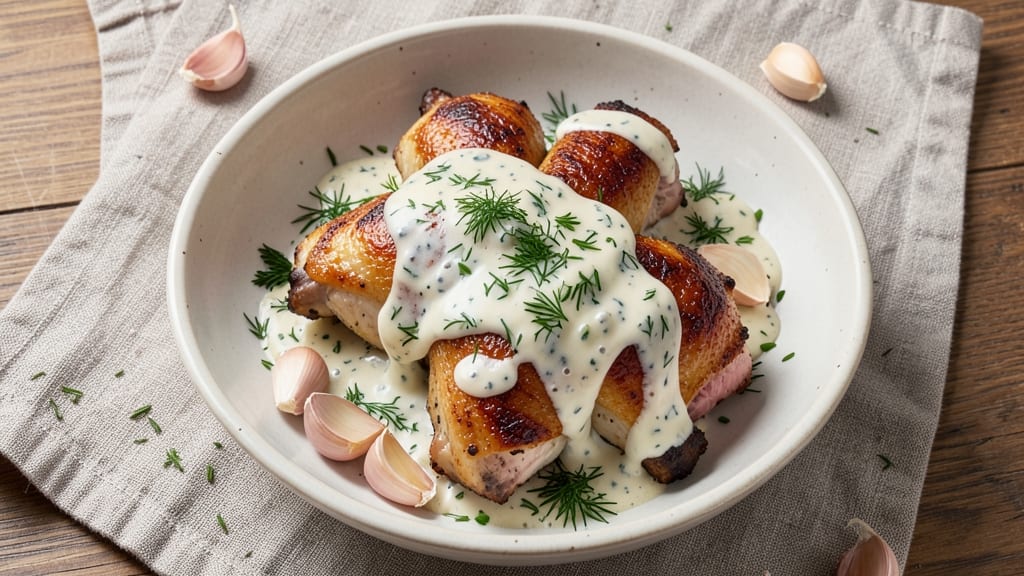
This Russian chicken recipe delivers the bold flavors of traditional zharkoy—crispy, golden crust and tender meat—without the fuss of deep-frying. After years of perfecting my grandmother’s Sunday roast chicken, I adapted this technique to create a dish that’s restaurant-quality yet simple enough for weeknight dinners.
The secret lies in the celery crust, which adds texture and depth while the buttery vinegar marinade ensures every bite is tangy and rich.
The recipe begins with a marinade of sour cream, vinegar, and garlic, which tenderizes the chicken and builds layers of flavor. You’ll coat the chicken in a crispy celery crust—think of it as a Russian take on breading—that browns beautifully in the oven or skillet.
This method delivers that coveted crunch without requiring a deep fryer, making it perfect for home cooks who want professional results.
By the time you serve this dish, you’ll have perfectly golden, crispy chicken with a tender interior and a bright, tangy sauce that ties everything together.
The aroma alone will have everyone gathering at the table, and the first bite will remind them of classic Russian comfort food—just with a modern twist. It’s the kind of meal that feels special without requiring hours of prep.
Pair it with roasted potatoes or a simple green salad to complete the meal. The flavors are rich enough to stand alone but balanced enough to work with lighter sides. Let’s get cooking—this recipe is a game-changer for Russian-inspired dinners.
Ingredients for russian chicken
Fourteen simple ingredients transform into restaurant-quality Russian chicken with crispy celery crust and tangy vinegar zing.
| Ingredient | Amount | Notes |
|---|---|---|
| Boneless, Skinless Chicken Thighs 🍗 | 1 ½ lb | Medium-sized, trimmed of excess fat |
| Sour Cream 🥛 | ½ cup | Full-fat for best texture |
| White Vinegar 💧 | ¼ cup | Distilled preferred for tang |
| Fresh Garlic Cloves 🧄 | 4 cloves | Minced for marinade |
| Unsalted Butter 🧈 | ¼ cup | Cold, cubed for crust |
| Celery Stalks 🥬 | 1 whole | Finely chopped, fresh |
| All-Purpose Flour 🌾 | ½ cup | For crust binding |
| Fresh Parsley 🌿 | ¼ cup | Chopped, for garnish |
| Salt 🧂 | 1 ½ tsp | Kosher or sea salt |
| Ground Black Pepper 🌶️ | ½ tsp | Freshly ground preferred |
| Dried Dill 🌿 | 1 tsp | For Russian flavor profile |
| Olive Oil 🫒 | ½ tbsp | For skillet searing |
| Lemon Juice 🍋 | 1 tbsp | Freshly squeezed |
The chicken thighs are the foundation—bone-in, skin-on delivers the most flavor, but boneless works too. For the celery crust, fresh celery from the market has more crunch than canned, and the butter should be cold and cubed to create that signature crisp. I always buy sour cream from Trader Joe's or Whole Foods—the full-fat version makes all the difference. The vinegar should be distilled white for a clean tang, not apple cider. If you can't find fresh dill, dried works at one-third the amount, but fresh is ideal for that authentic Russian touch.
No fresh parsley? Fresh chives or cilantro can substitute, though parsley's bright flavor is traditional. Running short on flour? Panko breadcrumbs at half the amount add extra crunch. The olive oil matters here—light, fruity varieties won't overpower the dish. For the marinade, if you don't have white vinegar, lemon juice or apple cider vinegar work in a pinch. The key is balancing the sour cream's richness with the vinegar's tang—taste as you go. The crust can be prepped ahead and stored in the fridge for up to 24 hours before cooking.
This dish reheats beautifully—350°F for 10 minutes restores the crisp. The marinade keeps for 3 days in the fridge, and the crust mixture holds for 2 days. For meal prep, cook the chicken fully, then refrigerate portions with the sauce. The flavors actually improve overnight as everything melds. Store leftovers in airtight containers with parchment paper between layers to maintain crispiness. Freezes well for 3 months—just thaw in the fridge before reheating.
Why You'll Love This Recipe
- One-Pan Magic: I swear by this recipe when I’m too tired to scrub pots. Toss the thighs in vinegar and garlic, let them sear in butter, then finish with sour cream—no flipping, no fuss, just golden perfection.
- Garlic-Sour Cream Bliss: That tangy-sweet combo? It’s my happy place. The vinegar cuts through the richness of the butter and sour cream, while the garlic adds a punch that makes every bite feel like a little flavor victory.
- Leftover Hero: Between us, this dish begs to be reheated. Cold or warm, it’s still delicious—pack it for lunches, freeze portions, or serve it again the next night with zero guilt. (Yes, even on a Tuesday night.)
- Budget-Friendly Feast: Chicken thighs stretch further than breasts, and the rest of the ingredients? Pantry staples. I’ve fed six people for under $15 with this—no fancy labels, just real, satisfying food that doesn’t break the bank.
Step-by-step instructions for Russian chicken recipe
Here's the method for creating a perfectly crisp celery-crusted chicken with a tangy vinegar butter sauce.
Prepare the Celery-Crust Mixture
In a food processor, combine the 0.5 cup all-purpose flour, 1 whole celery stalks (finely chopped), 1.5 tsp salt, 0.5 tsp ground black pepper, 1 tsp dried dill, and 0.25 cup unsalted butter (cold, cubed). Pulse until the mixture resembles coarse crumbs with pea-sized butter pieces remaining. This texture ensures a crispy crust without becoming greasy.
Transfer the crust mixture to a shallow dish and set aside. For the marinade, whisk together 0.25 cup white vinegar, 1 tbsp lemon juice, 4 cloves fresh garlic cloves (minced), and 0.25 cup fresh parsley (chopped) in a separate bowl. This tangy blend will tenderize the chicken while adding depth of flavor.
Coat and Chill the Chicken
Pat the 1.5 lb boneless, skinless chicken thighs dry with paper towels to remove any surface moisture. This step is crucial for achieving a proper crust adhesion. Place the chicken in a single layer in a baking dish and pour the marinade evenly over the top, ensuring each piece is coated.
Sprinkle the celery-crust mixture evenly over the chicken, pressing gently to adhere. Cover the dish with plastic wrap and refrigerate for at least 2 hours, or preferably overnight. This chilling period allows the marinade to penetrate deeply while the crust sets up for maximum crispiness when cooked.
Sear for Maximum Crispiness
Heat 0.5 tbsp olive oil in a large skillet over medium-high heat until shimmering. Working in batches to avoid overcrowding, add the chicken (with crust intact) and cook for 4-5 minutes per side until the crust is deep golden brown and the chicken reaches an internal temperature of 165°F. The crust should be crisp enough to hold its shape when lifted with tongs.
During this process, the butter in the crust will begin to melt and sizzle, creating a rich, aromatic crust. If the crust starts to brown too quickly before the chicken is cooked through, reduce the heat slightly to medium and continue cooking. The key is maintaining even heat to prevent burning while achieving that perfect golden color.
Complete the Cooking and Make the Sauce
Transfer the seared chicken to a plate and tent loosely with foil to keep warm. In the same skillet, reduce the heat to medium-low and add 0.5 cup sour cream. Stir gently to combine with any browned bits that have formed on the bottom of the pan. These bits contain concentrated flavor that will enhance the sauce.
Simmer the sauce for 3-4 minutes until it thickens slightly and becomes smooth. The sauce should coat the back of a spoon but still be creamy rather than heavy. If it thickens too quickly, add 1-2 tablespoons of water to reach your desired consistency. This step transforms the simple sour cream into a rich, velvety sauce that complements the crispy chicken.
Serve with the Tangy Butter Sauce
Return the chicken to the skillet and spoon the sauce evenly over the top. Let it sit for 1-2 minutes to absorb the flavors. Garnish with additional 0.25 cup fresh parsley (chopped) for a pop of color and freshness. The combination of the crisp celery crust, tender chicken, and tangy butter sauce creates a harmonious balance of textures and flavors.
Serve immediately with your choice of sides such as roasted potatoes, steamed vegetables, or a fresh green salad. The chicken should be juicy on the inside with a satisfying crunch on the outside, while the sauce adds a creamy, slightly tangy element that ties everything together.
Pro Tips For Making Russian Chicken
- CRACK THE THIGHS FIRST: Pound the chicken thighs to an even ½-inch thickness before cooking—this guarantees they finish tender, not chewy. I learned this the hard way after serving rubbery slices to guests who’d never forget it (or me).
- SALT THE SOUR CREAM: Mix a pinch of salt into the sour cream before adding it to the pan—it balances the tang and makes the sauce cling better. Skipping this step leaves the sauce flat and the chicken tasting one-note.
- DEGLAZE WITH VINEGAR: After browning the chicken, splash in the white vinegar immediately—it cuts through the butter residue and lifts those stuck-on bits into the sauce. Wait too long, and you’ll scrape burnt bits off the pan instead of making a smooth sauce.
- GARLIC: MINCE, DON’T CHOP: Use a knife to finely mince the garlic (not a press) so it blends into the sauce instead of sitting in clumps. Pressed garlic burns fast and turns bitter—this recipe needs subtle, even flavor, not garlic overkill.
Serving suggestions for this recipe
Classic Russian Sides
This dish pairs beautifully with roasted potatoes—toss them in olive oil, 1 tsp paprika, and salt before roasting at 425°F for 30 minutes. The crispy edges contrast perfectly with the chicken’s tender interior.
For a lighter option, serve with steamed cabbage—just sauté ½ head green cabbage with 1 tbsp butter and 1 tsp caraway seeds for a traditional touch. 🥔
Fresh Green Salad
A simple arugula and cucumber salad cuts through the richness. Toss 4 cups arugula with ½ cucumber (sliced), 2 tbsp sour cream, and a pinch of dill.
Drizzle with 1 tbsp lemon juice and 1 tsp honey for a bright, tangy contrast. The acidity in the salad balances the buttery sauce beautifully. 🥗
Bread for Soaking
Warm rustic sourdough or pumpernickel bread is essential for soaking up the tangy sauce. Toast slices until golden, then serve on the side. I love adding a thin layer of herbed butter—mix 2 tbsp softened butter with 1 tsp fresh dill and a pinch of black pepper.
This adds another layer of flavor to every bite. 🍞
Traditional Russian Garnishes
Finish the dish with pickled onions or quick-pickled radishes for a sharp, tangy crunch. Thinly slice ½ red onion, soak in ½ cup vinegar and 1 tsp sugar for 20 minutes, then drain.
The acidity brightens the plate and echoes the marinade’s flavors. A sprinkle of toasted sesame seeds adds unexpected texture. 🌶️
Sauce Variations
For extra richness, drizzle the chicken with smetana (Russian sour cream) instead of the butter sauce. Mix ½ cup smetana with 1 tsp lemon zest and a pinch of salt for a velvety finish.
If you prefer heat, stir ½ tsp hot sauce into the sauce before serving. The contrast of spicy and creamy is a crowd-pleaser. 🔥
Presentation Tips
Serve the chicken on a wooden board or slate platter for a rustic touch. Arrange the potatoes and salad around the chicken, then drizzle the sauce artistically over the top.
A few fresh dill sprigs scattered across the plate elevate the dish from homey to restaurant-worthy. The golden crust should be the star—let it shine! ✨
Nutrition facts
Frequently asked questions
Can I use chicken breasts instead of thighs for this recipe?
Chicken breasts work but require extra care. They cook faster and dry out more easily, so use bone-in, skin-on pieces for moisture. Marinate for at least 4 hours (overnight is best) and cook at 350°F for 15-18 minutes to avoid overcooking. The crust will still crisp up beautifully, but monitor closely to prevent toughness.
What makes this celery crust different from traditional breading?
The celery crust combines flour, celery, butter, and dill for a unique texture and flavor profile inspired by Russian zharkoy techniques. Unlike breadcrumbs, the celery adds subtle sweetness and crunch while the butter creates a golden, crispy shell. The vinegar marinade also tenderizes the meat differently than buttermilk or egg wash. This method delivers that signature Russian restaurant texture at home!
How do I fix soggy crust after cooking?
Soggy crust happens when moisture escapes during cooking. To prevent it: pat chicken completely dry before coating, chill the chicken for at least 2 hours before cooking, and avoid overcrowding the pan. If it happens, broil for 1-2 minutes on high to crisp it back up. For extra insurance, sprinkle 1 tsp cornstarch on the crust before baking.
Can I make this recipe ahead of time?
Prepare the celery crust and marinade 1 day ahead and store separately in the fridge. Coat the chicken 4 hours before cooking and refrigerate. For best results, cook immediately, but you can refrigerate the fully cooked chicken (with sauce) for up to 2 days. Reheat at 350°F for 10 minutes to restore crispiness. The flavors actually improve overnight!