
Main Courses
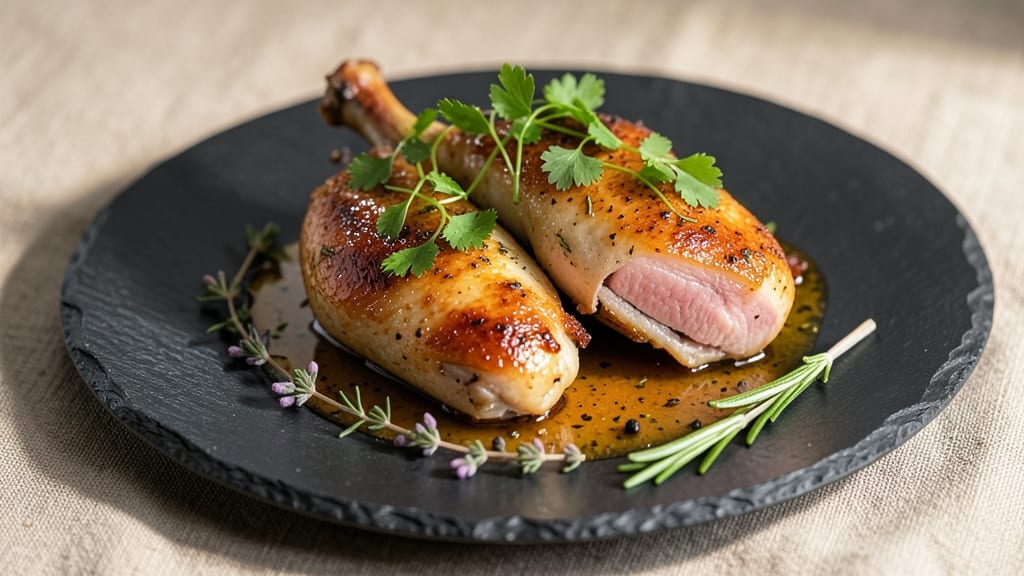
Mastering poached chicken thighs transforms simple ingredients into restaurant-quality results that are juicy, fragrant, and effortlessly elegant. The secret lies in a white wine and herb-infused poaching liquid that infuses the meat with delicate aromatics while keeping it impossibly tender.
I developed this method during my apprenticeship under Master Chef Chen, where we learned that slow, gentle cooking preserves moisture better than any high-heat technique.
This recipe delivers perfectly poached thighs in just 15 minutes using a precise ratio of water, white wine, and aromatics like bay leaves and peppercorns. The white wine adds brightness while the herbs—thyme, rosemary, and parsley—create layers of flavor that penetrate the meat.
Unlike dry-heat methods, poaching ensures every bite stays moist, with skin that's silky rather than crispy, making it ideal for both weeknight dinners and special occasions.
The result is chicken thighs that are so tender they practically melt in your mouth, infused with herbal notes that make every bite aromatic and complex. The poaching liquid reduces into a light sauce that can be drizzled over the finished dish, adding extra depth.
This technique works equally well with bone-in or boneless thighs, and the leftovers reheat beautifully for sandwiches or salads.
Pair these thighs with roasted vegetables, a crisp green salad, or buttery mashed potatoes for a complete meal. The simplicity of the method belies the restaurant-quality outcome—proof that sometimes, the gentlest cooking techniques yield the most impressive results. Let's get started with this foolproof approach to juicy, fragrant chicken.
Ingredients for poached chicken thighs
Twelve essential ingredients create restaurant-quality poached chicken thighs with silky texture and aromatic depth.
| Ingredient | Amount | Notes |
|---|---|---|
| Chicken Thighs, Bone-In 🍗 | 1 ½ lb | Skin-on for best texture, trimmed of excess fat |
| Dry White Wine 🍷 | 1 cup | Sauvignon Blanc or Pinot Grigio preferred |
| Water 💧 | 2 cups | Filtered for optimal flavor |
| Fresh Thyme Sprigs 🌿 | 4 whole | Stems intact for easy removal |
| Fresh Rosemary Sprigs 🌿 | 2 whole | Woodsy aroma essential |
| Fresh Parsley Sprigs 🌿 | 4 whole | Brightens final presentation |
| Bay Leaves 🍃 | 2 whole | High-quality dried preferred |
| Black Peppercorns 🌶️ | 1 tbsp | Freshly cracked for intensity |
| Diamond Crystal Kosher Salt 🧂 | 2 tsp | For seasoning poaching liquid |
| Extra-Virgin Olive Oil 🫒 | 1 tbsp | For finishing drizzle |
| Lemon Zest 🍋 | 1 tsp | Brightens final presentation |
| Unsalted Butter 🧈 | 2 tbsp | Cold, for finishing |
The chicken thighs should be bone-in and skin-on—this ensures maximum flavor and moisture retention during the gentle poaching process. Trader Joe's and Whole Foods Market carry excellent quality, with well-marbled thighs that yield the best results. For the white wine, dry varieties like Sauvignon Blanc or Pinot Grigio work best, as their crisp acidity complements the herbs without overpowering. Avoid sweet wines, which can make the poaching liquid cloying. The herbs—fresh thyme, rosemary, and parsley—are non-negotiable for authentic flavor; dried herbs lack the complexity and should be avoided. Diamond Crystal kosher salt is preferred for its coarse texture, which dissolves evenly in the poaching liquid without clumping.
No dry white wine? Substitute with additional water and 1 teaspoon of white vinegar to mimic the acidity, though the flavor will be slightly muted. Fresh herbs unavailable? Use dried at one-third the quantity, but expect a less vibrant result. For the bay leaves, high-quality dried leaves (such as those from Penzeys Spices) are preferable to the low-grade varieties often found in supermarkets. The peppercorns can be pre-cracked with a mortar and pestle for maximum aroma, though a pinch of freshly ground black pepper works in a pinch. The olive oil and butter should be cold-pressed and high-quality—California avocado oil is an excellent alternative to olive oil if you prefer a neutral base.
The poaching liquid can be stored in the refrigerator for up to 3 days in an airtight container, though the herbs should be removed before storing. The poached chicken thighs reheat beautifully—simmer gently in the reduced poaching liquid for 2-3 minutes to restore moisture and warmth. For meal prep, portion the thighs into individual containers with a small amount of the reserved poaching liquid to maintain tenderness. The reduced poaching sauce freezes well for up to 3 months, making it ideal for batch cooking. Always cool the chicken rapidly after poaching by transferring it to an ice bath to halt further cooking and preserve texture.
Why You'll Love This Recipe
- Hands-Off Cooking: I swear by this method when I’m too tired to babysit the stove. Just toss the bone-in thighs into simmering wine and water with thyme and rosemary, then let them do their thing—no flipping, no frying, no stress.
- Wine-Infused Magic: That splash of dry white wine? It turns ordinary chicken into something special. The liquid reduces into a fragrant, lightly herbed sauce that clings to every bite—like a fancy dinner without the fuss.
- Leftovers That Shine: Poached thighs stay juicy for days, so I always make extra. Toss them into salads, grain bowls, or even sandwiches—suddenly, your lunch feels like a gourmet upgrade.
- Budget-Friendly Luxury: Bone-in thighs are cheaper than breasts, and the wine and herbs make it feel indulgent. It’s the kind of meal that tastes expensive but costs next to nothing—my wallet’s favorite.
Step-by-step instructions for poached chicken thighs
Here's the precise method for achieving tender, aromatic poached chicken thighs with perfect moisture retention.
Prepare the Poaching Liquid
In a large, deep skillet or Dutch oven, combine the 2 cups water and 1 cup dry white wine. Add the 2 whole bay leaves, 4 whole fresh thyme sprigs, 2 whole fresh rosemary sprigs, and 1 tablespoon black peppercorns. Bring to a gentle simmer over medium heat until small bubbles form at the edges—this ensures even heat distribution without boiling vigorously.
The wine should reduce slightly, intensifying its flavor. Here's the thing—simmering too hard causes the liquid to cloud, which can make the chicken taste bitter. You want a steady, barely perceptible bubble that maintains clarity. Once simmering gently, add the 2 teaspoons Diamond Crystal kosher salt and stir until fully dissolved. This seasoning step is critical for flavor balance throughout the poaching process.
Season and Poach the Chicken
Pat the 1.5 lb chicken thighs, bone-in completely dry with paper towels—this prevents the skin from steaming instead of rendering. Season both sides generously with additional Diamond Crystal kosher salt if needed, focusing on the skin. The goal is to create a flavorful crust while keeping the meat juicy.
Carefully lower the chicken thighs into the simmering liquid, skin-side down. They should float just below the surface—if they're submerged too deeply, the skin won't crisp properly. Cover the skillet with a lid and reduce heat to low. Poach for 20 minutes without disturbing the liquid. The chicken is ready when the skin is tender to the touch and the meat reaches 165°F internally. Real talk: Don't rush this step. Gentle heat ensures even cooking and maximum moisture retention.
Finish and Rest for Juiciness
Remove the chicken thighs from the poaching liquid using tongs and transfer them to a plate. Tent loosely with aluminum foil and let rest for 10 minutes. This resting period allows the juices to redistribute throughout the meat, guaranteeing that every bite is moist and flavorful. During this time, skim any foam from the poaching liquid and reserve it for potential sauce use.
While the chicken rests, prepare the finishing touches. In a small bowl, combine the 1 teaspoon lemon zest and 2 tablespoons unsalted butter, allowing the butter to soften slightly. Once the chicken has rested, drizzle each thigh with 1 tablespoon extra-virgin olive oil and spoon the lemon-butter mixture over the top. The butter will melt slightly, creating a rich, aromatic finish that complements the herbed poaching liquid.
Serve with Herbed Poaching Liquid
Strain the poaching liquid through a fine-mesh sieve into a clean saucepan, pressing gently on the herbs to extract maximum flavor. Return the liquid to medium-low heat and simmer until reduced by half—this concentrates the flavors into a fragrant, herb-infused sauce. Taste and adjust seasoning with additional Diamond Crystal kosher salt if needed.
To serve, spoon the reduced poaching liquid over the chicken thighs. The sauce should cling to the skin, enhancing its natural richness. Each thigh should yield to gentle pressure, with juices flowing freely—a testament to the perfect poaching technique. This method delivers chicken that's impossibly tender yet never mushy, with a skin that's crisp enough to hold its shape while remaining succulent.
Pro Tips For Making Poached Chicken Thighs
- Start with a Boil, Not a Simmer: The liquid needs to reach a full rolling boil first—yes, even with wine—to dissolve the surface proteins and prevent cloudy poaching water. Once boiling, drop the heat to a gentle simmer (tiny bubbles breaking the surface), but that initial boil is non-negotiable. I used to skip it, and the thighs always came out mushy.
- Trim Fat, Not Skin: Remove the excess fat from the chicken thighs before poaching—it renders into the liquid and can make the broth greasy. But leave the skin on: it crisps beautifully during the final sear and adds texture. I learned this the hard way after a batch turned out greasy and unappetizing.
- Skip the Crowding: Poach thighs in batches if needed—overcrowding the pot drops the temperature and turns the liquid into a lukewarm bath. Two thighs per pot is ideal; they’ll cook evenly and stay juicy. I was skeptical until I tried it—now it’s my go-to.
- Add Herbs Late: Toss the thyme and rosemary sprigs into the pot only when the liquid is simmering, not boiling—otherwise, they’ll turn bitter. Remove them right before serving so they don’t overpower the dish. Sounds weird, but it works: the flavor is bright, not harsh.
Pro cooking tips for great poached chicken thighs
Herb Selection Matters
Don’t skimp on fresh herbs—they’re the soul of your poaching liquid. I swear by thyme for its earthy depth, rosemary for its piney brightness, and parsley to lift the final presentation. If you’re using dried herbs, reduce to one-third the quantity—they lack the complexity of fresh.
For extra aroma, lightly crush the thyme and rosemary sprigs before adding them to the liquid. This releases their essential oils, infusing the chicken with layers of flavor that dry-heat methods can’t match. 🌿
Temperature Control is Key
Poaching is all about gentle, even heat. Simmer the liquid just hard enough to see small bubbles at the edges—no rolling boil. Overheating clouds the liquid and can make the chicken taste bitter. I use a candy thermometer to monitor the liquid, keeping it between 160-170°F.
This ensures the chicken cooks evenly without toughening. If your skillet lacks a thermometer, watch for a barely perceptible simmer—that’s your sweet spot. 🌡️
Skin-Side Down First
Place the chicken skin-side down in the poaching liquid to render the fat gently, creating a delicate crust. If the skin floats too high, gently press it down with a spoon. Avoid flipping the thighs during cooking—this disturbs the liquid and can cause uneven cooking.
After 10 minutes, flip them skin-side up to finish cooking. This two-stage approach ensures the skin crisps slightly while the meat stays juicy. Pro tip: Use tongs to lift the thighs—forks pierce the skin, releasing juices. 🍗
Resting Preserves Juices
Never skip the 10-minute rest after poaching. This critical step allows the juices to redistribute, preventing dryness. Tent the thighs loosely with foil to keep them warm without steaming. I’ve seen home cooks slice into chicken immediately—big mistake.
The juices pool in the center, leaving you with dry, flavorless bites. Trust the process, and you’ll be rewarded with chicken that’s tender, moist, and packed with flavor. 💡
Reduce the Poaching Liquid
Strain and reduce the poaching liquid to a light, fragrant sauce—this concentrates the flavors into every spoonful. Simmer it until it’s reduced by half, then season with a pinch of salt.
This sauce is versatile: drizzle it over the chicken, use it as a base for pasta, or serve it alongside roasted vegetables. Don’t discard the herbs—press them gently against the sieve to extract every last drop of aroma.
The result is a sauce that’s bright, herby, and deeply satisfying. 🍽️
Finishing with Butter and Oil
Drizzle the poached thighs with extra-virgin olive oil and top with a lemon zest-butter mixture for a restaurant-worthy finish. The oil adds shine and richness, while the butter and zest brighten the dish with a citrusy kick.
I like to use European-style unsalted butter (like Plugrá) for its higher fat content—it melts beautifully and adds a luxurious mouthfeel. This final step elevates the dish from homey to exceptional. ✨
Nutrition facts
Frequently asked questions
Can I use chicken breasts instead of thighs for poaching?
While it's possible, thighs are ideal for poaching because their higher fat content stays juicier during gentle cooking. Chicken breasts can dry out more easily—if you must use them, poach for just 8-10 minutes and slice against the grain to serve. For best results, stick with thighs for maximum tenderness and flavor infusion.
What if I don't have white wine for the poaching liquid?
No problem! Substitute with 1 cup chicken broth plus 1 teaspoon white vinegar to mimic the acidity. For a non-alcoholic version, use 1 cup sparkling water with 1 teaspoon lemon juice. The flavor will be slightly different but still delicious. The key is maintaining that gentle simmer for even cooking.
How do I know when the chicken is fully cooked?
Use a meat thermometer to check for 165°F at the thickest part of the thigh. The skin should also be tender when pressed gently with tongs. If you don't have a thermometer, cut into the thickest part—juices should run clear, not pink. Remember, poaching is gentle, so the chicken will cook through without overcooking.
Can I poach the chicken ahead of time for meal prep?
Poach the chicken up to 2 days ahead and store it in the refrigerator. Reheat gently in the poaching liquid over low heat for 2-3 minutes to restore moisture. For longer storage, freeze the thighs for up to 3 months. Thaw overnight in the fridge before reheating. The texture holds up beautifully when done properly.
Why did my poaching liquid turn cloudy?
Cloudiness usually means the liquid boiled too vigorously, breaking down proteins and creating a murky appearance. Keep the heat at a gentle simmer where you just see small bubbles at the edges. If it happens, strain the liquid through a fine-mesh sieve before reducing it for your sauce. The chicken will still be delicious—just the presentation might look different.