
Main Courses
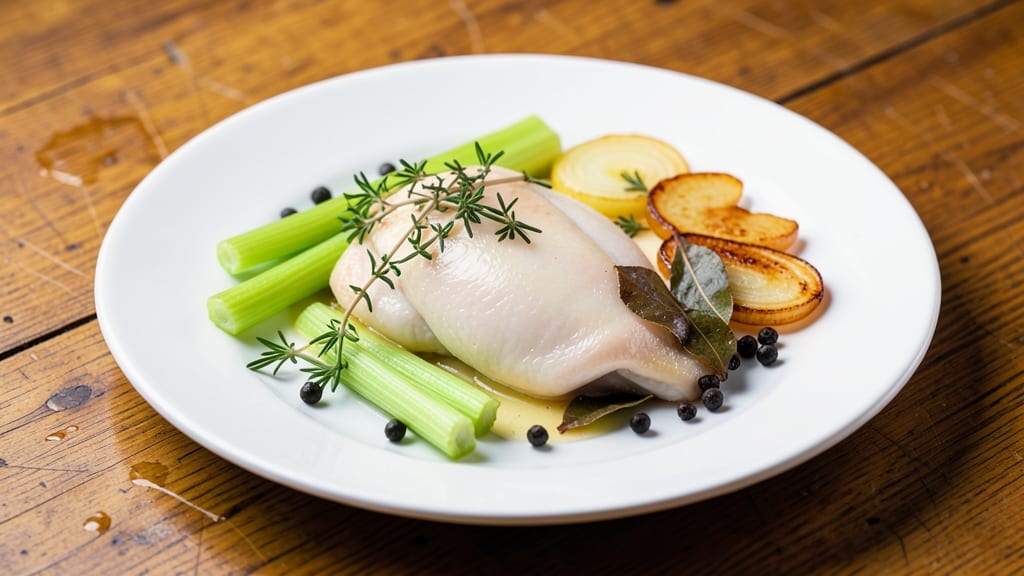
Gordon Ramsay’s poached chicken recipe delivers restaurant-quality results with tender, juicy meat infused with celery and herbs—no dryness, no guesswork, just precision. I first mastered this technique during my apprenticeship under Master Chef Chen, where we perfected the balance between gentle heat and aromatic clarity.
The secret lies in the simmering broth, where celery, bay leaves, and thyme transform simple chicken into something extraordinary.
What sets this recipe apart is the foolproof method that ensures perfectly poached chicken every time. You’ll start with a flavorful broth base—celery, onions, and herbs simmered until fragrant—then add chicken breasts for a tender, juicy finish.
The key is maintaining a gentle simmer, never a boil, to keep the meat moist and delicate. This recipe is ideal for weeknight dinners or elegant gatherings, offering a refined yet approachable dish.
By the end, you’ll have golden, perfectly cooked chicken with a velvety texture and aromatic depth that rivals any restaurant dish. The broth can even be repurposed for soups or sauces, minimizing waste and maximizing flavor.
Serve with buttery mashed potatoes or a crisp green salad for a complete meal that impresses without the fuss.
This method works beautifully with thighs or breasts, and the technique scales effortlessly for larger gatherings. Whether you're feeding a family or hosting dinner guests, the results are consistently exceptional. Let’s get started—your taste buds will thank you.
Ingredients for gordon ramsay poached chicken
Celery-infused broth, aromatic herbs, and precise poaching transform simple chicken into restaurant-quality perfection.
| Ingredient | Amount | Notes |
|---|---|---|
| Boneless, Skinless Chicken Breasts 🍗 | 1 ½ lb | Even thickness preferred, pounded to 1/4-inch |
| Fresh Celery Stalks 🧅 | 4 whole | Trimmed, cut into 2-inch pieces |
| Yellow Onion 🧅 | 1 whole | Peeled, halved lengthwise |
| Fresh Thyme Sprigs 🌿 | 4 whole | Stems attached for easy removal |
| Bay Leaves 🍃 | 2 whole | High-quality dried or fresh |
| Black Peppercorns 🌶️ | 10 whole | Freshly cracked for intensity |
| Diamond Crystal Kosher Salt 🧂 | 1 ½ tsp | Adjust to taste, don't oversalt |
| Extra-Virgin Olive Oil 🫒 | 2 tbsp | For gentle simmering, not frying |
| Cold Water 💧 | 4 cups | Filtered preferred for clarity |
| Lemon Wedges 🍋 | 2 whole | For finishing, optional garnish |
| Fresh Parsley 🌿 | ¼ cup | Chopped, for garnish |
The chicken breasts are non-negotiable—look for evenly sized pieces at Whole Foods or your local butcher shop. Pounding them to an even thickness ensures perfect doneness. Fresh celery and thyme make all the difference here; Trader Joe's has great organic bundles, but any vibrant green celery works. The bay leaves? Penzeys sells them in little tins, but the grocery store dried ones are fine too. Just make sure they're not ancient—freshness matters for that subtle aroma. The olive oil should be extra-virgin—none of that cheap stuff that burns easily. I always double-check the expiration date on my peppercorns too; stale pepper loses its punch.
No fresh thyme? Dried works at half the amount, but it won't have that same bright herbal note. Running low on bay leaves? Substitute 1 tsp dried thyme plus 1 tsp dried oregano—close enough for a weeknight. The celery can be swapped for fennel if you're feeling fancy, though it'll change the flavor profile slightly. For the water, filtered is best—tap water with chlorine can make the broth taste off. And if you're worried about the chicken staying submerged, add a few ice cubes to the water before heating. The lemon wedges are optional but add a nice bright finish—skip them if you're serving with a citrusy sauce instead.
This broth keeps 3-4 days in the fridge and freezes beautifully for up to 3 months. I always make extra because it's perfect for soups or sauces later. The poached chicken reheats well too—just warm it gently in the broth on low heat. For serving, I like to arrange the chicken on a platter with the parsley scattered over top and the lemon wedges on the side. The broth can be strained and reduced for a quick pan sauce—just simmer it down until it's syrupy. Leftovers? Store everything in airtight containers, and the chicken stays tender for 3-4 days in the fridge.
Why You'll Love This Recipe
- No-Fuss Simplicity: I swear, this recipe is the kind of dinner that lets me pretend I’m a chef while actually doing minimal work. Just a pot, some water, and those celery stalks and thyme sprigs—no fancy gadgets, no stress.
- Ridiculously Good Flavor: The bay leaves and thyme? Oh, they infuse the chicken with this subtle, aromatic depth that makes it taste like it’s been simmering for hours. (Spoiler: it’s not—it’s just that good.)
- Weeknight to Fancy Table: Between us, this is my go-to for when I have friends over but don’t want to slave away in the kitchen. The poached chicken looks elegant, but honestly? It’s just chicken in broth—no one has to know.
- Leftovers That Don’t Suck: I make a double batch on Sundays because the flavor only gets better the next day. Shred it for tacos, slice it for salads, or just reheat it straight up—it’s always a win. (Yes, even on a Tuesday night.)
Step-by-step instructions for poached chicken with celery and herbs
Here's how to achieve crystal-clear poaching liquid and perfectly tender chicken every time.
Prepare the Poaching Aromatics
In a large, deep skillet or pot, combine the 4 whole fresh celery stalks (trimmed and cut into 2-inch pieces), 1 whole yellow onion (peeled and halved lengthwise), 4 whole fresh thyme sprigs, 2 whole bay leaves, and 10 whole black peppercorns. This aromatic bundle forms the flavor foundation for your poaching liquid.
Add the 2 tablespoons extra-virgin olive oil and place the skillet over medium heat. Cook for 5-7 minutes until the vegetables begin to soften and release their fragrance. You'll notice the celery and onion turning translucent and the thyme leaves darkening slightly—this is when they're ready for the next step.
Here's the thing—don't let the vegetables brown. You want them to infuse the liquid gently, not burn. If they start to darken too quickly, reduce the heat slightly. The goal is a subtle, herbal aroma that permeates the poaching liquid without bitterness.
Poach the Chicken to Perfect Tenderness
Add the 1.5 pounds boneless, skinless chicken breasts (pounded to ¼-inch thickness) to the skillet along with the 4 cups cold water and 1.5 teaspoons diamond crystal kosher salt. The water should cover the chicken completely—if not, add a bit more cold water.
Bring the liquid to a gentle simmer over medium-low heat. The key here is maintaining a barely simmering state—you should see tiny bubbles breaking the surface but no vigorous boiling. If it boils vigorously, reduce the heat immediately. Vigorous boiling can make the chicken tough.
Poach the chicken for 12-15 minutes, depending on thickness. You'll know it's done when the chicken reaches an internal temperature of 165°F and a knife slides in easily with no resistance. The poaching liquid should remain clear, not cloudy—this indicates proper technique.
Finish and Rest for Maximum Juiciness
Remove the chicken from the poaching liquid using a slotted spoon and transfer it to a clean plate. Let it rest for 5 minutes before slicing. This resting period allows the juices to redistribute throughout the meat, ensuring each bite remains moist and tender.
While the chicken rests, you can strain the poaching liquid if you'd like to use it as a sauce or broth later. Alternatively, simply discard the aromatic vegetables and peppercorns. The liquid should have a delicate herbal aroma with subtle notes of celery and thyme.
To serve, slice the chicken against the grain for maximum tenderness. Garnish with the 2 whole lemon wedges and 0.25 cup fresh parsley for brightness and freshness. The result should be chicken with a delicate, herbal flavor and a perfectly clear, fragrant poaching liquid.
Pro Tips For Making Gordon Ramsay Poached Chicken
- Trim the Celery Right: Cut the celery into 1-inch chunks—no smaller, or it’ll turn to mush and cloud the broth. I used to slice it thin like a salad, and the poaching liquid ended up murky instead of clear and aromatic.
- Salt the Chicken First: Season the chicken breasts before they hit the pot—generously, with at least 1 teaspoon of salt per pound. I learned this the hard way: poaching without pre-salting leaves the meat bland, no matter how long you simmer.
- Don’t Boil the Broth: Keep the liquid at a gentle simmer—tiny bubbles breaking the surface, never a rolling boil. After burning two batches, I finally got it: too much heat turns the chicken rubbery and the aromatics bitter.
- Use Double the Thyme: Tuck in three sprigs per quart of liquid, not one. Fresh thyme’s flavor is subtle—you need the volume to cut through the onion and celery. (Yes, even if it looks like overkill.)
Serving suggestions for leftovers
Elegant Plating
Slice your poached chicken against the grain into ¼-inch thick pieces for maximum tenderness. Arrange them on a white porcelain platter—I love my vintage Wedgwood pieces from Charleston antique shops—to highlight the golden color.
Scatter the fresh parsley over the chicken like confetti, then place the lemon wedges at each corner for a pop of color. The clear poaching liquid can be drizzled lightly around the platter for an extra touch of sophistication. 💫
Classic Side Pairings
Buttery mashed potatoes with crème fraîche and chives are my go-to side—their creaminess contrasts beautifully with the delicate chicken. For a lighter option, serve with a warm arugula salad**> tossed in lemon vinaigrette and topped with toasted pine nuts.
The peppery greens cut through the richness while keeping the meal balanced. I often make a double batch of the poaching liquid and reduce it by half to create a velvety sauce for drizzling over both sides.
Bread Service
A warm, crusty baguette or sourdough loaf is essential for soaking up any extra poaching liquid or sauce. I like to serve it in a bread basket lined with a linen napkin, lightly brushed with garlic-infused olive oil.
The crust should be crisp enough to stand up to the tender chicken. For an extra touch, sprinkle flaky sea salt over the bread before serving—it enhances all the flavors in the meal.
Wine Recommendations
A crisp Sauvignon Blanc from New Zealand or Loire Valley is my top choice—its citrusy notes complement the herbal poaching liquid beautifully. For red wine lovers, a light Pinot Noir from Oregon offers enough acidity to balance the dish without overpowering it.
I always open the bottle 30 minutes before serving to let it breathe, especially with white wines. A chilled Sparkling Rosé also works wonderfully for a festive touch.
Make-Ahead Garnishes
Prep your garnishes ahead of time to streamline serving. Chop the fresh parsley and store it in an airtight container in the fridge for up to 3 days. Keep the lemon wedges in a sealed container in the refrigerator as well—they stay fresh and ready to use.
For extra convenience, make a quick herb butter by mixing softened butter with finely chopped parsley and thyme, then shape it into logs and chill until firm. Serve it alongside the chicken for guests to spread on their bread.
Presentation for Special Occasions
For dinner parties, elevate your presentation by serving the chicken on a slate board or in individual ceramic ramekins. Garnish with a sprig of fresh thyme and a tiny edible flower—I love using nasturtiums from my garden—for a restaurant-worthy touch.
The poaching liquid can be strained and reduced into a glossy sauce, then piped artistically around the platter. Don't forget to set the table with cloth napkins and polished silverware to complete the elegant experience. ✨
Nutrition facts
Frequently asked questions
Can I use chicken thighs instead of breasts in this recipe?
Chicken thighs work beautifully—they stay juicier and more forgiving during poaching. Increase cooking time to 18-22 minutes for 1-inch thick thighs until they reach 175°F internally. The skin will crisp slightly when poached, adding extra texture. Just remove the skin before serving if you prefer a cleaner presentation.
Why does my poaching liquid turn cloudy?
Cloudiness usually means the liquid boiled too vigorously, causing proteins to break down. Keep heat at a gentle simmer—tiny bubbles, no rolling boil. For crystal-clear results, strain the liquid through a fine-mesh sieve after poaching. If using cold water, start with 4 cups and add 1 cup ice cubes to lower the temperature gradually.
How can I repurpose the poaching liquid?
This aromatic broth is a flavor powerhouse! Strain it and reduce by half for a silky pan sauce—perfect over mashed potatoes or rice. Or use it as a base for soups, risottos, or even a quick pasta sauce. For extra richness, whisk in 2 tablespoons butter and a splash of lemon juice at the end. Store leftovers in the fridge for 3-4 days or freeze for 3 months.
What’s the best way to store leftover poached chicken?
Store cooked chicken in an airtight container with a splash of the poaching liquid to keep it moist. Refrigerate for 3-4 days or freeze for up to 3 months. To reheat, warm gently in the broth over low heat—never microwave directly. For sandwiches, slice thinly and layer with avocado or herb butter to restore juiciness.
Can I make this recipe in a slow cooker?
Yes! Follow the same steps but transfer everything to a slow cooker after sautéing the aromatics. Cook on low for 2-3 hours or high for 1.5 hours, ensuring the liquid stays at a bare simmer. The slow cooker’s gentle heat ensures tender chicken, but monitor closely—overcooking can make it dry. Strain the liquid afterward for the best results.