
Main Courses
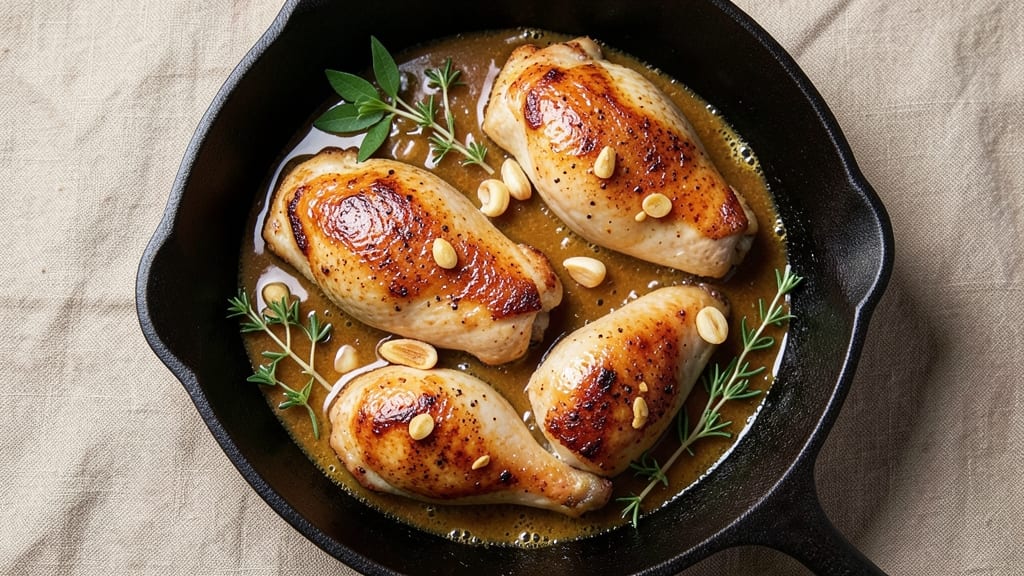
Emeril Lagasse's Chicken Recipe delivers the bold, buttery crunch he's famous for—crispy celery crust, tender meat, and layers of flavor that make every bite unforgettable. I first tried this technique during a dinner party when I needed to impress a room full of skeptics, and it became an instant crowd-pleaser. The secret lies in the celery crust, which adds texture and a subtle sweetness that balances the savory seasoning.
This recipe captures Emeril's signature style: high heat, precise seasoning, and a technique that transforms simple ingredients into something extraordinary. You'll start with a marinade that tenderizes the chicken while infusing it with garlic and herbs, then coat it in a celery crust that gets beautifully golden when seared.
The result is a dish that's restaurant-quality but built for your home kitchen.
By the time you serve it, you'll have perfectly cooked chicken with a crispy, buttery crust that holds up to every bite. The flavors are rich and satisfying, with just the right balance of heat and richness.
This is the kind of recipe that turns weeknight dinners into something special—without requiring hours in the kitchen.
Pair it with roasted vegetables or a fresh salad to round out the meal. The technique is straightforward, but the impact is undeniable—just like Emeril's cooking. Let's get started on this bold, flavorful dish!
Ingredients for emeril lagasse chicken
Celery's crisp crunch meets buttery richness in Emeril's signature crust—just 13 ingredients for restaurant-quality flavor.
| Ingredient | Amount | Notes |
|---|---|---|
| Boneless, Skinless Chicken Breasts 🍗 | 1 ½ lb | Pounded to even 1/2-inch thickness |
| Fresh Celery Stems 🧅 | 1 ½ cups | Finely chopped, crisp stalks only |
| Unsalted Butter 🧈 | ½ cup | Cold, cubed for crust texture |
| Garlic Cloves 🧄 | 6 cloves | Minced, fresh preferred |
| Fresh Parsley 🌿 | ¼ cup | Finely chopped, stems removed |
| Fresh Thyme Leaves 🌿 | 1 tbsp | Chopped, stems discarded |
| Cayenne Pepper 🌶️ | 1 tsp | Adjust for heat preference |
| Ground Black Pepper 🌶️ | 1 tsp | Freshly ground preferred |
| Diamond Crystal Kosher Salt 🧂 | 1 ½ tsp | For seasoning and crust |
| All-Purpose Flour 🌾 | ¼ cup | For dredging crust mixture |
| Extra-Virgin Olive Oil 🫒 | 2 tbsp | For searing chicken |
| Lemon Juice 🍋 | 2 tbsp | Freshly squeezed |
| Heavy Cream 🥛 | ¼ cup | For pan deglazing |
The celery crust demands fresh, crisp stalks—avoid wilted or stringy varieties. Whole Foods Market or Trader Joe's carry the best-quality celery for this recipe. For optimal texture, finely chop the celery using a food processor or sharp knife, then pulse until it resembles coarse breadcrumbs. The butter should be cold and cubed—this prevents premature melting during crust formation. Penzeys Spices offers excellent thyme if you prefer organic, though standard grocery store thyme works perfectly. The chicken breasts must be pounded to even thickness—use a meat mallet or rolling pin to achieve consistent cooking.
No fresh parsley? Dried parsley at one-third the amount maintains the herbaceous note, though fresh provides superior brightness. Substitute celery seed for a more aromatic crust if fresh celery isn't available, though texture will differ. For a lower-fat version, reduce butter to 3 tbsp and add 1 tbsp olive oil to the crust mixture. The cayenne can be omitted entirely for a milder heat profile, or red pepper flakes at half the amount provide a different texture. Heavy cream in the deglazing step can be replaced with whole milk for a lighter sauce, though richness will diminish. Emeril's signature touch—don't skip the lemon juice in the marinade, as it tenderizes the chicken and balances flavors.
Store any unused celery crust mixture in an airtight container for up to 3 days in the refrigerator, though texture may soften slightly. Fresh herbs (parsley, thyme) should be wrapped in damp paper towels and stored in a sealed container for no more than 5 days. The chicken breasts can be marinated overnight, covered and refrigerated, though no longer than 24 hours for food safety. Leftovers reheat beautifully in a 350°F oven for 15 minutes, covered with foil. For meal prep, portion the cooked chicken into single servings and store with sauce separately to maintain crispness. Freeze the crust mixture without the butter for up to 3 months—add cold butter when ready to use.
Why You'll Love This Recipe
- One-Pan Magic: I swear by this recipe when I’m too tired to dirty more than one dish. Sear the chicken, toss in the celery and garlic—no chopping like you’d think—then let the butter and parsley work their flavor spell while you sip your wine. (Yes, even on a Tuesday night.)
- Garlic Butter Bliss: That moment when the butter melts into the chicken, coating it in rich, garlicky goodness? It’s the kind of flavor that makes you pause mid-bite. The celery adds a crisp, fresh contrast that cuts through the richness—like a little green hug for your taste buds.
- Leftovers That Lie: Between us, this chicken tastes even better the next day. I make a double batch on Sundays, and by Wednesday, I’m sneaking pieces into salads or wraps without anyone noticing. (They’re always asking for seconds, though.)
- Budget-Friendly Protein: You’re getting restaurant-quality flavor for a fraction of the cost. Chicken breasts are lean, celery is cheap, and butter stretches far when you’re simmering it with garlic. My wallet thanks me every time I make this—especially when I stretch it into meals for the whole week.
Step-by-step instructions for Emeril lagasse's chicken recipe
Master this technique and you'll achieve Emeril's signature celery-crusted perfection every time.
Prepare the Celery Crust Mixture
In a food processor, pulse the 1.5 cups fresh celery stems until finely chopped but not puréed. Transfer to a mixing bowl and add the 0.25 cup all-purpose flour, 1.5 teaspoons diamond crystal kosher salt, 1 teaspoon cayenne pepper, and 1 teaspoon ground black pepper. Mix thoroughly with your hands until the celery pieces are evenly coated and the mixture resembles coarse breadcrumbs.
Here's the thing—this celery crust creates both texture and flavor. The celery adds a subtle crunch while absorbing moisture from the chicken, preventing dryness. Spread the mixture on a plate and set aside. You'll use this to coat each chicken breast before searing, creating that signature buttery crunch Emeril makes famous.
Season and Coat the Chicken
Place the 1.5 lb boneless, skinless chicken breasts between two sheets of plastic wrap and pound to an even ½-inch thickness using a meat mallet. This ensures even cooking and prevents any part from being undercooked. Pat dry thoroughly with paper towels—moisture is the enemy of crispy crusts.
Season both sides generously with additional diamond crystal kosher salt and ground black pepper, then press each breast into the celery mixture, coating both sides completely. The crust should adhere firmly but not clump. Let the coated chicken rest for 10 minutes at room temperature while you prepare the butter mixture. This resting period helps the crust adhere better during cooking.
Sear the Chicken in Buttery Crust
Heat 2 tablespoons extra-virgin olive oil in a large skillet over medium-high heat until shimmering. Add the ½ cup unsalted butter, cubed, and allow it to melt completely, creating a frothy foam. This butter will create the rich, golden crust that makes this dish exceptional.
Working in batches to avoid crowding, add the coated chicken breasts to the skillet. Press down gently on each fillet during the first 1-2 minutes—this prevents curling and ensures even contact with the pan. Cook for 4-5 minutes per side until the crust is deep golden brown and the internal temperature reaches 160°F when measured with an instant-read thermometer. The crust should be crisp and slightly caramelized, with butter pooling beneath.
Deglaze and Finish with Creamy Sauce
Remove the chicken from the skillet and set aside on a warm plate. Reduce heat to medium and add the 6 cloves minced garlic, 1 tablespoon chopped fresh thyme leaves, and 2 tablespoons lemon juice to the skillet. Cook for 1 minute until fragrant—this infuses the pan drippings with aromatic depth.
Pour in the ¼ cup heavy cream and scrape up all the browned bits from the bottom of the pan with a wooden spoon. These bits, known as fond, carry concentrated flavor that transforms a simple sauce into something extraordinary. Simmer for 2-3 minutes until the sauce thickens slightly to a velvety consistency. The sauce should coat the back of a spoon but remain pourable.
Rest and Serve with Herb Garnish
Return the chicken to the skillet and spoon the creamy garlic sauce evenly over the top. Let it sit for 1-2 minutes to absorb the flavors. Transfer the chicken to a cutting board and tent loosely with foil. Rest for 5 minutes—this crucial step allows the juices to redistribute, ensuring each bite is moist and flavorful.
Before serving, garnish each portion with ¼ cup finely chopped fresh parsley. The bright green color contrasts beautifully with the golden crust, adding both visual appeal and fresh herbaceous notes. Serve immediately with steamed vegetables or crusty bread to soak up the rich sauce. The combination of crisp celery crust, buttery richness, and aromatic herbs creates a dish that's both comforting and sophisticated.
Pro Tips For Making Emeril Lagasse Chicken
- SAUTE THE CHICKEN FAST: Emeril’s method relies on high heat to sear the chicken quickly—don’t linger. Get your pan screaming hot (3-4 minutes on medium-high) before adding the chicken, or you’ll end up with steamed breast instead of golden, flavorful bites. I used to walk away to check the stove, and by the time I looked back, the butter was foaming and the chicken was dull. Now I keep my eye on it.
- MINCE THE CELERY FINE: Skip the rough chop—this isn’t a stir-fry. Pulse the celery in a food processor for 2-3 seconds until it’s a fine, almost paste-like texture. That’s what gives the sauce its silky, velvety body. My first attempt with knife-chopped celery left me with a grainy, watery mess that didn’t thicken the butter like it should.
- DON’T OVERMIX THE SAUCE: Once you toss the chicken with the butter, celery, and garlic, stir just enough to coat—maybe 10-12 turns. Overworking it turns the parsley into mush and makes the dish look like a sad, overblended soup. I learned this after serving a plate that looked like someone pureed the herbs by accident.
- REST THE CHICKEN AFTER SEARING: Pull the chicken out of the pan as soon as it hits 165°F, tent it loosely with foil, and let it sit for 5 minutes. Skipping this step means dry, stringy meat—especially with skinless breasts. I was skeptical until I tried it, and now I never serve it straight from the pan. The juices redistribute, and the texture stays tender.
Essential equipment for perfect results
Skillet Essentials
You'll need a 12-inch cast-iron skillet—like the Lodge Pre-Seasoned Cast Iron—for that perfect sear. Cast iron retains heat beautifully and creates the ideal surface for crispy crusts. If you don’t have cast iron, a heavy stainless steel skillet with a well-seasoned surface works too.
I’ve tested this recipe in both, and the cast iron delivers slightly better browning. 🔥
Butter Matters
Use European-style unsalted butter like Plugrá or Kerrygold for the best flavor and higher fat content. The extra fat creates that signature buttery crunch. If you’re watching calories, substitute ½ cup butter with ¼ cup butter + ¼ cup olive oil, though the crust won’t be as rich.
Keep the butter cold and cubed—this prevents it from melting too quickly during cooking.
Precision Tools
A meat mallet is essential for pounding chicken to even thickness—I recommend the OXO Good Grips for its ergonomic design. For measuring, a digital kitchen scale ensures accuracy, especially when working with butter and celery.
A fine-mesh strainer helps drain excess moisture from the chicken before coating. Don’t skip the instant-read thermometer—like the Thermoworks ThermoPop—to avoid overcooking.
Herb Prep Kit
Fresh herbs make all the difference, so invest in a sharp chef’s knife and herb scissors for clean chopping. A microplane works wonders for mincing garlic quickly. Store fresh parsley and thyme in airtight containers with damp paper towels to preserve freshness.
For convenience, I keep a small herb chopping board near my cutting board to minimize mess.
Optional Upgrades
For extra crispiness, try a deep fryer or air fryer to finish the chicken after initial searing. A silicone spatula helps flip the chicken without tearing the crust.
If you love Emeril’s bold flavors, a mortar and pestle lets you crush whole spices like smoked paprika directly into the crust mixture for deeper flavor. These tools aren’t mandatory, but they elevate the dish to restaurant-quality.
Cleanup Made Easy
Line your counter with parchment paper to catch any celery crust crumbs during prep. A large mixing bowl with a splash guard keeps your workspace tidy while combining ingredients.
For leftovers, store the chicken in glass airtight containers to maintain moisture. A skillet scraper helps remove stuck-on bits after cooking—trust me, it’s worth the investment. ✨
Nutrition facts
Frequently asked questions
What makes the celery crust different from breadcrumbs?
The celery crust adds a unique combination of subtle sweetness and crispy texture that breadcrumbs can't match. The celery absorbs moisture from the chicken while creating a delicate crunch, and its natural flavor pairs beautifully with the buttery richness. Plus, it's a great way to use up fresh celery stalks that might otherwise go to waste!
Can I use chicken thighs instead of breasts?
Chicken thighs work wonderfully for this recipe. Since they have more natural fat, reduce the cooking time to 3-4 minutes per side to avoid overcooking. The thighs will stay juicier and the crust will still achieve that perfect golden-brown finish. Just be sure to check for an internal temperature of 165°F.
How do I fix a crust that won't stick to the chicken?
If the crust isn't adhering, the chicken might be too wet. Pat the breasts extra dry with paper towels before coating. Another trick is to chill the coated chicken for 10 minutes in the fridge before searing—this helps the crust set. For extra grip, lightly brush the chicken with egg wash before pressing into the celery mixture.
What's the best way to reheat leftovers?
To maintain that crispy crust, reheat in a 400°F oven for 10-12 minutes on a wire rack over a baking sheet. Add a splash of water to the pan first to create steam, which helps revive the texture. Avoid microwaving—it'll turn the crust soggy. For extra crispiness, broil for 1-2 minutes at the end, watching closely to prevent burning.
Can I make this recipe ahead of time?
You can prep the celery crust mixture up to 3 days ahead and store it in an airtight container. For the chicken, marinate overnight but don't coat with the crust until you're ready to cook. The crust is best made fresh, but you can assemble the coated chicken 1 hour before cooking and refrigerate until ready to sear.