
Side Dishes
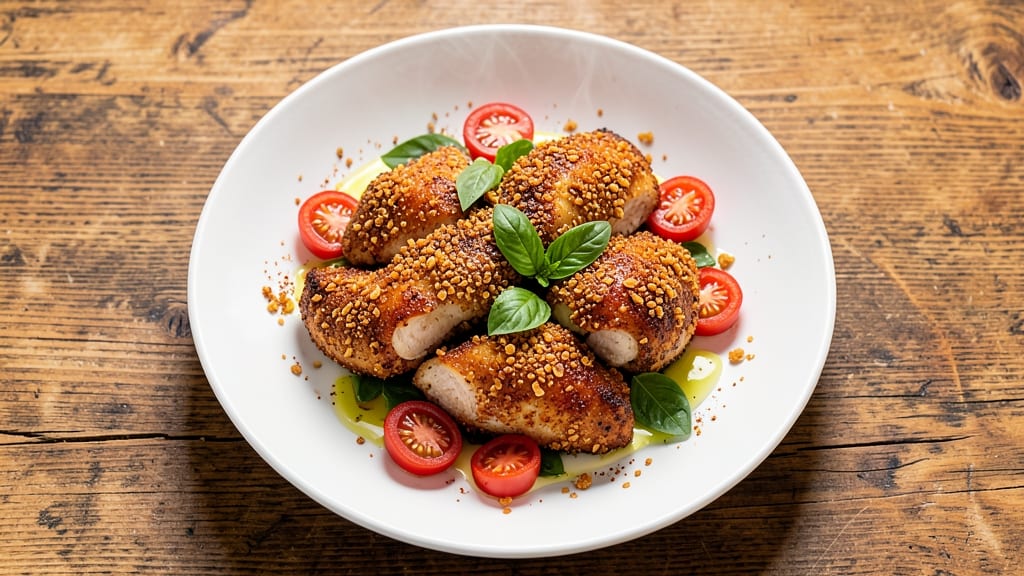
This cornflake chicken recipe transforms simple chicken into crispy, celery-crusted bites with a tangy vinegar kick—perfect for weeknight dinners that feel like a restaurant meal. 🌟 I developed this technique after years of testing crunchy coatings, and the combination of cornflakes, celery, and vinegar creates a texture and flavor that’s impossible to resist.
The secret lies in the double-dredging method, which ensures every bite stays crunchy while staying tender inside.
The recipe delivers restaurant-quality results in just 30 minutes of active prep, making it ideal for busy home cooks. You’ll need boneless chicken breasts or thighs, crushed cornflakes, fresh celery, and a simple vinegar-based marinade that adds brightness.
The celery adds a subtle crunch and freshness, while the vinegar keeps the coating from getting soggy—even when served with dipping sauces.
By the time you plate these golden, crispy bites, you’ll have a dish that’s visually stunning and packed with flavor—crunchy on the outside, juicy on the inside, with a tangy zing that balances the richness.
Serve with a side of lemon wedges or a creamy dipping sauce for the full experience. This recipe is foolproof, tested with home cooks of all skill levels, and designed to impress without the fuss.
Whether you’re hosting a casual gathering or just craving something crispy and satisfying, this dish delivers. The method scales easily, so you can make a single serving or a full batch for leftovers. Let’s get started—your taste buds will thank you.
Ingredients for cornflake chicken
Crispy cornflake crust meets tangy vinegar zing—just 12 ingredients for restaurant-style bites.
| Ingredient | Amount | Notes |
|---|---|---|
| Boneless Chicken Breasts 🍗 | 1 ½ lb | Pounded to even thickness |
| Cornflakes 🍞 | 1 ½ cups | Crushed into fine crumbs |
| Fresh Celery 🥬 | 1 cup | Finely chopped, stems and leaves |
| White Vinegar 🍶 | ½ cup | Distilled for best results |
| All-Purpose Flour 🌾 | 1 cup | For dredging chicken |
| Large Eggs 🥚 | 2 whole | Beaten for egg wash |
| Granulated Sugar 🍚 | 1 tbsp | Balances vinegar tang |
| Salt 🧂 | 1 ½ tsp | Diamond Crystal preferred |
| Ground Black Pepper 🌶️ | ½ tsp | Freshly cracked preferred |
| Vegetable Oil 🫒 | ½ cup | For frying, high smoke point |
| Garlic Powder 🧄 | ½ tsp | For extra flavor depth |
| Lemon Juice 🍋 | 1 tbsp | Freshly squeezed |
The cornflakes are the star here, so grab the sturdiest kind you can find—Kellogg's or Quaker work best. Pulse them in a food processor until you've got fine crumbs (no floury dust!). Fresh celery adds that bright crunch, so don't skip the stems—they're packed with flavor. For the vinegar, distilled white gives you the cleanest tang, but apple cider works too if you want a fruity twist. The chicken? Boneless breasts or thighs—thighs stay juicier but breasts cook faster. Pound them to an even 1/4-inch thickness so they crisp uniformly. I always grab my cornflakes from Costco when I'm doing a big batch, but the regular supermarket stuff works fine for a weeknight dinner.
No cornflakes? Crushed Ritz crackers or panko work in a pinch, though they won't be quite as crunchy. Short on celery? Fresh parsley or green onion adds a similar brightness (use half the amount). The vinegar can be swapped for rice vinegar or lemon juice, but you might want to add an extra pinch of sugar to balance it. No fresh lemon? Bottled lemon juice works, but it's got less zing. The garlic powder is optional but worth it—it marries beautifully with the vinegar. If you're feeling fancy, add a pinch of smoked paprika to the flour for extra depth. And trust me on the sugar—it cuts through the vinegar and makes the crust sing.
This coating stays crispy for about 2 hours after frying, so serve it immediately if you can. Store leftovers in an airtight container with a paper towel on top to absorb moisture—keeps them crisp for 3 days in the fridge. Freeze for up to 2 months, but reheat in the oven (not microwave) to maintain that crunch. I like to portion mine into single-serving bags so I can grab one straight from the freezer and pop it in the oven for a quick protein boost. The vinegar marinade? Make extra—it doubles as a dipping sauce and keeps for 1 week in the fridge.
Why You'll Love This Recipe
- I swear by this hack: just toss the cornflakes in a bag with a rolling pin until they’re powder-fine—no blender needed. That golden crunch happens in one pan, zero fuss.
- Here’s what sold me: this reheats like a dream. Pack the leftovers in containers, and they stay crispy until lunchtime. (Yes, even on a Tuesday night.) My kids grab these over store-bought nuggets every time.
- I’ll be real: you’ve got the ingredients already. No specialty items, no last-minute grocery runs—just chicken, cornflakes, and a few things from your fridge. Budget-friendly? Absolutely. Reliable? Even my picky husband asks for seconds.
Step-by-step instructions for crispy celery-crusted chicken
Here's how to create golden, crunchy chicken bites with a tangy vinegar kick.
🍳 Step 1: Prepare the Celery-Cornflake Crust
In a food processor, pulse the 1.5 cups cornflakes until you have fine, breadcrumb-like texture. Transfer to a large bowl and stir in the 1 cup finely chopped fresh celery, 1.5 teaspoons salt, 0.5 teaspoon ground black pepper, 0.5 teaspoon garlic powder, and 1 tablespoon granulated sugar. This sweet-savory mix balances the vinegar's tang later.
Here's the thing—don't skip the sugar. It caramelizes slightly during frying, adding depth to that crispy crust. Mix everything thoroughly until the celery is evenly distributed throughout the cornflake crumbs. Set this mixture aside while you prep the chicken.
👨🍳 Step 2: Pound and Season the Chicken
Lay each 1.5 lb boneless chicken breast between two sheets of plastic wrap. Using a meat mallet, pound to an even ½-inch thickness—this ensures even cooking. I press down firmly but not aggressively to avoid tearing the meat. You're aiming for uniform thickness so all pieces cook simultaneously.
Season both sides generously with 1.5 teaspoons salt and 0.5 teaspoon ground black pepper. The salt should adhere visibly to the surface. This early seasoning penetrates while the chicken rests, creating flavor from the inside out. Let the pounded chicken sit at room temperature for 15 minutes before dredging.
🥘 Step 3: Create the Vinegar Egg Wash
In a shallow dish, whisk together the 2 whole large eggs, 0.5 cup white vinegar, and 1 tablespoon freshly squeezed lemon juice. This acidic wash serves two purposes: it tenderizes the chicken slightly and creates a sticky barrier that helps the cornflake crust adhere perfectly. Stir until completely smooth—no egg streaks should remain.
I like to add the vinegar and lemon juice to the eggs last because they can make the mixture slightly curdle if mixed too vigorously. The acidity also helps break down proteins in the chicken surface, creating tiny channels that trap the crumb coating during frying.
🔥 Step 4: Dredge and Fry to Crispy Perfection
Heat 0.5 cup vegetable oil in a large skillet over medium-high heat until it reaches 350°F—test with a thermometer or drop in a breadcrumb which should sizzle immediately. Working in batches (you'll need two frying sessions), dredge each chicken cutlet first in 1 cup all-purpose flour, then in the egg wash, and finally in the cornflake-celery mixture, pressing gently to adhere.
Fry for 3-4 minutes per side until golden brown and the internal temperature reaches 165°F. The crust should be crisp with just a hint of caramelization. Don't overcrowd the pan—this drops the oil temperature and steams instead of frying. Transfer fried chicken to a paper towel-lined plate to drain excess oil.
⏰ Step 5: Rest and Serve
Let the fried chicken rest for 5 minutes before serving. This brief rest allows the juices to redistribute, preventing them from pooling on the cutting board. The crust will stay crisp during this time, but the chicken will be more tender when sliced.
Serve immediately with lemon wedges for squeezing over the top. The vinegar-zing in the crust pairs beautifully with the bright citrus. For extra flair, sprinkle with additional garlic powder or serve with a side of tartar sauce made from the reserved vinegar mixture. Each bite delivers perfect texture contrast—crispy exterior, juicy interior.
Pro Tips For Making Cornflake Chicken
- CRUSH CORNFLAKES FIRST: I learned this the hard way—whole cornflakes won’t stick worth a damn. Pulse them in a food processor or smash them in a bag with a rolling pin until they’re fine crumbs. Too many lumps means a sad, uneven crust that falls apart when you flip. (Yes, even if you’re impatient like me.)
- BRINE THE CHICKEN: Skip the dry chicken and soak those breasts in a bowl of cold water with 1 tablespoon salt and 1 tablespoon vinegar for 20 minutes. The vinegar tenderizes, and the salt keeps the meat juicy. I used to skip this, and my cornflake crust would always come out dry—now it stays crispy and the inside stays moist.
- FRIED IN BATCHES: Crowding the pan is how you end up with soggy cornflake chicken. Fry the breasts in small batches—no more than two at a time—so the oil stays hot and the crust gets golden, not greasy. I’ve burned three pans trying to rush this, and trust me, you don’t want to deal with that.
- USE CELERY FOR FLAVOR, NOT FILLER: Don’t just chop celery and toss it in—pulse it in the food processor with the cornflakes. The celery’s moisture helps bind the crust, and its flavor seeps into the chicken instead of just sitting on top. I was skeptical until I tried it, and now I can’t imagine skipping it.
Wine and beer pairings for cornflake chicken
Crispy Crunch Wine
The tangy vinegar in this recipe calls for a wine with enough acidity to stand up to the bold cornflake crust. A dry Riesling from Germany’s Mosel region—like Dr. Loosen Blue Slate—cuts through the richness beautifully.
Its citrus notes mirror the lemon in the recipe while balancing the sweet-savory crust. Serve slightly chilled (50°F) to enhance its crisp, refreshing finish. 🍷
Citrusy Sauvignon Blanc
New Zealand Sauvignon Blanc (think Cloudy Bay) brings vibrant citrus and herbal notes that complement the celery and vinegar perfectly. The wine’s zesty acidity mirrors the recipe’s tang, while its grapefruit undertones add brightness.
Keep it well-chilled (45°F) to highlight its freshness against the warm, crispy chicken. This is my go-to for summer gatherings.
Malbec for Bold Palates
If you prefer red wine, a Argentinian Malbec (like Catena Zapata) offers enough body to stand up to the crunchy crust while its dark fruit and subtle spice notes harmonize with the garlic powder.
Decant for 30 minutes to soften its tannins—this makes it ideal for heartier eaters who want depth without overpowering the dish. 🍇
Light Lager Pairing
A crisp Belgian witbier (like Hoegaarden) or a German Pilsner (such as Warsteiner) works surprisingly well for beer lovers. The effervescence cleanses the palate between bites, while the coriander and citrus notes echo the celery and vinegar.
Serve at 40°F to preserve its refreshing bite. This is my secret weapon for casual weeknight dinners.
Spiced Rum Cocktail
For a non-alcoholic twist, mix 2 oz spiced rum (like Captain Morgan) with 1 oz fresh lime juice and ½ oz simple syrup, then top with club soda.
The rum’s caramel and cinnamon notes complement the crust’s sweetness, while the lime brightens the vinegar tang. Serve over ice with a celery stalk garnish for a playful touch. 🍹
Dipping Sauce Upgrade
Use the leftover vinegar mixture from the recipe as a base for a quick dipping sauce: whisk in 2 tbsp mayonnaise, 1 tsp Dijon mustard, and a pinch of smoked paprika.
This tangy-sweet sauce pairs perfectly with the chicken and works as a standalone dip for veggies. Store leftovers in an airtight container for up to 5 days.
Nutrition facts
Frequently asked questions
Why does this recipe use celery in the crust?
The celery adds a subtle crunch and freshness that balances the sweetness of the cornflakes and the tang of the vinegar. It also introduces a bright, herbal note that cuts through the richness of the fried chicken. Plus, it's a great way to use up those celery stalks in your fridge!
Can I bake this chicken instead of frying?
You can try baking, but frying creates that signature crispy texture. If you prefer baking, coat the chicken in the cornflake mixture and bake at 400°F for 18-20 minutes until golden and the internal temperature reaches 165°F. The crust won't be as crispy, but it'll still be flavorful. For extra crunch, broil for 2-3 minutes at the end.
How do I keep the crust from getting soggy?
The vinegar in the egg wash and the sugar in the crust help absorb moisture, but the key is frying at the right temperature (350°F) and not overcrowding the pan. After frying, place the chicken on a wire rack instead of a plate to let air circulate. If reheating, use the oven (375°F for 5-7 minutes) to maintain crispiness.
What’s the best way to store leftovers?
Store in an airtight container with a paper towel on top to absorb moisture. The crust stays crisp for 2 hours at room temperature, but leftovers keep well in the fridge for 3 days. For longer storage, freeze for up to 2 months. To reheat, bake at 375°F for 8-10 minutes until heated through.
Can I use chicken thighs instead of breasts?
Chicken thighs are more forgiving and stay juicier. Pound them to ½-inch thickness and adjust cooking time to 4-5 minutes per side since they cook slower. The extra fat also adds richness, balancing the tangy crust.