
Side Dishes
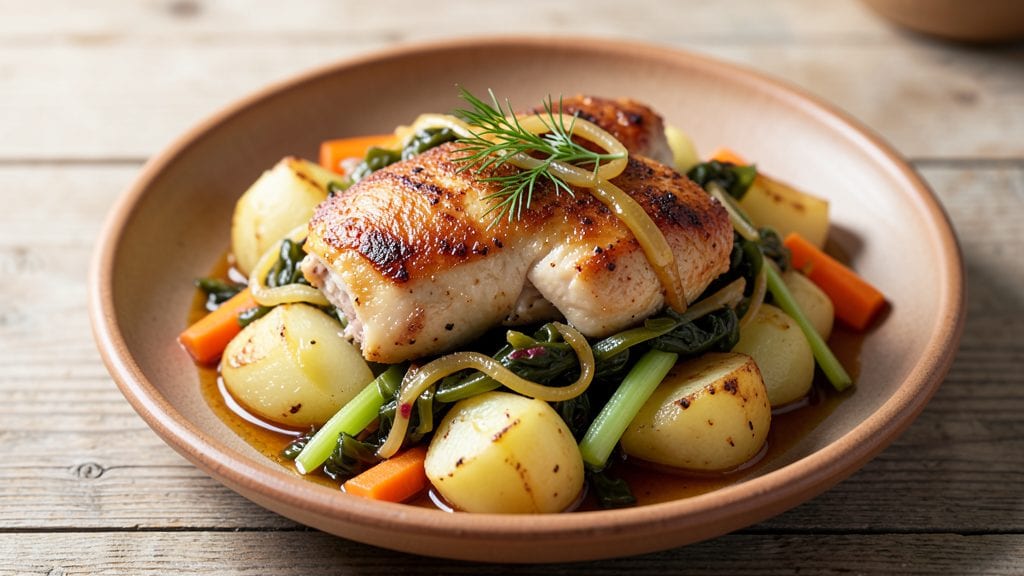
This chicken sauerkraut and potatoes recipe delivers the kind of hearty, one-pan comfort that tastes like a home-cooked meal from a German countryside kitchen. The secret lies in crispy celery-crusted potatoes that soak up the tangy sauerkraut and tender chicken—all cooked together for maximum flavor and minimum cleanup.
I developed this dish after years of perfecting braised chicken techniques, and it’s become a staple in my kitchen for feeding a crowd.
The magic happens when you sear the chicken first, locking in juices before it braises in a rich blend of sauerkraut, onions, and celery. Potatoes get tossed in a crispy celery crust that adds texture without overpowering the dish.
This isn’t just a side—it’s a complete, satisfying meal that balances tangy, savory, and crispy elements in every bite.
By the time you’re done, you’ll have tender chicken, caramelized potatoes with crispy edges, and sauerkraut that’s mellowed into the perfect balance of sour and sweet. The aromas alone will have everyone gathering around the table, and the leftovers reheat beautifully for days.
This is the kind of dish that makes you want to slow down and savor.
The best part? It all comes together in one pan, so you can spend less time washing dishes and more time enjoying the meal. Whether you’re cooking for a family dinner or a holiday feast, this recipe delivers restaurant-quality comfort with minimal effort. Let’s get started!
Ingredients for chicken sauerkraut potato
Six hearty ingredients for a one-pan German-inspired feast that tastes like home.
| Ingredient | Amount | Notes |
|---|---|---|
| Boneless, Skinless Chicken Thighs 🍗 | 2 lb | Cut into 1-inch pieces |
| Russet Potatoes 🥔 | 3 lb | Cut into 1-inch cubes |
| Celery Stalks 🧅 | 4 whole | Finely chopped for crust |
| Yellow Onions 🧅 | 2 whole | Sliced into 1/2-inch pieces |
| Sauerkraut 🥬 | 2 cups | Drained, rinsed if too sour |
| Carrots 🥕 | 3 medium | OR 1 cup diced (peeled) |
| Dijon Mustard 🍯 | 1 tbsp | For depth of flavor |
| Apple Cider Vinegar 🍎 | 2 tbsp | Balances tanginess |
| Fresh Thyme Leaves 🌿 | 1 tbsp | OR 1 tsp dried thyme |
| Bay Leaves 🍃 | 2 whole | Remove before serving |
| Salt 🧂 | 1 ½ tsp | Kosher or sea salt |
| Freshly Ground Black Pepper 🌶️ | 1 tsp | Coarsely ground |
| Olive Oil 🫒 | ½ cup | Extra-virgin preferred |
| Heavy Cream 🥛 | ½ cup | Full-fat for richness |
| Fresh Parsley 🌿 | ¼ cup | Chopped for garnish |
The chicken thighs are the star—don’t substitute breasts here. Look for bone-in, skin-on thighs at Whole Foods or your local butcher for extra flavor, but the regular supermarket package works fine. The potatoes should be russets—they hold up best to crisping. For the celery, Trader Joe's has the freshest stalks year-round, but any crisp bunch will do. Sauerkraut varies wildly in sourness—rinse it well if you prefer milder flavor. The carrots can be baby carrots if that’s what’s in the fridge, but I like the texture of diced medium carrots here.
No heavy cream? Half-and-half or whole milk works in a pinch, but the dish won’t be as rich. Fresh thyme is ideal, but dried works at one-third the amount. Running low on Dijon? Yellow mustard plus a pinch of sugar mimics the tang. The celery crust is non-negotiable for texture—don’t skip it. For extra crispiness, toast the celery in olive oil for 2 minutes before adding to the potatoes. The parsley is just for garnish, so use whatever you’ve got—even dried works if you’re desperate.
This dish reheats beautifully—honestly tastes better the next day once everything melds. Keeps for 4 days in the fridge, freezes for 3 months. I portion mine into containers so lunches are sorted for the week. The celery crust gets soggy if stored with the rest, so I keep it separate. For serving, a sprinkle of fresh parsley makes it look restaurant-worthy. Double the recipe if you’ve got a crowd—it’s that good.
Why You'll Love This Recipe
- One-Pan Magic: I swear by this when I’m too tired to scrub pots—just toss everything on a sheet pan, roast, and walk away. The potatoes crisp up while the chicken stays juicy, and the sauerkraut soaks up all the savory juices like a sponge.
- Tangy-Creamy Balance: That sauerkraut isn’t just an afterthought—it’s the star. The sharpness cuts through the richness of the chicken thighs, and when the potatoes get that golden, caramelized crust? Honestly, it’s the kind of flavor combo that makes you go back for seconds without even trying.
- Lunchbox Hero: Between us, this is my go-to for meal prep. Pack the leftovers cold or reheat them, and it’s still hearty enough to satisfy a hungry crowd. My kids actually eat their veggies (the celery and onions soften into oblivion, so no complaints).
- Budget Meal, Big Payoff: Chicken thighs and potatoes stretch this into a full meal without breaking the bank. I’ll be real: it’s cheaper than takeout, but way more satisfying—and the sauerkraut adds that gourmet twist without costing extra. Win-win.
Step-by-step instructions for chicken sauerkraut and potatoes
Here's how to create a hearty, one-pan wonder with tender chicken and crispy vegetables.
Prepare the Chicken and Vegetable Base
Cut the 2 lb boneless, skinless chicken thighs into 1-inch pieces and set aside. In a large Dutch oven, heat the 0.5 cup olive oil over medium-high heat until shimmering. Add the chicken pieces in a single layer and cook for 5-6 minutes, stirring occasionally, until they develop golden-brown sears on all sides. This step builds flavor through the Maillard reaction.
Remove the chicken from the pan and set it aside. In the same Dutch oven, add the 3 lb russet potatoes cut into 1-inch cubes, 2 whole yellow onions sliced into 1/2-inch pieces, and 3 medium carrots cut into 1/2-inch pieces. Cook for 8-10 minutes, stirring occasionally, until the potatoes begin to soften and the onions turn translucent. This creates a flavorful foundation for the dish.
Build the Crispy Celery Crust
Push the potatoes and vegetables to one side of the Dutch oven. Add the 4 whole celery stalks finely chopped to the empty space and cook for 3-4 minutes until the celery softens and begins to brown. Sprinkle the 1.5 tsp salt and 1 tsp freshly ground black pepper over everything, then stir to combine.
Here's the thing—this celery crust is what gives the dish its signature crispy texture. I like to press down gently on the vegetables with a wooden spoon for 30 seconds to help them crisp up. This ensures maximum surface area comes into contact with the hot pan, creating that satisfying crunch we're after.
Add Sauerkraut and Aromatics
Return the browned chicken to the Dutch oven. Add the 2 cups drained sauerkraut, 1 tbsp Dijon mustard, 2 tbsp apple cider vinegar, 1 tbsp fresh thyme leaves, and 2 whole bay leaves. Stir everything together gently to combine, being careful not to break up the crispy celery crust too much.
Pour in enough water to come about halfway up the vegetables—approximately 2 cups. Bring to a simmer, then reduce heat to medium-low. Cover with a lid and let cook for 20-25 minutes, stirring occasionally, until the potatoes are tender when pierced with a fork. The liquid should reduce but still coat the vegetables slightly.
Finish with Cream and Garnish
Once the potatoes are tender, remove the bay leaves. Stir in the 0.5 cup heavy cream and simmer uncovered for 5 minutes until the sauce thickens slightly. The cream adds richness that balances the tangy sauerkraut perfectly. Taste and adjust seasoning if needed—you might want to add a pinch more salt or a splash of apple cider vinegar for brightness.
Real talk: This is the moment that matters. The dish should have a perfect balance of crispy celery crust at the bottom, tender chicken, and creamy sauce. Garnish with the 0.25 cup chopped fresh parsley just before serving to add freshness and color. Let it sit for 2-3 minutes before serving so the flavors meld completely.
Pro Tips For Making Chicken Sauerkraut Potato
- SEAR CHICKEN FIRST: Hit the chicken thighs with a hot pan—no oil needed, just their own fat—until deep golden brown. I learned this the hard way: skipping the sear means flavorless chicken swimming in sauerkraut juice.
- RINSE SAUERKRAUT WELL: Drain the sauerkraut and give it a quick cold-water rinse to cut the acidity. Trust me, you don’t want that sharp tang overpowering the potatoes or chicken—especially if you’re using a heavy-handed hand on the mustard or caraway later.
- CUT POTATOES EVENLY: Use a mandoline or sharp knife for ½-inch-thick slices—no thicker, no thinner. Uneven cooking turns this dish into a mushy mess, and nobody wants that when you’re going for crispy edges.
- DEGLAZE WITH BEER: After browning the onions and celery, splash in ½ cup of beer (lager or pale ale) and let it bubble. It’s the easiest way to add depth without extra effort—just don’t skip the simmer time to let the alcohol cook off.
Troubleshooting this recipe
Sauerkraut Too Sour?
If your sauerkraut tastes overly tangy, don’t panic—this is fixable. First, rinse it thoroughly under cold water to remove excess acid. For extra mellow flavor, simmer the drained sauerkraut in ½ cup water with 1 tsp sugar for 5 minutes before adding it to the dish.
I’ve also found that adding 1 tbsp apple cider vinegar to the cooking liquid helps balance the sourness naturally. 🌶️
Potatoes Stay Soggy
The celery crust is key to crispy potatoes, but sometimes they still turn out mushy. Don’t skip the par-cooking step—soften the potatoes slightly in boiling water for 5 minutes before adding them to the pan.
Also, pat them completely dry with a kitchen towel to prevent steam from making them soggy. If they’re still underdone after braising, return them to a 375°F oven for 10-15 minutes until golden.
Chicken Overcooked
Chicken thighs are forgiving, but if yours turn out dry, you likely overcooked them. Remove the chicken from the pan when it reaches 165°F internal temperature—don’t wait for the full 20-25 minutes of braising time.
For extra juiciness, deglaze the pan with ¼ cup chicken broth after removing the chicken, then pour it over the meat before serving. I also recommend brining the chicken for 30 minutes in ½ cup salt + 4 cups water before cooking to keep it moist. 💡
Celery Crust Fails
A soggy celery crust ruins the texture, but this is easy to prevent. Cook the celery separately in a skillet with 1 tbsp olive oil until deeply browned (5-6 minutes), then sprinkle with ½ tsp salt before adding it to the potatoes.
For extra crunch, press the celery into the potatoes with a spatula for 1 minute before adding the sauerkraut. If the crust still softens during cooking, add the celery in the last 5 minutes of simmering.
Sauce Too Thin
A watery sauce can happen if the potatoes release too much liquid. Reduce the cooking liquid by ½ cup before adding the cream—simmer uncovered for 5 minutes to thicken naturally.
For an instant fix, mix 1 tbsp cornstarch with 2 tbsp cold water, stir it into the sauce, and cook for 2 minutes until thickened. If the sauce is still too thin, remove the lid and cook for 5-10 minutes longer to evaporate excess liquid. 🔥
Leftovers Dry Out
This dish reheats beautifully if done right. Store it in an airtight container and reheat on the stovetop with 2 tbsp water or broth to restore moisture. For microwave reheating, cover with a damp paper towel and heat in 1-minute intervals until reaching 165°F.
To revive the celery crust, broil for 2-3 minutes after reheating. I like to add a splash of heavy cream when reheating to restore richness.
Nutrition facts
Frequently asked questions
Can I use chicken breasts instead of thighs?
Chicken thighs are ideal because they stay juicy during long cooking. If you must use breasts, cut them into small pieces and cook them for only 12-15 minutes total to avoid drying out. They’ll be tender but less flavorful than thighs. For best results, brine them for 30 minutes first to keep them moist.
How do I make this dish vegetarian?
Swap the chicken for smoked tofu or tempeh, cut into cubes and pan-fried until crispy. For extra protein, add ½ lb mushrooms or 1 cup lentils to the pot. The celery crust and sauerkraut will still shine as the star elements. Just reduce the cooking liquid by ½ cup since plant-based proteins release less moisture.
Can I make this in a slow cooker?
Sear the chicken and vegetables first, then transfer everything to a 6-quart slow cooker. Add the sauerkraut, aromatics, and 1 cup water. Cook on Low for 6-7 hours or High for 3-4 hours. Stir in the cream during the last 30 minutes of cooking. The slow cooker makes the potatoes extra tender, so you may need to add 1 extra potato to account for moisture loss.
What's the best way to serve this dish?
This hearty one-pan meal pairs perfectly with crusty rye bread or buttery dinner rolls to soak up the creamy sauce. For a complete meal, add a simple green salad with a tangy vinaigrette to balance the richness. Leftovers make great sandwiches—pile the chicken and potatoes on toasted sourdough with extra sauerkraut and a drizzle of sour cream.
Why does my celery crust turn mushy?
The celery crust needs high heat to crisp properly. Cook it separately in a skillet until deeply browned (5-6 minutes) before adding to the potatoes. Also, press it down firmly with a spatula for 30 seconds to maximize contact with the pan. If it still softens, add the celery in the last 5 minutes of cooking to preserve its texture.