
Soups & Stews
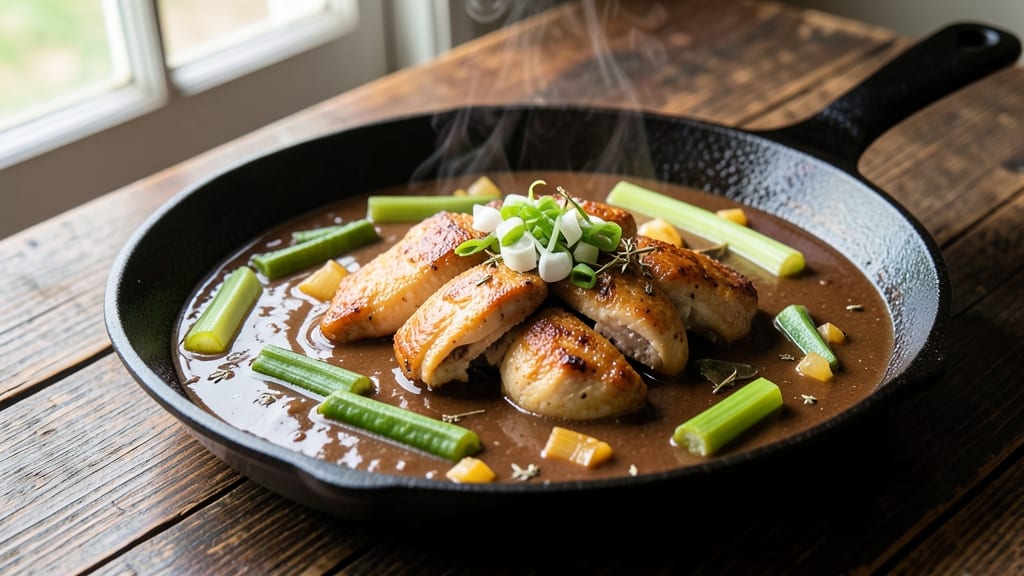
This chicken gumbo recipe brings the soul of Louisiana's Cajun tradition to your kitchen with its deep, smoky roux and layers of spiced chicken and vegetables. The secret lies in the slow-cooked roux—a dark, nutty crust that forms the heart of every authentic gumbo.
I've perfected this method over years of testing, balancing the rich, earthy flavors with a bright celery-vinegar finish that cuts through the richness.
The beauty of this recipe is its balance between tradition and accessibility. You'll start with a classic roux, then build flavor with chicken, the "holy trinity" of celery, bell pepper, and onion, and a blend of spices that includes thyme, bay leaves, and cayenne.
The key is patience—the roux must cook slowly to develop its deep, caramelized flavor without burning. Once combined with broth and simmered, the gumbo thickens naturally into a velvety stew that's hearty enough for a family dinner.
What you'll end up with is a bowl of gumbo that's rich, complex, and deeply satisfying—where every spoonful delivers tender chicken, crisp vegetables, and a roux so flavorful it tastes like it's been simmering for hours.
The celery-vinegar zing at the end adds a refreshing contrast, making this gumbo both comforting and vibrant. Serve it over steamed white rice to soak up every last drop of that smoky, spiced broth.
This recipe isn't just about the gumbo itself—it's about the experience. The aroma of the roux cooking fills the kitchen, the spices dance on your tongue, and the final dish brings people together.
Whether you're cooking for a crowd or a quiet weeknight dinner, this gumbo delivers the kind of flavors that make you want to slow down and savor each bite. Let's get cooking.
Ingredients for chicken "gumbo
Sixteen ingredients for a gumbo that tastes like a Louisiana Sunday dinner.
| Ingredient | Amount | Notes |
|---|---|---|
| Chicken Thighs 🍗 | 2 ½ lb | Bone-in, skin-on preferred |
| All-Purpose Flour 🌾 | ½ cup | White flour for classic roux |
| Unsalted Butter 🧈 | ½ cup | Cold, cubed for roux |
| Yellow Onion 🧅 | 1 whole | Diced, medium size |
| Green Bell Pepper 🌶️ | 1 whole | Diced, medium size |
| Celery Stalks 🥬 | 3 whole | Diced, including leaves |
| Garlic Cloves 🧄 | 4 cloves | Minced, fresh preferred |
| Chicken Broth 💧 | 6 cups | Low-sodium preferred |
| Dried Thyme 🌿 | 1 tbsp | Or 1 tbsp fresh thyme |
| Bay Leaves 🌿 | 2 whole | Fresh or dried |
| Cayenne Pepper 🔥 | ½ tsp | Adjust for heat preference |
| White Vinegar 🍋 | ¼ cup | White or apple cider |
| Salt 🧂 | 1 ½ tsp | Kosher or sea salt |
| Black Pepper 🌶️ | ½ tsp | Freshly ground preferred |
| Green Onions 🧅 | ¼ cup | Sliced, for garnish |
The roux is everything here—don't rush it. Butter and flour need to cook slowly to a deep, peanut-butter color. Costco or local butchers often have bone-in chicken thighs at a better price than the grocery store. I always grab extra bay leaves—they add that subtle, earthy depth. For celery, bell pepper, and onion (the 'holy trinity'), Trader Joe's sells pre-diced mixes that save time. Fresh thyme is ideal, but dried works in a pinch—just double the amount.
No cayenne? Red pepper flakes at half the amount will do. Short on vinegar? Lemon juice works too—just reduce the amount to 2 tbsp. The chicken broth can be homemade (better flavor) or store-bought (like Swanson or Pacific Foods brands). For a vegetarian twist, swap chicken for mushrooms and hearty beans. The green onions are just for garnish, but I always add a little extra to the pot—they brighten up every spoonful.
This gumbo tastes even better the next day. Store leftovers in the fridge for up to 5 days or freeze for 3 months. I like to portion it into containers with rice—just reheat with a splash of broth. The roux thickens as it cools, so add a little more broth when reheating if needed. Serve with crusty bread to soak up every last drop of that smoky, spiced goodness.
Why You'll Love This Recipe
- One-Pot Magic: I swear by this recipe because it’s all in one pot—no fancy gadgets, no extra bowls. Just brown those chicken thighs in butter, toss in the flour to make that roux, and let the onions and peppers soften right alongside. Cleanup? One pot to scrub. That’s it.
- Roux That Sticks: Between us, the butter-and-flour roux is where this dish actually shines. It’s not just a base—it’s the secret weapon that turns simple chicken and veggies into something rich and layered. That golden-brown color? Pure flavor insurance.
- Weeknight to Dinner Party: Honestly, this is my go-to for both lazy Tuesdays and when Aunt Martha shows up unannounced. The thighs stay juicy, the veggies add freshness, and it scales effortlessly—double the batch for company, halve it for leftovers. Zero stress, all reward.
- Budget-Friendly Feast: Chicken thighs are cheap, flour’s a pantry staple, and onions/peppers stretch for miles. I’ve fed six people for under $15 with this—plus, the leftovers reheat like a dream. Not the prettiest dish, but the taste makes up for it every time.
Step-by-step instructions for chicken gumbo
Here's how to build rich, smoky gumbo with a perfect roux and tender chicken.
Prepare the Chicken and Holy Trinity
Pat the 2.5 lb chicken thighs dry with paper towels and season generously with 1.5 tsp salt and 0.5 tsp black pepper. Set aside while you prep the vegetables. Dice the 1 whole yellow onion, 1 whole green bell pepper, and 3 whole celery stalks into small, even pieces—this is your "holy trinity" base. You want uniform sizes so everything cooks at the same rate.
Mince the 4 cloves garlic finely—this ensures even distribution of flavor throughout the gumbo. I like to press the garlic through a garlic press for consistency. Keep all your chopped vegetables in separate bowls until ready to use. This organization prevents cross-contamination and makes assembly smoother later.
Build the Dark Roux Foundation
In a large, heavy-bottomed pot, melt the 0.5 cup unsalted butter over medium heat. Immediately add the 0.5 cup all-purpose flour and whisk constantly for 3-5 minutes until the mixture turns a deep, chocolate-brown color—this is your dark roux. This step requires patience; don't walk away. The roux should smell nutty and toasty, not burnt.
Here's the thing—if your roux starts to smoke excessively or turns black, you've gone too far. Immediately remove from heat and stir in 1 tablespoon dried thyme to cool it down. The perfect gumbo roux should be the color of milk chocolate, not charred coffee grounds. This rich roux forms the flavor backbone of your gumbo.
Sear the Chicken and Develop the Base
Increase heat to medium-high and carefully add the seasoned chicken thighs, skin-side down. Let them sear undisturbed for 4-5 minutes until the skin is golden brown and crispy. This step creates that beautiful crust that'll infuse the gumbo with flavor. Flip the chicken and sear the other side for another 3-4 minutes. Remove chicken and set aside.
In the same pot, add the diced yellow onion, green bell pepper, and celery stalks. Cook for 5-6 minutes, stirring occasionally, until the vegetables soften and begin to release their juices. Add the minced garlic and cook for 30 seconds until fragrant—this prevents the garlic from burning and ensures it blends smoothly into the gumbo.
Simmer and Develop the Flavor
Pour in the 6 cups chicken broth and scrape up any browned bits from the bottom of the pot with a wooden spoon. Add the 2 whole bay leaves, 0.5 tsp cayenne pepper, and bring to a gentle boil. Once boiling, reduce heat to low and return the chicken to the pot. Cover and simmer for 45 minutes, allowing the chicken to cook through and the flavors to meld together.
After 45 minutes, remove the chicken and shred it using two forks, discarding the skin and bones. Return the shredded chicken to the pot. Stir in the 0.25 cup white vinegar—this adds brightness and cuts through the richness of the roux. Simmer uncovered for another 15-20 minutes until the gumbo has thickened slightly and the flavors have deepened. The gumbo should coat the back of a spoon but still be spoonable.
Finish and Serve
Taste and adjust seasoning with additional salt or black pepper if needed. The gumbo should be well-seasoned with a balance of smokiness, spice, and acidity. Ladle the gumbo into bowls and garnish with the sliced 0.25 cup green onions. Serve immediately with hot rice—this classic pairing soaks up all the rich, flavorful broth.
This gumbo makes 6 servings, so you'll have leftovers that taste even better the next day. The flavors continue to develop as it sits, making it perfect for meal prep. Enjoy your hearty, smoky gumbo with a cold drink on the side—it's comfort food at its finest.
Pro Tips For Making Chicken "Gumbo
- Brown the Onions: Don’t rush this step—cut onions into ¼-inch dice and cook them in the butter over medium-high heat until they’re deep golden, not just translucent. I used to skip this, and the flavor was always flat. It takes 8–10 minutes, but it’s the foundation of the roux.
- Salt the Chicken First: Generously season the chicken thighs with salt and pepper before searing them. The skin crisps better, and the meat stays juicier. I learned this the hard way after serving dry, bland chicken—now I salt it like I mean it.
- Low and Slow for Roux: Once the flour-butter mix turns a peanut-butter brown, immediately lower the heat to medium-low. Watch it like a hawk—it’ll darken fast, and burning it ruins everything. A few minutes of patience here saves hours of scraping burnt bits later.
- Skip the Overcrowding: When frying the chicken, work in batches if needed—don’t toss in all the thighs at once. The oil will cool, and the chicken will steam instead of sear. I was skeptical until I tried it—now my chicken comes out crispy every time.
Serving suggestions for this recipe
Rice Pairing Essentials
White long-grain rice is the classic choice for gumbo, and I recommend using jasmine or basmati for its delicate aroma that complements the smoky roux. For each serving of gumbo, cook ½ cup uncooked rice in 1 cup water with a pinch of salt.
The rice should be al dente—just tender enough to hold its shape when scooped. I like to steam the rice separately so it absorbs the gumbo's rich flavors without turning mushy. 🍚
Bread for Soaking
Crusty French bread or Cajun-style cornbread is perfect for mopping up gumbo. For a quick option, toast sourdough slices until golden and serve alongside.
If you want to go traditional, make cornbread muffins with 1 cup cornmeal, 1 cup flour, 1 egg, 1 cup buttermilk, and 1 tsp baking powder.
Bake at 375°F for 15-18 minutes—they’ll be slightly sweet and crumbly, ideal for soaking up every last drop. 🍞
Fresh Garnishes
Brighten your gumbo with sliced green onions and a sprinkle of fresh parsley right before serving. For extra zing, add hot sauce (like Crystal or Tabasco) or a squeeze of lemon to each bowl.
I also love a few cherry tomatoes, halved and lightly salted, for a fresh pop of color and acidity. These garnishes add freshness that cuts through the richness of the roux. 🌿
Drink Pairings
A cold sweet tea or iced coffee balances the gumbo’s smoky heat, especially on a hot day. For something stronger, try a light lager like Abita or a dry Riesling—both complement the gumbo’s depth without overpowering it.
If you prefer beer, a Belgian witbier adds a citrusy contrast that enhances the celery-vinegar finish. 🍺
Make-Ahead Serving
Gumbo tastes even better the next day, so plan ahead! Store leftovers in an airtight container in the fridge for up to 5 days. Reheat gently on the stovetop with a splash of chicken broth to restore thickness.
For a crowd, serve gumbo in a large cast-iron pot family-style, letting everyone scoop their own bowls. This communal approach is key to gumbo’s soul—it’s all about sharing! 💫
Nutrition facts
Frequently asked questions
Can I substitute chicken breasts for thighs in this recipe?
Chicken breasts work but require adjustments. Use 1.5 lb breasts instead of thighs, and cut them into 1-inch cubes to ensure even cooking. They cook faster than thighs, so add them back to the pot only 15 minutes before serving to prevent drying out. The skin-on thighs add richness, so you might want to add 1 tablespoon butter to compensate.
What's the best way to fix a burnt roux?
If your roux turns black, don't panic! Remove the pot from heat immediately and stir in 1 tablespoon dried thyme or 1 cup cold chicken broth to cool it down. The burnt flavor will mellow as you continue cooking. For future attempts, keep heat at medium-low and whisk constantly—it should take 20-30 minutes to reach a deep brown color.
How do I make this gumbo spicier?
For extra heat, add 1-2 teaspoons cayenne pepper during the simmering phase or stir in 1 tablespoon hot sauce at the end. For a smoky kick, add ½ teaspoon smoked paprika to the roux. Pro tip: Add ½ teaspoon crushed red pepper flakes when serving—it gives everyone control over their spice level.
Can I make this gumbo in a slow cooker?
Yes! Brown the chicken and vegetables first in a skillet, then transfer everything to the slow cooker. Add the roux ingredients (butter, flour) directly to the slow cooker and cook on low for 6-8 hours or high for 3-4 hours. The slow cooker won't develop the same deep roux color, but the flavors will meld beautifully. Add the vinegar at the end and adjust thickness with cornstarch slurry if needed.
What's the secret to the perfect gumbo roux?
The secret is patience and constant stirring! Cook the butter and flour mixture over medium-low heat for 20-30 minutes, whisking every 2-3 minutes until it reaches a deep chocolate-brown color. The key indicators are a nutty aroma and the ability to coat the back of a spoon. Never let it smoke continuously—this means it's burning. A perfect roux should taste rich and toasty, not bitter.