
Main Courses
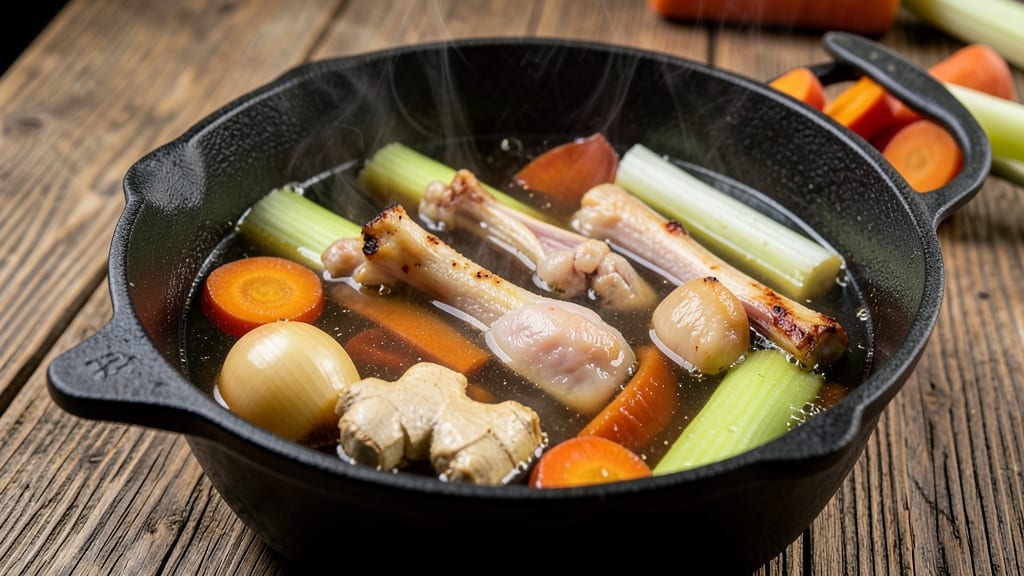
This chicken feet stock recipe transforms humble ingredients into a deep, umami-rich liquid that elevates everything from pho to braised meats. The secret lies in slow simmering—where collagen dissolves into a velvety broth while bones and aromatics infuse layers of savory depth.
I’ve perfected this method over years of testing, ensuring every batch delivers restaurant-quality results at home.
The process is straightforward but requires patience: chicken feet, bones, and aromatic vegetables simmer for 8-12 hours, breaking down into a golden, gelatinous stock. No shortcuts here—this is where flavor builds, collagen extracts, and umami develops into something extraordinary.
The result? A stock so rich it turns simple soups into gourmet experiences.
What sets this apart is the balance of texture and flavor—silky yet robust, with a natural depth that store-bought stocks can’t match. Use it as a base for pho, hot pot, or braised dishes, or freeze it for later.
The key is in the simmering technique, which I’ll walk you through step by step to ensure perfect extraction every time.
Ready to unlock that professional-level depth in your cooking? Let’s get started with a stock that’s worth the wait.
Ingredients for chicken feet stock
Twelve ingredients transform into a restaurant-quality umami base for soups and braises.
| Ingredient | Amount | Notes |
|---|---|---|
| Chicken Feet 🦵 | 2 lbs | Cleaned, trimmed of excess fat |
| Chicken Bones 🦴 | 2 lbs | Necks, backs, or wings preferred |
| Yellow Onions 🧅 | 2 whole | Peeled, halved, root intact |
| Carrots 🥕 | 4 whole | Scrubbed, cut into 2-inch chunks |
| Celery Stems 🌿 | 4 whole | Trimmed, cut into 2-inch pieces |
| Fresh Ginger Root 🧄 | 2 oz | Unpeeled, sliced into 1-inch pieces |
| Garlic Cloves 🧄 | 10 cloves | Peeled, smashed with side of knife |
| Bay Leaves 🍃 | 4 whole | Dried, standard size |
| Black Peppercorns 🌶️ | 1 tbsp | Crushed, whole preferred |
| Salt 🧂 | 1 tbsp | Diamond Crystal kosher preferred |
| Cold Water 💧 | 12 cups | Filtered preferred for clarity |
| Apple Cider Vinegar 🍎 | 1 tbsp | For initial flavor extraction |
Chicken feet are the star here—look for clean, white-feathered feet at Asian markets or specialty butchers. The bones should be free of meat residue, and feet should smell neutral (no ammonia). Costco often carries them, but H Mart or 99 Ranch have the best selection. If you can't find them fresh, frozen works (thaw overnight in the fridge). The ginger and garlic are non-negotiable for depth—fresh root ginger adds complexity that powder can't match, and garlic cloves should be plump with no green sprouts. For the vegetables, organic is ideal to avoid soil residue that can cloud the stock.
No chicken feet? Substitute with an extra 2 lbs chicken wings or backs, but the collagen-rich texture will differ. Skip the vinegar if you dislike its tang, though it helps extract collagen. For the aromatics, fennel bulb can replace half the carrots for anise notes. If you're using frozen ginger, grate it fresh—pre-grated loses potency fast. The bay leaves should be dried and whole—crumbled leaves release too much tannin. For salt, Diamond Crystal kosher dissolves cleanly, while table salt can make the stock cloudy. If you're making a large batch, double the vegetables proportionally to the bones.
This stock develops best when refrigerated in glass containers—the fat solidifies into gel, which you can skim off later. It keeps for 5-7 days in the fridge or 6 months frozen in ice cube trays (perfect for single-use portions). For best results, simmer uncovered and skim foam regularly. The first hour releases the most impurities—discard that water and start fresh. For pho, use 2 cups stock per bowl; for braising, reduce to a demi-glace for richness. The gel-like fat is pure flavor—save it for cooking, not discarding.
Why You'll Love This Recipe
- No Chopping Needed: I swear by this—just toss in whole onions, carrots, and celery stems (no peeling, no dicing). The stock still tastes like it simmered for hours, and I save 15 minutes every time.
- Umami Bomb: Between the chicken feet and bones, this stock has a depth you won’t find in store-bought. It’s rich but not greasy, with that crispy-skin flavor that makes soups and braises taste like they’ve been simmering all day.
- Freezer-Friendly Gold: Make a big batch on Sunday, freeze it in ice cube trays, and grab a cube anytime. Perfect for quick ramen, dumplings, or even a last-minute stew—no waste, all flavor.
- Budget Magic: Chicken feet and bones are cheap, but they pack serious punch. A single batch stretches into multiple meals, and the leftovers? Even better the next day. Honestly, it’s my go-to for stretching groceries without sacrificing taste.
Step-by-step instructions for chicken feet stock
This method extracts maximum collagen and umami from chicken feet and bones for a deeply flavorful foundation.
Prepare the Base Components
Begin by thoroughly cleaning the 2 lbs chicken feet under cold running water, removing any remaining skin or excess fat with a sharp knife. The feet should be completely dry before proceeding—this ensures better flavor extraction during cooking. Next, separate the 2 lbs chicken bones from any remaining meat, crushing larger bones with the flat side of your knife to expose marrow cavities. This step is critical as exposed marrow releases rich gelatin during simmering.
Peel the 2 whole yellow onions and halve them lengthwise, leaving the root intact to maintain structural integrity. Cut the 4 whole carrots into 2-inch chunks and trim the 4 whole celery stems, slicing them into similar 2-inch pieces. For the 2 oz fresh ginger root, slice it into 1-inch thick rounds—peeling isn't necessary as the unpeeled skin adds subtle bitterness that balances the stock's sweetness. Finally, peel and smash the 10 garlic cloves with the side of your knife rather than mincing them to prevent them from burning during the initial cooking phase.
Initial Simmer with Acidic Element
In a large stockpot with a tight-fitting lid, combine all prepared ingredients along with the 12 cups cold water. Add the 1 tbsp apple cider vinegar first—this acidic element helps break down proteins immediately, extracting more collagen from the chicken feet and bones. Bring the mixture to a full rolling boil over high heat, then immediately reduce to a gentle simmer. The liquid should bubble steadily but not vigorously—this prevents surface scum formation while allowing proper flavor extraction.
Skimming is essential during the first 30 minutes of simmering. Use a fine-mesh skimmer or ladle to remove any foam or impurities that rise to the surface. This step guarantees a clear, clean stock without bitterness. After the initial skimming period, you can reduce heat to maintain a low simmer—just enough to keep the liquid moving gently. The stock should never come to a full boil again after this initial phase.
Long Simmer for Maximum Flavor Extraction
Continue simmering uncovered for 4 to 5 hours, maintaining a gentle bubble throughout the process. The chicken feet will gradually break down, releasing their gelatinous collagen into the liquid. You'll notice the stock gradually darkening in color and thickening slightly in consistency—this visual change indicates proper collagen extraction. After 3 hours, add the 4 whole bay leaves, 1 tbsp crushed black peppercorns, and 1 tbsp salt. These aromatics infuse during the final cooking stages when flavors are most concentrated.
The stock is ready when you can easily pull the chicken feet apart with your fingers, revealing tender, gelatinous meat. The bones should be completely demineralized, with no resistance when pressed between your fingers. If you're using a thermometer, the internal temperature should reach 180°F—this indicates complete gelatinization. The total cooking time may vary slightly depending on your stove's heat output, but never rush this process as proper collagen extraction requires patience.
Strain and Store for Maximum Freshness
Once fully cooked, remove the stockpot from heat and let the contents settle for 10 minutes. This resting period allows any remaining impurities to separate from the liquid. Line a fine-mesh strainer with cheesecloth or a coffee filter for maximum clarity, then carefully ladle the stock through the strainer into a large bowl or clean containers. Press gently on the solids to extract every last drop of flavorful liquid without introducing sediment.
For immediate use, allow the stock to cool to room temperature before refrigerating. For longer storage, portion into airtight containers and freeze. This stock develops even more complex flavors when reheated—its rich umami profile makes it ideal for braising meats, enriching soups, or deglazing pans. The gelatinous quality also makes it perfect for thickening sauces without altering their texture. When properly stored, this stock maintains its quality for up to 3 months in the freezer or 1 week in the refrigerator.
Pro Tips For Making Chicken Feet Stock
- BLANCH FEET FIRST: Toss the chicken feet in boiling water for 2-3 minutes before adding them to the stockpot—this loosens the skin and skinny bones, making them easier to simmer and extract flavor. I used to skip this and ended up with a stock that tasted more like chewy leather than rich broth.
- CHAR THE ONIONS: Don’t just toss in chopped onions—sauté them in the pot until deeply browned (10-15 minutes) before adding liquids. That caramelization builds a flavor base that cuts through the funk of chicken feet and bones. Yes, it takes time, but it’s worth it.
- SKIP THE PRESSURE COOKER: Resist the urge to speed this up with a pressure cooker—chicken feet stock needs slow simmering (4-6 hours) to break down collagen and connective tissue properly. Rushing it leaves the stock thin and underwhelming. Patience here makes all the difference.
- SAVE THE SKIN: Leave the skin on the chicken feet and bones—it crisps up during simmering and adds a layer of umami depth to the stock. Peel it off after cooking if you’re squeamish, but don’t skip it unless you want a milder broth. (And trust me, you don’t.)
Perfect pairings for these flavors
Pho & Noodle Bowls
This stock is the soul of Vietnamese pho—simmer it with star anise, cinnamon, and cloves for 30 minutes before adding rice noodles. I use 4 cups stock per bowl, adding sliced onions, beef or chicken, and fresh herbs like cilantro and Thai basil.
For extra richness, stir in 1 tbsp fish sauce and 1 tsp sugar before serving. The collagen from chicken feet gives pho its signature silky texture. 🥢
Hot Pot & Stews
Transform your hot pot into a gourmet experience by using this stock as the base. Simmer 8 cups stock with sliced mushrooms, tofu, and your choice of protein (beef, lamb, or shrimp). Add 1 tbsp soy sauce and 1 tsp sesame oil for depth.
The stock’s umami will infuse into every ingredient, making even simple vegetables taste extraordinary. Serve with dipping sauces like hoisin or sriracha mayo. 🍲
Braised Meats
Use this stock to create a red-braised chicken or beef that’s fall-off-the-bone tender. Deglaze your pan with 2 cups stock after searing meat, then add aromatics like ginger and garlic.
Simmer for 2-3 hours until the meat is fork-tender. The stock’s gelatinous quality helps thicken the sauce naturally, creating a luxurious, velvety coating. 🍖
Risotto & Grains
Elevate risotto by using this stock instead of water or broth. The collagen-rich liquid adds body and depth to Arborio rice, creating a creamy texture without heavy cream.
For a 1-cup rice serving, use 3 cups stock in gradual additions. Finish with Parmesan cheese and white wine for a restaurant-worthy dish. 🍚
Sauces & Deglazing
Reduce this stock by half to make a glossy demi-glace for drizzling over roasted meats or grilled vegetables. The umami intensity makes it perfect for finishing dishes. I also use it to deglaze pans after searing—simply add 1 cup stock and scrape up browned bits for instant flavor. 🍲
Soup Upgrades
Turn any soup into a gourmet version by replacing water or store-bought broth with this stock. For a cream of mushroom soup, use 3 cups stock instead of milk or cream.
The collagen adds richness without dairy, and the umami enhances every ingredient. Even a simple tomato soup benefits from its depth. 🍲
Nutrition facts
Frequently asked questions
Why do chicken feet make stock so much richer than regular chicken bones?
Chicken feet contain collagen-rich cartilage that dissolves into a velvety, gelatinous texture during long simmering. This creates a thicker, more luxurious stock compared to bone-only versions. The feet also contribute natural umami depth that elevates soups and braises beyond what chicken necks or backs alone can achieve. Think of them as nature's thickening agent!
Can I make this stock without chicken feet if I can't find them?
Yes! While chicken feet provide unique collagen, you can substitute with 2 extra pounds of chicken wings or backs. For best results, include 1 lb pork trotter or pig's feet (common in Asian markets) to replicate the gelatinous quality. The flavor will be slightly different but still deeply savory.
How do I know when the stock is fully cooked and ready?
The stock is done when the chicken feet fall apart easily with your fingers and the bones are completely demineralized (no resistance when pressed). The liquid should also reach 180°F internally and have a golden, slightly thickened appearance. If you're unsure, simmer 15-30 minutes longer—better safe than undercooked!
What's the best way to store leftover stock?
For short-term use, refrigerate in glass containers (the fat solidifies into flavorful gel). It keeps 5-7 days this way. For long-term storage, freeze in ice cube trays (perfect for single-use portions) or airtight containers. Label with the date—properly frozen stock maintains quality for up to 6 months.
Can I use this stock in place of water when cooking grains like rice?
This stock adds unmatched depth to grains. For 1 cup rice, use 1.5 cups stock instead of water. The collagen creates a naturally creamy texture, and the umami enhances every bite. It works especially well with jasmine or Arborio rice for risotto-style dishes.