
Soups & Stews
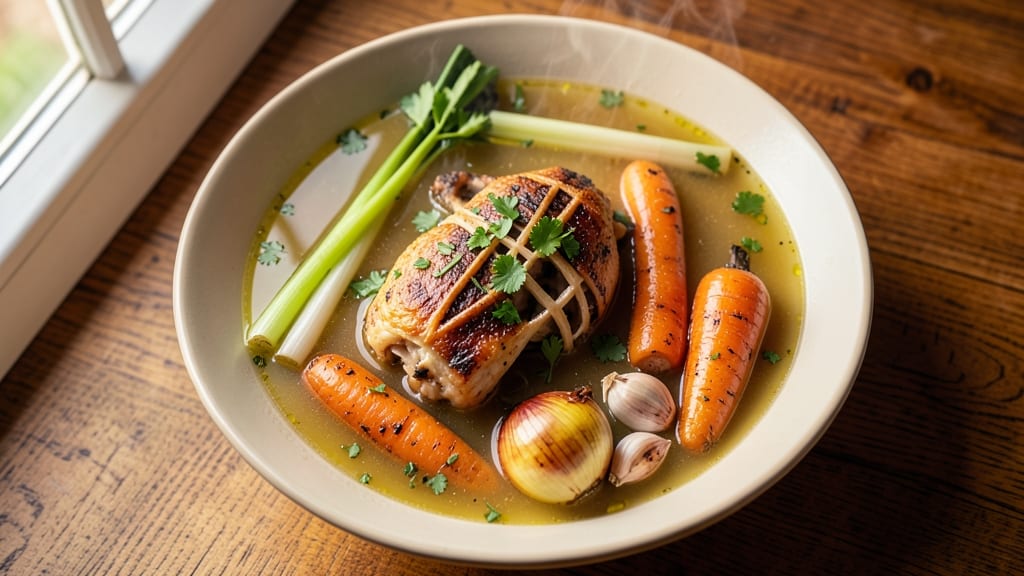
This basic chicken stock soup recipe transforms simple ingredients into a deeply comforting bowl of homemade goodness in just one pot. The secret lies in building rich, flavorful stock from scratch—no shortcuts, no store-bought substitutes—just pure, aromatic depth that elevates every spoonful.
I’ve perfected this method over years of testing, ensuring the broth develops layers of savory complexity while remaining approachable for beginners.
The process begins with simmering chicken and vegetables until the bones render their essence, creating a golden, velvety stock that forms the soul of the soup. No blenders or complicated techniques—just patience and a low, steady simmer to extract maximum flavor.
The result is a broth so rich it coats your spoon, with tender chicken and vegetables that melt into every bite. This isn’t just soup; it’s a foolproof foundation for any meal, ready in under an hour.
What makes this recipe truly special is its versatility. Start with a simple base of chicken, carrots, celery, and onions, then customize with herbs, grains, or proteins to suit your taste. The stock alone can transform a basic bowl into something restaurant-worthy, while the one-pot method keeps cleanup minimal.
Whether you’re feeding a family or prepping for the week, this soup delivers homemade richness without the fuss.
Perfect for chilly evenings or as a nourishing recovery meal, this soup proves that comfort food doesn’t require complicated steps—just time and intention. The aroma alone will have everyone gathering at the table, and the first taste will confirm why homemade always tastes better.
Let’s get started with a recipe that’s as rewarding to make as it is to eat.
Ingredients for basic chicken stock soup
Simple ingredients that build rich, aromatic stock for a comforting bowl of homemade soup.
| Ingredient | Amount | Notes |
|---|---|---|
| Chicken Carcass 🍗 | 1 lb | Raw, with skin and fat |
| Yellow Onion 🧅 | 1 whole | Quartered, skin on |
| Carrots 🥕 | 4 medium | Whole, scrubbed clean |
| Celery Stalks 🌿 | 4 whole | Trimmed, cut into chunks |
| Garlic Cloves 🧄 | 4 cloves | Peeled, smashed |
| Fresh Parsley 🌿 | ¼ cup | Chopped, stems removed |
| Fresh Thyme 🌿 | 1 tbsp | Leaves only, stems removed |
| Salt 🧂 | 1 ½ tsp | Diamond Crystal kosher salt |
| Black Peppercorns 🌶️ | ½ tsp | Freshly cracked |
| Bay Leaves 🍃 | 2 whole | Dried, standard size |
| Chicken Breast 🍗 | 1 ½ lb | Boneless, skinless, cut into pieces |
| Water 💧 | 8 cups | Filtered preferred |
| Extra-Virgin Olive Oil 🫒 | 1 tbsp | For initial searing |
The chicken carcass is where the magic happens—look for raw, uncooked bones from your butcher or grocery store meat department. They should still have some meat and fat attached for maximum flavor. Costco often sells these for cheap in bulk, but any well-stocked grocery store will have them. If you can't find a carcass, use chicken backs or necks instead—they render just as well. Fresh herbs like thyme and parsley are non-negotiable here; dried versions won't give that bright, fresh aroma. For the bay leaves, avoid the tiny ones—they're harder to remove later. The onions, carrots, and celery form the classic 'mirepoix' base—buy organic if possible to avoid dirt buildup, which can cloud your broth.
No chicken carcass? Substitute with 2 lbs chicken backs or necks—they work just as well. Fresh thyme unavailable? Dried thyme at half the amount works in a pinch, but the flavor won't be as bright. For the vegetables, baby carrots or pre-cut celery save time, but whole carrots and celery stalks add more flavor as they slowly break down. The olive oil is just for initial searing—don't skimp on this step. If you're making a large batch, double the herbs to keep the flavor balanced. For extra richness, add a splash of white wine when deglazing, but it's not required. The water should be cold—hot water can cook the vegetables too quickly and make the broth cloudy.
This soup tastes even better the next day as flavors meld. Store in an airtight container in the fridge for up to 5 days, or freeze for 3 months. For freezing, portion into 2-cup containers—perfect for single servings. The stock alone keeps for 4 days in the fridge or 6 months frozen, making it a great base for other recipes. If you make extra broth, strain it through a fine-mesh sieve for crystal-clear results. The chicken pieces can be removed after cooking and used in salads or sandwiches.
Why You'll Love This Recipe
- No-Waste Hero: I swear by this recipe for using every last bit of my chicken carcass—no scraps, no guilt. That golden broth? Pure magic from what would’ve been trash.
- Miso-Garlic Magic: The moment those garlic cloves hit the simmering pot, the kitchen fills with that unmistakable aroma. Honestly, it’s the kind of flavor that makes you pause mid-chop and take a deep breath.
- Lunchbox Champion: I make a big batch on Sundays—carrots and celery stay crisp, and the stock? It’s the secret weapon in my kids’ school lunches. (Yes, even on a Tuesday night.)
- Budget Booster: For pennies, I get a pot of soup that feeds four, tastes like a restaurant, and keeps for days. Freeze the leftovers—next month’s me will thank you.
Step-by-step instructions for homemade chicken stock soup
Here's how to create a deeply flavorful chicken stock soup using every ingredient to its fullest potential.
Sear the Chicken Carcass and Breast Pieces
Heat the 1 tablespoon extra-virgin olive oil in a large Dutch oven over medium-high heat. Add the 1 pound chicken carcass and 1.5 pounds chicken breast pieces, skin-side down first. Let them sear undisturbed for 5-6 minutes until the skin and surfaces turn deep golden brown. This step develops the richest possible flavor through the Maillard reaction.
Flip the carcass and chicken pieces, then add the 1 whole quartered yellow onion, 4 medium whole carrots, 4 whole celery stalks, and 4 smashed garlic cloves. Continue cooking for another 5 minutes, stirring occasionally, until everything is lightly browned. The vegetables will soften slightly but maintain their structure. Transfer the seared ingredients to a plate and set aside temporarily.
Build the Flavor Base with Aromatics
With the pan still over medium-high heat, add the 1 tablespoon fresh thyme leaves and 0.5 teaspoon freshly cracked black peppercorns. Toast for 30 seconds until fragrant—you should smell the thyme's earthy aroma and see the peppercorns darken slightly. Add the 2 whole bay leaves and stir for 10 seconds to release their essential oils.
Pour in the 8 cups water and bring to a rolling boil. Once boiling, return the seared chicken and vegetables to the pot. The water should cover everything by about 1 inch. Add the 1.5 teaspoon salt and adjust the heat to maintain a gentle simmer—small bubbles breaking the surface, but not a vigorous boil.
Simmer for Maximum Flavor Extraction
Partially cover the pot with a lid (leave a small gap for steam to escape) and simmer for 45 minutes. This initial simmer time allows the chicken to release its collagen and begin breaking down. Skim any foam that rises to the surface during the first 15 minutes—this removes impurities for a clearer broth.
After 45 minutes, add the 0.25 cup chopped fresh parsley. The parsley adds bright freshness that balances the deep umami flavors developing in the stock. Return the heat to a gentle simmer and cook uncovered for another 30 minutes. The longer simmer time continues breaking down connective tissue, creating a velvety texture while concentrating the flavors.
Strain and Finish the Soup
Carefully remove the chicken carcass and vegetables using tongs and transfer them to a plate. Strain the broth through a fine-mesh sieve or cheesecloth-lined colander into a clean pot. Press gently on the solids to extract all the flavorful liquid—this is where the magic happens. You should have about 6-7 cups of rich, golden chicken stock.
Return the strained stock to the pot and taste it. Adjust the seasoning with additional salt if needed—remember, the chicken pieces will have absorbed some of the initial salt. Bring the stock to a gentle simmer and add the cooked chicken breast pieces back to the pot. Simmer for 5 minutes to heat through and infuse the meat with the stock's flavors.
Pro Tips For Making Basic Chicken Stock Soup
- CHAR THE ONIONS FIRST: Skip tossing the whole onion in raw—chop it into 1-inch chunks and cook them in the pot until they’re deep golden brown, about 8-10 minutes. That caramelized flavor is the base of your soup’s depth, and it won’t dissolve if you add it later. (Yes, even if you’re impatient like me.)
- ROAST THE CARCASS: Toss the chicken carcass on a baking sheet, drizzle with oil, and roast at 425°F (220°C) for 20 minutes before simmering. The Maillard reaction pulls out way more flavor than just dumping it cold into the pot. I learned this the hard way—my first few batches tasted bland until I tried this.
- SKIP THE CROWDED POT: Don’t overload the stockpot with all the veggies at once. Simmer the carcass alone for 30 minutes first, then add the onions, carrots, and celery in stages—this keeps the broth from getting murky. (Your future self will thank you when the soup isn’t cloudy.)
- SAVE TIME WITH FROZEN GARLIC: Instead of peeling fresh garlic cloves mid-recipe, use 2 tablespoons of minced frozen garlic straight from the bag. It thaws as it simmers, adds the same punch, and cuts prep by half. I was skeptical until I tried it—now I keep a bag in the freezer just for stock.
Best sauces and condiments for this dish
Classic Creamy Additions
For a velvety finish, stir in ½ cup heavy cream or ½ cup whole milk during the final 5 minutes of simmering. This adds richness without overpowering the broth’s depth. I like Hormel heavy cream for its consistent quality, but any high-fat dairy works.
For a lighter option, use ¼ cup Greek yogurt—it thickens beautifully while keeping the soup bright. 🥄
Umami Boosters
Elevate the soup’s savory profile with 1 tablespoon soy sauce or 1 teaspoon fish sauce> (like Red Boat brand) during the final simmer. These ingredients add complexity without altering the dish’s homey character.
For a vegetarian twist, swap in 1 tablespoon nutritional yeast—it delivers a cheesy, umami punch. Add these toward the end to preserve their flavors.
Herb-Infused Oils
Drizzle the finished soup with 1 tablespoon herb-infused olive oil for an elegant touch. Infuse ½ cup olive oil with 2 tbsp fresh thyme, 2 tbsp fresh parsley, and 1 garlic clove (lightly toasted) for 10 minutes at low heat.
Strain and store in a jar—it keeps for 2 weeks in the fridge. A single drizzle adds aromatic depth and a silky finish. ✨
Acidic Brighteners
Balance the soup’s richness with a splash of acidity. A 1-teaspoon squeeze of lemon juice or 1 tbsp apple cider vinegar per bowl cuts through the fat beautifully. For a sweeter contrast, add ½ teaspoon honey> or 1 tsp maple syrup> during the last 5 minutes of cooking.
These adjustments are especially effective if your stock tastes overly salty or heavy.
Toppings for Texture
Transform the soup into a textural masterpiece with toppings. A sprinkle of toasted breadcrumbs> (made with 2 tbsp butter> and 2 tbsp panko) adds crunch, while crumbled feta cheese> or shaved Parmesan> brings saltiness.
For a pop of color, add ¼ cup chopped chives> or microgreens>. Garnish just before serving to keep toppings crisp.
Spicy Kicks
For heat lovers, stir in ½ teaspoon red pepper flakes> or 1 tsp sambal oelek> during the final simmer. For a smoky depth, add ½ teaspoon smoked paprika> or a dash of chipotle powder>.
If you prefer fresh heat, top with thinly sliced jalapeños> or a drizzle of sriracha>** after serving. Adjust to taste—some of these flavors mellow as the soup cools.
Nutrition facts
Frequently asked questions about homemade chicken stock soup
Can I use chicken thighs instead of breasts for the soup?
Chicken thighs are even better—they stay juicier and add extra richness to the broth. Use 1.5 pounds bone-in, skin-on thighs instead of breasts, and reduce the simmer time to 30 minutes after adding them back to the stock (they cook faster than breasts). The skin will render fat that enhances the soup's depth.
What if I don't have a chicken carcass or backs?
No problem! Use 2 pounds chicken wings or 1 whole chicken cut into pieces (including bones). The key is to include bones—they release collagen for that velvety texture. For a meat-only option, add 1 extra chicken breast and simmer 10 minutes less after adding it back to the stock.
How do I make this soup vegetarian?
Replace the chicken with 1.5 pounds mushrooms (cremini or shiitake) and 1 cup dried beans (soaked overnight). Use vegetable stock instead of water, and add 1 tbsp soy sauce or 1 tsp miso paste for umami depth. Simmer the beans for 45 minutes before adding mushrooms in the final 10 minutes.
Why does my stock look cloudy?
Cloudiness usually means proteins and starches weren't fully broken down. Skim foam more aggressively during the first 15 minutes, and simmer uncovered for the last 30 minutes to evaporate excess moisture. For extra clarity, strain through a cheesecloth-lined sieve and refrigerate overnight—the fat will solidify, leaving clear broth when you spoon it off.
Can I make this soup in an Instant Pot?
Yes! Sear the chicken and vegetables as directed, then add all ingredients to the Instant Pot. Cook on high pressure for 30 minutes, followed by a 10-minute natural release. Strain and finish as written. The pressure cooker cuts time by 40 minutes, but the flavor will be slightly less concentrated than stove-top simmering.