
Soups & Stews
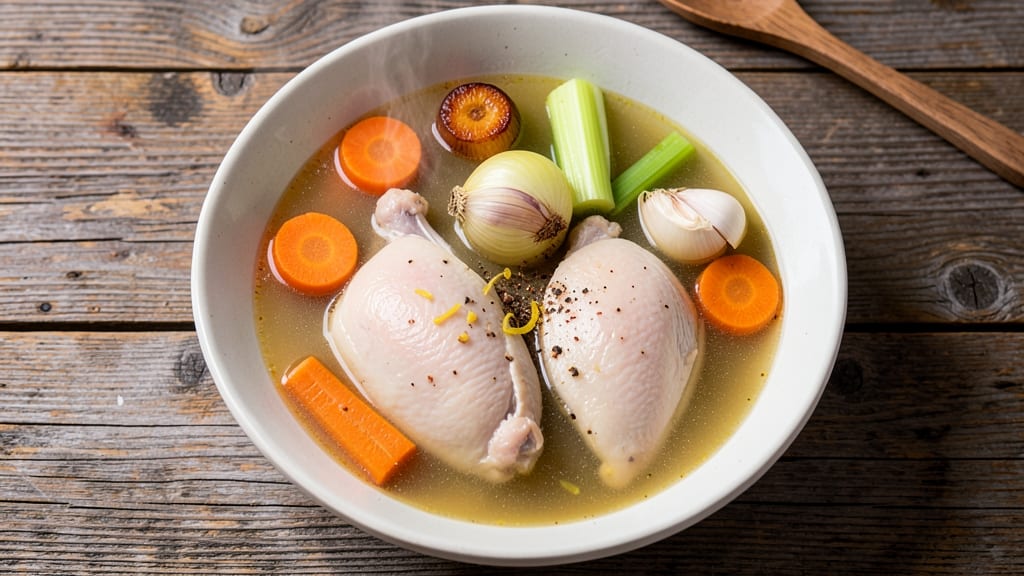
This basic chicken soup recipe from scratch delivers the comforting warmth of homestyle cooking with every spoonful. 💛 The secret lies in slow-simmered broth that extracts maximum flavor from the chicken and vegetables, creating a nourishing base that feels like a hug in bowl form.
I've perfected this version to balance simplicity with depth—no shortcuts, just traditional techniques that yield restaurant-quality results at home.
The foundation begins with a properly built broth using chicken bones and aromatic vegetables, which simmer for hours to develop rich, savory depth. Fresh herbs like thyme and bay leaves infuse subtle brightness, while carrots and celery add natural sweetness that rounds out the flavor.
The chicken cooks just until tender, ensuring each bite delivers both protein and comforting texture.
What you'll end up with is a steaming bowl of golden broth, tender chicken pieces, and perfectly softened vegetables—each component working together to create a meal that's both simple and deeply satisfying.
The aroma alone transforms any kitchen into a place of warmth, while the first spoonful delivers that perfect balance of savory, herbal, and slightly sweet notes.
This recipe builds on traditional methods while keeping it accessible for home cooks, making it perfect for weeknight dinners or when you need nourishment. The beauty of this soup lies in its versatility—it's comforting enough for cold days but light enough for any meal.
Let's get started with the foundation that makes every spoonful special.
Ingredients for basic chicken soup recipe from scratch
These simple, quality ingredients create a rich, comforting chicken soup from scratch.
| Ingredient | Amount | Notes |
|---|---|---|
| Chicken Breasts 🍗 | 1 ½ lb | Boneless, skinless, cut into bite-sized pieces |
| Chicken Carcasses 🍗 | 2 whole | For flavorful broth base |
| Carrots 🥕 | 3 medium | Peeled and cut into 1-inch pieces |
| Celery Stalks 🧅 | 3 whole | Trimmed, cut into 1-inch pieces |
| Yellow Onion 🧅 | 1 whole | Peeled and quartered |
| Garlic Cloves 🧄 | 4 cloves | Peeled and smashed |
| Fresh Thyme Sprigs 🌿 | 2 whole | Or 1 tsp dried thyme |
| Fresh Bay Leaves 🌿 | 2 whole | For subtle herbal depth |
| Fresh Parsley 🌿 | ¼ cup | Chopped, for garnish |
| Olive Oil 🫒 | ¼ cup | For sautéing vegetables |
| Salt 🧂 | 1 ½ tsp | Kosher or sea salt |
| Black Peppercorns 🌶️ | ½ tsp | Freshly ground |
| Fresh Lemon Juice 🍋 | 1 tbsp | Brightens the broth |
The chicken carcasses are non-negotiable for deep flavor—ask your butcher to save them or use the bones from a rotisserie chicken. For the vegetables, organic carrots and celery are ideal, but regular store brands work fine. Fresh thyme and bay leaves elevate the broth beyond basic seasoning. I always grab Trader Joe's fresh herbs because they stay vibrant longer. The garlic should be fresh—no jarred minced stuff here, trust me on that.
No fresh thyme? Dried works at one-third the amount. Swap the bay leaves for a pinch of dried oregano if needed. The carrots can be baby carrots if that's what's in the fridge. For extra richness, add a splash of low-sodium chicken broth if you're short on time. The lemon juice is key—it brightens the whole dish, so don't skip it. If you're using store-bought chicken, bone-in thighs give you more flavor than breasts, but either works.
The broth freezes beautifully—portion it into ice cube trays for easy future use. Fresh herbs should be wrapped in damp paper towels and stored in a sealed bag for up to 5 days. The chicken pieces reheat well, but add a splash of water or broth to keep them moist. This soup tastes even better the next day as flavors meld—double batch if you can.
Why You'll Love This Recipe
- No-Waste Magic: I save money and reduce scraps by using both chicken breasts and carcasses—simmering the bones gives that deep, rich broth without extra effort. The breasts stay tender, and my grocery bill drops because I’m not buying pre-made stock.
- Savory Soul Food: That golden-brown onion and celery base? Chef’s kiss. The carrots add natural sweetness, while the chicken carcass turns the water into a flavor bomb—no bouillon cubes needed. It’s the kind of taste that makes you slow down and actually savor a meal.
- Meal Prep MVP: I make a big batch on Sundays, and it lasts all week—lunches, quick dinners, or even reheated for a sick day. The flavors only get better as it sits, and I can swap in noodles, rice, or greens depending on what I’m craving.
- Budget Booster: Chicken breasts are affordable, and the carcasses? Free if you ask the butcher for bones. A few veggies and time spent simmering turn cheap ingredients into a hearty, filling soup that feeds four for under $10. (Yes, even on a Tuesday night.)
Step-by-step instructions for homestyle chicken soup
This method builds rich flavor layer by layer—starting with aromatic vegetables and finishing with bright herbs.
🍳 Step 1: Sauté the Aromatic Vegetable Base
Heat the 0.25 cup olive oil in a large pot over medium heat until shimmering. Add the 3 medium carrots, 3 whole celery stalks, and 1 whole yellow onion (all prepped as listed). Cook for 8-10 minutes until the vegetables soften and the onion becomes translucent.
This foundational step develops deep flavor through caramelization. Stir occasionally to prevent burning—you'll know it's ready when the vegetables release their natural juices and the onion edges begin to brown slightly. The aroma should fill your kitchen with sweet, earthy notes.
🔥 Step 2: Add Garlic and Herbs for Depth
Push the vegetables to one side of the pot and add the 4 cloves garlic cloves and the 2 whole fresh thyme sprigs. Cook for 1-2 minutes until the garlic is fragrant but not browned. Stir everything together, then add the 2 whole fresh bay leaves.
Here's the thing—adding garlic at this stage ensures it infuses the entire broth with its sweet, aromatic essence. The thyme and bay leaves contribute subtle herbal complexity that elevates the simple vegetable base. Don't skip this step; these herbs are the secret to restaurant-quality homemade broth.
🍳 Step 3: Brown the Chicken for Rich Broth
Working in batches if needed, add the 1.5 lb chicken breasts (cut into bite-sized pieces) to the pot. Brown them for 3-4 minutes per side until golden brown. Remove the chicken and set aside.
This browning step is crucial for developing deep flavor in your broth. The Maillard reaction creates thousands of flavor compounds that dissolve into the cooking liquid. Don't rush this step—you'll know the chicken is ready when it releases easily from the pan and develops a nice crust. The browned chicken will finish cooking later in the broth.
🥘 Step 4: Simmer the Broth with Carcasses
Add the 2 whole chicken carcasses to the pot along with 6 cups water. Bring to a boil, then reduce heat to low and simmer uncovered for 45-60 minutes. Skim any foam that rises to the surface during the first 15 minutes of simmering.
The carcasses will break down into gelatinous goodness, creating a naturally rich broth. This long simmer time is what transforms simple ingredients into something truly comforting. The broth should reduce slightly, becoming more concentrated in flavor. You'll know it's ready when you can easily slide a knife through the chicken meat on the carcasses.
🍽️ Step 5: Finish with Lemon and Fresh Herbs
Return the browned chicken pieces to the pot and add the 1.5 tsp salt, 0.5 tsp black peppercorns, and 1 tbsp fresh lemon juice. Simmer for another 15 minutes until the chicken is cooked through (165°F internal temperature). Stir in the 0.25 cup fresh parsley just before serving.
The lemon juice brightens the rich broth, cutting through the natural fattiness while adding a refreshing acidity. The parsley adds a final herbal note that makes the soup feel fresh and complete. Taste and adjust seasoning—you might need a pinch more salt or pepper to balance the flavors perfectly. Serve hot with crusty bread to soak up every last drop of that healing broth.
Pro Tips For Making Basic Chicken Soup Recipe From Scratch
- Brown the Carcass First: That raw chicken carcass won’t build flavor if you toss it straight into the pot. Hit it with a hot skillet for 3-4 minutes on each side until the bones turn golden—this caramelization is what makes your broth taste homemade, not watery. (Yes, I know it’s messy, but skip this and you’re missing the soul of the soup.)
- Cut Chicken Breasts Against the Grain: Nobody wants rubbery chicken in soup. Slice the breasts horizontally into ½-inch thick pieces, then cut each slice diagonally against the grain. This makes them tender faster and keeps them from turning into chewy hockey pucks. (Pro move: Pound them lightly with a meat mallet if you’re impatient.)
- Don’t Overcrowd the Pot: Throwing in all your veggies at once? Bad idea. Start with half the carrots and celery, let them soften for 10 minutes, then add the rest. Crowding steams instead of sautés, and you’ll end up with mushy onion instead of sweet, caramelized flavor. (Your future self will curse you if you skip this.)
- Simmer Low and Long: The magic happens at a gentle simmer—no rolling boil, no rushing. Cover the pot and keep it at 180°F (tiny bubbles at the edges) for at least 45 minutes. This pulls collagen from the carcass into the broth, making it rich without extra salt. (I learned this after three batches of weak, watery soup—don’t make my mistake.)
Flavor customization for this recipe
Herbal Variations
Swap the thyme and bay leaves for rosemary and tarragon for a more complex herbal profile. Use 1 sprig each and add them with the garlic. I find this works especially well with lemon juice—it creates a bright, almost Mediterranean-inspired flavor.
For a smoky twist, add ½ tsp smoked paprika when browning the chicken. 🌿
Spicy Kick Options
Add ½ tsp red pepper flakes when sautéing the vegetables for gentle heat, or stir in 1 tbsp hot sauce (like Cholula) at the end for a quick tangy kick.
For authentic Mexican-inspired flavor, add 1 tsp ground cumin and ½ tsp oregano with the garlic. The cumin deepens the broth while keeping it comforting.
Asian-Inspired Twist
Replace the thyme and bay leaves with 1-inch fresh ginger (peeled and sliced) and 1 stalk lemongrass (bruised). Add 1 tbsp fish sauce and 1 tsp soy sauce when simmering the broth. Finish with cilantro instead of parsley. This transforms the soup into a fragrant, umami-rich Vietnamese-style pho base.
Creamy Comfort
Stir in ½ cup coconut milk or ¼ cup heavy cream during the final 5 minutes of simmering for a velvety texture. Add ½ tsp nutmeg and a pinch of cinnamon for warmth.
This works especially well with the original herbs—it creates a rich, almost bisque-like consistency while keeping the soup light enough for any meal.
Vegetarian Adaptation
Replace the chicken with 1.5 lb mushrooms (cremini or shiitake) and 1 cup chickpeas. Use vegetable broth instead of water and add 1 tsp turmeric for color and earthiness.
The broth will still develop depth from the mushrooms and vegetables, just without the meaty richness. Garnish with extra parsley and a squeeze of lemon.
Global Seasoning Blends
For a North African touch, add ½ tsp ground coriander and ¼ tsp cinnamon with the garlic. For Italian flair, use 1 tsp dried oregano and ½ tsp fennel seeds (toasted briefly in the oil).
Both versions keep the core vegetables and lemon but transform the soup into something entirely new while maintaining that comforting essence. 🌍
Nutrition facts
Frequently asked questions
Can I make this chicken soup without chicken carcasses?
Yes! If you don't have carcasses, use 2-3 extra chicken thighs (bone-in) instead—they'll add rich flavor to the broth. For even more depth, add 1 chicken bouillon cube or 2 cups extra chicken broth when simmering. The soup will still be delicious, though the broth won't be quite as gelatinous.
How long can I store leftovers?
This soup keeps well for 4-5 days in an airtight container in the fridge. For longer storage, freeze portions for up to 3 months. Reheat gently on the stove with a splash of water or broth to maintain moisture. The flavors actually improve overnight as everything melds together!
Why does my broth taste bland?
Bland broth usually means one of three things: not enough simmering time (at least 45 minutes is ideal), insufficient seasoning, or not enough fat from the chicken. Try browning the chicken longer next time, adding a splash of lemon juice or fish sauce at the end, or toasting the spices slightly in the oil before adding vegetables.
Can I make this soup in an Instant Pot?
Sauté the vegetables and brown the chicken as directed, then add everything (including carcasses) and 6 cups water. Cook on high pressure for 30 minutes, then quick-release. The broth will be rich but slightly less gelatinous than stovetop. Add fresh herbs at the end for brightness.
What if I don't have fresh herbs?
No problem! Use ½ teaspoon dried thyme and ½ teaspoon dried oregano instead of fresh, and add them with the garlic. For bay leaves, ¼ teaspoon ground bay leaf works in a pinch. The dried versions are more concentrated, so use sparingly. The soup will still taste amazing—just slightly less vibrant.