
Main Courses
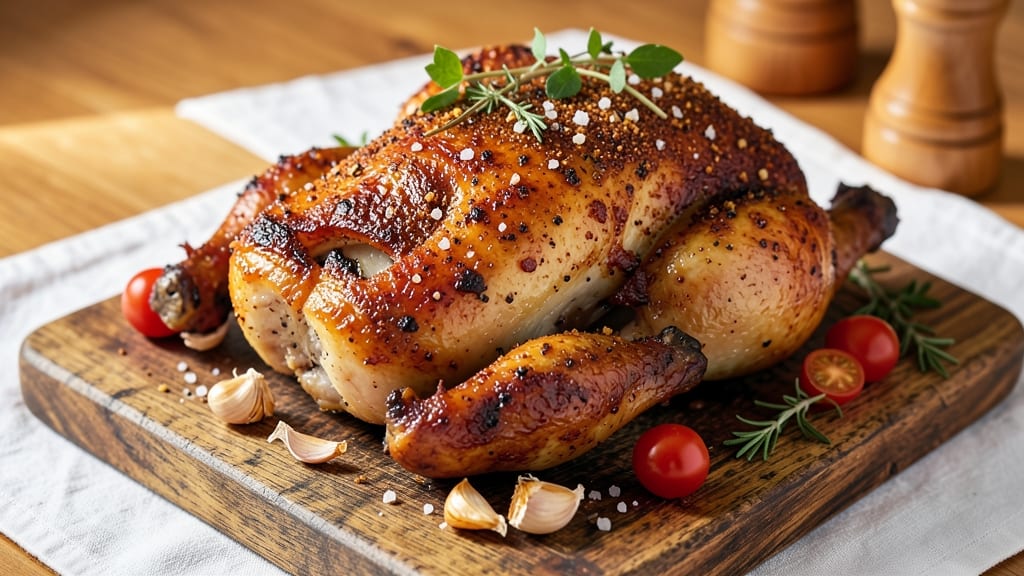
This barbecue roast chicken recipe delivers smoky-spiced perfection with crisp skin and juicy centers that fall apart at the touch of a fork. The secret lies in a dry rub blend of paprika, brown sugar, and garlic powder, which creates an irresistible bark while keeping the meat tender inside.
I developed this method after years of perfecting holiday roasts—no basting required, just simple techniques that guarantee restaurant-quality results every time.
The beauty of this approach is its versatility—you can prepare it in an oven, smoker, or even on the grill for that authentic backyard flavor. A 30-minute marinade (or overnight for deeper flavor) lets the spices penetrate, while roasting at 375°F ensures even cooking without drying out.
The key is patience: letting the chicken rest for 15 minutes after roasting locks in those juices for the most tender, flavorful bite.
What sets this apart is the balance of textures—crispy golden skin that shatters with each bite, paired with meat so tender it practically melts.
The smoky aroma alone will have everyone gathering at the table, and the versatility means it works as a centerpiece for holidays or a weeknight dinner. Serve with roasted vegetables or a drizzle of barbecue sauce for the full experience.
This method transforms a simple whole chicken into a showstopper with minimal effort—no fancy equipment or complicated steps. Whether you're hosting a crowd or treating yourself to a special meal, this recipe delivers foolproof, crowd-pleasing results that taste like they came from a pitmaster's table. Let's get cooking!
Ingredients for barbecue roast chicken
Essential ingredients for restaurant-quality barbecue roast chicken with crisp skin and juicy centers.
| Ingredient | Amount | Notes |
|---|---|---|
| Whole Chicken 🍗 | 4 lb | Fresh, preferably organic, skin-on |
| Smoked Paprika 🌶️ | 2 tbsp | High-quality for authentic smoky flavor |
| Brown Sugar 🍚 | 2 tbsp | Light or dark, packed measurement |
| Garlic Powder 🧄 | 1 tbsp | Freshly ground preferred |
| Ground Black Pepper 🌶️ | 1 tsp | Freshly cracked for best flavor |
| Kosher Salt 🧂 | 1 ½ tbsp | Diamond Crystal preferred |
| Onion Powder 🧅 | 1 tsp | For depth of flavor |
| Olive Oil 🫒 | 2 tbsp | Extra-virgin for crisp skin |
| Fresh Rosemary 🌿 | ½ tsp | Chopped, for aromatic depth |
| Fresh Thyme 🌿 | ½ tsp | Leaves only, finely chopped |
| Barbecue Sauce 🍅 | ¼ cup | Optional for finishing drizzle |
| Lemon Juice 🍋 | 1 tbsp | Freshly squeezed for brightness |
The whole chicken is the foundation—opt for organic or free-range when possible, as the natural fat distribution enhances crispiness. A 4-pound bird strikes the perfect balance between yield and cooking time. For the dry rub, smoked paprika is non-negotiable; brands like Penzeys or McCormick deliver consistent quality. Brown sugar should be packed to avoid measurement errors, and Diamond Crystal kosher salt dissolves more easily than table salt. Fresh herbs like rosemary and thyme elevate the flavor profile significantly compared to dried alternatives. If sourcing fresh herbs proves challenging, Trader Joe's typically stocks high-quality, affordable options.
No smoked paprika? Regular paprika plus a pinch of liquid smoke works in a pinch, though the flavor won't be identical. Substitute brown sugar with white sugar if needed, but the caramelization will be less pronounced. For a lower-sodium option, reduce the kosher salt to 1 tbsp and add an extra ½ tsp garlic powder. The olive oil is crucial for crisp skin—avoid vegetable oil, as it lacks the fruity compounds that promote browning. If barbecue sauce isn't available, a mix of ketchup and apple cider vinegar can mimic the tangy-sweet profile. Fresh herbs can be swapped for dried at one-third the amount, but fresh is always preferred for aromatic impact.
Store the dry rub blend in an airtight container for up to 3 months to preserve its potency. Fresh herbs should be wrapped in damp paper towels and refrigerated for 5-7 days or frozen for 6 months. The whole chicken can be prepped a day ahead and refrigerated uncovered to dry the skin slightly, which enhances crispiness. Once roasted, let the chicken rest for 15 minutes before carving—this critical step ensures juices redistribute, preventing dry meat. Leftovers keep for 4 days in the fridge or 3 months frozen, though reheating may compromise the skin's crispness.
Why You'll Love This Recipe
- Five-Ingredient Magic: I swear by this—just rub the chicken with paprika, sugar, garlic powder, and pepper, then roast. No fancy prep, no stress, and the whole house smells like Sunday dinner in 20 minutes.
- Smoky-Sweet Obsession: That caramelized crust from the brown sugar and smoked paprika? It’s the kind of flavor that makes you slow down mid-bite. The garlic powder ties it all together—simple, but ridiculously good.
- Leftovers I Actually Love: This chicken stays juicy for days. Shred it for tacos, slice it for sandwiches, or reheat portions straight from the fridge. Honestly, I make it on Sundays just for the leftovers.
- Budget Dinner Hero: A whole chicken costs less than takeout, and this recipe uses pantry staples. Plus, the leftovers stretch across lunches—no wasted money, no wasted food, just pure satisfaction. (Yes, even on a Tuesday night.)
Step-by-step instructions for smoky-spiced roast chicken
Master the balance of crisp skin and juicy meat with this professional technique.
Prepare the Chicken for Maximum Flavor and Crisp
Remove the whole chicken from its packaging and place it on a clean cutting board. Pat the skin completely dry using paper towels—this is absolutely critical for achieving that perfect crisp. I mean really dry, especially under the wings and in the cavity where moisture tends to hide. Any lingering moisture will steam the skin instead of crisping it.
Next, create your dry rub by combining the 2 tbsp smoked paprika, 2 tbsp brown sugar, 1 tbsp garlic powder, 1 tsp ground black pepper, 1.5 tbsp kosher salt, and 1 tsp onion powder in a small bowl. Mix thoroughly with your fingers or a whisk to ensure even distribution. The smoky-sweet combination will penetrate the skin while the salt helps draw out moisture for that coveted crisp texture.
Generously coat the entire chicken with the rub, pressing it into the skin so it adheres well. Don't forget the cavity—rub the inside of the chicken with half the mixture. Let the chicken sit uncovered on a wire rack in the refrigerator for at least 1 hour (or up to 24 hours for deeper flavor penetration). This resting period allows the rub to develop its full flavor and the skin to become properly dry.
Create the Perfect Roasting Environment
Preheat your oven to 425°F with the rack positioned in the lower third of the oven. This high heat is essential for creating that crispy skin while the lower position allows heat to circulate evenly around the chicken. Place a wire rack inside a rimmed baking sheet to ensure air circulates underneath the chicken.
Once the oven reaches temperature, carefully transfer the chicken to the prepared rack. The skin-side should face up to maximize browning. Drizzle the 2 tbsp olive oil evenly over the chicken, focusing on the skin. This creates a barrier that helps the skin crisp while preventing it from drying out too quickly. Don't skip this step—it's what creates that perfect balance of texture.
For aromatic depth, place the 0.5 tsp chopped fresh rosemary and 0.5 tsp chopped fresh thyme in the bottom of the baking sheet. As the chicken roasts, these herbs will infuse the surrounding air with their delicate flavors, enhancing the overall taste of the meat.
Roast to Golden Perfection with Precision Timing
Slide the chicken into the preheated oven and roast for 1 hour and 15 minutes. This timing is crucial for achieving both crisp skin and perfectly juicy meat. The high initial temperature creates a golden-brown crust while the internal temperature gradually rises. I recommend using an instant-read thermometer to monitor progress—insert it into the thickest part of the thigh (not touching bone).
The chicken is done when the internal temperature reaches 165°F. You'll also notice the skin has turned a deep golden brown with crisp edges that release easily when you lift the chicken. If the skin begins to darken too quickly, tent the chicken loosely with aluminum foil to prevent over-browning while it continues to cook through.
Real talk: Your oven might run hot, so start checking the temperature at the 1 hour mark. Some ovens need 1 hour and 30 minutes to reach perfect doneness. The key is patience—rushing leads to dry meat, but proper timing guarantees juicy centers with crispy skin.
Rest and Finish with Flavorful Touches
Once the chicken reaches 165°F, remove it from the oven and transfer to a cutting board. Let it rest for 15-20 minutes before carving. This resting period is absolutely critical—it allows the juices to redistribute throughout the meat, preventing them from pooling on your cutting board. If you skip this step, you'll end up with dry, disappointing slices.
While the chicken rests, prepare the finishing touches. In a small bowl, combine the 0.25 cup barbecue sauce with 1 tbsp fresh lemon juice. This bright, tangy mixture will cut through the richness of the chicken while adding a smoky depth. Carefully brush this mixture over the chicken just before serving, focusing on the crispy skin to enhance its flavor.
Slice the chicken against the grain for maximum tenderness, and serve immediately with the pan juices drizzled over the top. Each piece should have that perfect contrast of crispy, golden skin with succulent, juicy meat underneath. The barbecue-lemon glaze adds a finishing touch that ties all the flavors together beautifully.
Pro Tips For Making Barbecue Roast Chicken
- Dry the Skin First: Pat the chicken thoroughly with paper towels before seasoning—wet skin won’t crisp, no matter how much smoked paprika you slather on. I learned this the hard way after slathering a damp bird in my first attempt and ending up with sad, sticky skin instead of that golden, crackling crust.
- Mix Dry Rub Early: Combine smoked paprika, brown sugar, garlic powder, and black pepper before seasoning the chicken—this ensures even distribution. My grandmother swore by this, and she was right: clumping rub on one side of the bird means uneven flavor and a bitter bite in some spots.
- Use a Meat Thermometer: Pull the chicken at 165°F in the thickest part of the thigh—waiting for the skin to darken leads to overcooked, dry meat. I skipped this for years, and every time, the breast would be rubbery by the time the thigh was done.
- Baste with Pan Juices: After searing the chicken, pour the browned bits from the pan over it every 20 minutes—this adds depth and keeps the meat moist. Sounds weird, but it works: the caramelized fond dissolves into the skin, making the barbecue flavor stick like glue.
Creative variations of this dish
Smoky Grill Masterpiece
Swap your oven for a grill or smoker to create a restaurant-quality barbecue flavor profile. Preheat your grill to 375°F and place the rubbed chicken directly on the grates. Use a two-zone fire method—direct heat on one side for searing, indirect heat on the other for slow cooking.
Baste occasionally with apple cider vinegar> mixed with 1 tbsp brown sugar for extra smokiness. This method infuses the chicken with wood-fired essence while keeping it moist. 🔥
Honey-Glazed Crisp
For a sweet-savory twist, brush the chicken with 2 tbsp honey> mixed with 1 tbsp Dijon mustard after the initial 30 minutes> of roasting. The honey caramelizes beautifully, creating a sticky glaze that contrasts with the crisp skin.
Finish with a sprinkle of flaky sea salt for a gourmet touch. This variation works especially well for dinner parties—it’s visually stunning and packed with flavor.
Herb Butter Stuffing
Elevate your chicken by stuffing the cavity with a herb butter mixture> made from 4 tbsp softened butter, 1 tbsp chopped fresh parsley, 1 tsp garlic powder, and ½ tsp lemon zest.
The butter melts during roasting, basting the meat from within and creating a rich, aromatic crust. This technique adds an extra layer of depth without altering the crisp skin you worked so hard to achieve.
Spicy Cajun Twist
Transform your chicken into a Cajun-inspired dish by adding 1 tbsp Cajun seasoning> (like Tony Chachere’s) to your dry rub. Boost the heat with ½ tsp cayenne pepper> and a pinch of smoked paprika>.
Serve with a side of cooling avocado slices> and a drizzle of creole mustard> to balance the spice. This variation is perfect for those who love bold, fiery flavors with a smoky backbone.
Slow-Cooker Shortcut
For a hands-off approach, place the rubbed chicken in a slow cooker with ½ cup chicken broth> and cook on low for 6-7 hours>. The indirect heat keeps the meat tender while the rub infuses flavor.
Finish by broiling for 5 minutes> to crisp the skin. This method is ideal for busy weeknights—just add the chicken and let it work its magic. 💫
Global Fusion Flavors
Experiment with international flavors by swapping spices. For a Moroccan touch, replace smoked paprika with 1 tbsp ras el hanout> and add ½ tsp ground cumin>.
For Korean-inspired chicken, mix 1 tbsp gochujang> into the rub and serve with kimchi**>. These global twists keep the technique intact while offering exciting new taste experiences.
Nutrition facts
Frequently asked questions
Can I use this recipe with bone-in or boneless chicken?
This recipe is designed for bone-in, skin-on whole chicken (typically 4 pounds) to achieve the perfect crisp skin and juicy meat. Bone-in pieces cook more evenly and develop richer flavor. For boneless breasts, reduce cooking time to 20-25 minutes at 425°F and avoid the dry rub—opt for a light marinade instead. Bone-in thighs work beautifully too, just adjust time to 40-45 minutes.
Why does my chicken skin sometimes turn rubbery instead of crispy?
Rubbery skin usually means moisture got trapped during cooking. Always pat the chicken completely dry before seasoning, and avoid covering it with foil until the last 15 minutes of cooking. Another common mistake is overcrowding the pan—leave space for air circulation. For extra crispiness, broil for 2-3 minutes at the end while watching closely to prevent burning.
How do I adjust this recipe for a smoker instead of an oven?
For a smoker, maintain 250-275°F with your preferred wood (hickory or apple works best). Smoke the chicken for 2-3 hours until internal temp reaches 165°F, then finish with 10 minutes at 375°F in the oven to crisp the skin. Spritz with apple cider vinegar every 30 minutes to keep it moist. The low-and-slow method enhances smoky flavor while maintaining tenderness.
What's the best way to reheat leftover barbecue chicken?
Reheat gently to preserve crispiness: Place slices on a baking sheet and warm in a 350°F oven for 10-12 minutes until reaching 165°F. For the whole chicken, wrap in foil and reheat at 325°F for 20 minutes. Avoid microwaving—it turns skin soggy. Store leftovers in an airtight container for up to 4 days or freeze for 3 months.
Can I make this ahead of time for a holiday meal?
Prep the chicken 1 day ahead by applying the dry rub and refrigerating uncovered (this dries the skin). Roast it 4-6 hours before serving and keep warm in a 200°F oven. The skin will re-crisp beautifully when reheated briefly. For make-ahead sides, roast vegetables the day before and reheat with the chicken. This is perfect for Thanksgiving or Christmas dinners when timing is tight!