
Main Courses
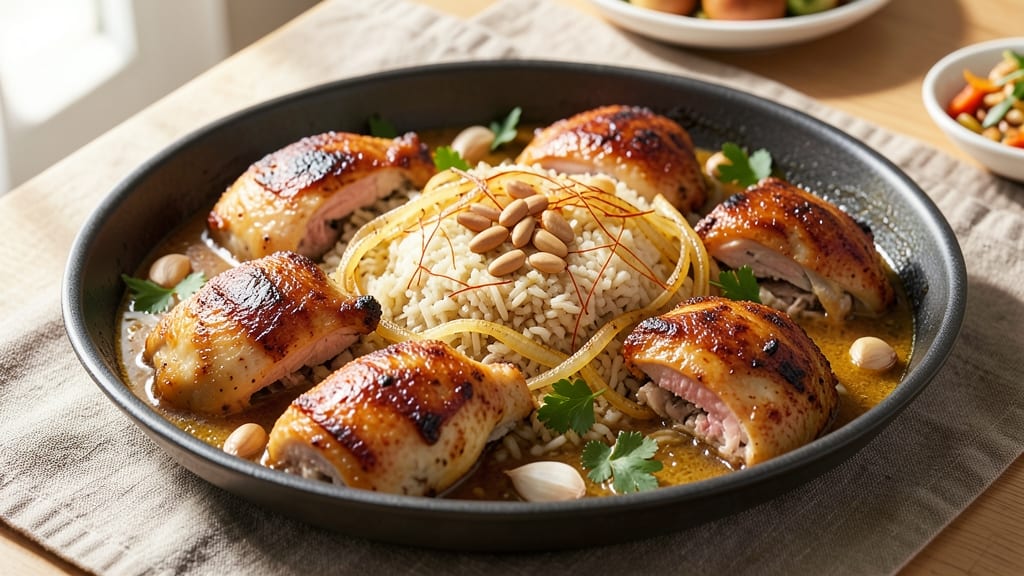
This baked chicken paella recipe transforms a classic Spanish dish into a showstopper with saffron-infused rice and a perfectly crispy top layer. The secret lies in browning the chicken first to lock in flavor, then layering it with aromatic sofrito and saffron-infused rice for depth.
Every bite delivers tender chicken, fragrant rice, and a caramelized crust that makes this dish restaurant-worthy.
The beauty of this approach is its simplicity: no constant stirring required, just a single baking dish and 45 minutes of hands-off time. The chicken stays juicy while the rice develops that signature socarrat—those prized crispy bits at the bottom.
This method preserves the dish’s traditional soul while making it easier to perfect at home, even for weeknight dinners.
What sets this apart is the balance of textures: tender chicken, fluffy yet slightly firm rice, and that crispy edge that adds drama. The saffron-infused broth adds a golden hue and earthy aroma, while the sofrito base layers in smoky, garlicky depth.
Garnish with fresh herbs and lemon wedges for a finish that’s as vibrant as it is flavorful.
Whether you’re cooking for a crowd or treating yourself to a special meal, this paella delivers restaurant-quality results with minimal effort. The crispy top layer isn’t just for show—it’s the signature touch that makes every forkful unforgettable. Ready to elevate your paella game?
Ingredients for baked chicken paella
Saffron threads and crispy chicken thighs transform this paella into a restaurant-worthy masterpiece.
| Ingredient | Amount | Notes |
|---|---|---|
| Chicken Thighs, Bone-In 🍗 | 1 ½ lb | Skin-on for crispy texture |
| Arborio Rice 🍚 | 1 ½ cups | Uncooked, medium-grain preferred |
| Saffron Threads 🌼 | ¼ tsp | High-quality, finely crushed |
| Chicken Broth 💧 | 2 cups | Low-sodium preferred |
| Yellow Onion 🧅 | 1 whole | Diced, medium size |
| Garlic Cloves 🧄 | 6 cloves | Minced, fresh preferred |
| Red Bell Pepper 🌶️ | 1 whole | Diced, any color |
| Smoked Paprika 🌶️ | 1 tbsp | Sweet or smoked variety |
| Ground Cumin 🌿 | ½ tsp | Toasted for depth |
| Bay Leaves 🌿 | 2 whole | Fresh or dried |
| Lemon Juice 🍋 | 2 tbsp | Freshly squeezed |
| Olive Oil 🫒 | ¼ cup | Extra-virgin for richness |
| Fresh Parsley 🌿 | ¼ cup | Chopped, for garnish |
| Salt 🧂 | 1 ½ tsp | Diamond Crystal preferred |
| Black Pepper 🌶️ | ½ tsp | Freshly ground |
The saffron is non-negotiable here—Spanish saffron from Penzeys or a specialty store delivers the best flavor and aroma. Look for vibrant red threads, not orange powder. The chicken thighs should have good marbling for juiciness, and bone-in pieces stay moister during baking. Arborio rice is a must; it absorbs liquid gradually for that signature texture. For the sofrito base, fresh garlic and bell pepper make all the difference—frozen works in a pinch, but fresh is ideal. The smoked paprika adds depth, so Penzeys or La Boîte brands are worth the investment.
No saffron? Turmeric at half the amount adds color but lacks the floral notes, so use it only if absolutely necessary. For the chicken, thighs can be swapped for breasts, but they’ll dry out faster—brine them for 30 minutes first. Running short on chicken broth? Vegetable broth with a splash of white wine works well. The bay leaves can be skipped if you dislike their flavor, but they add subtle earthiness. Lemon juice can be substituted with vinegar, though fresh lemon brightens the dish more effectively. If you’re prepping ahead, toast the rice in olive oil before adding liquid for extra depth.
This paella reheats beautifully—just cover with foil and bake at 375°F for 15 minutes. The crispy top layer, or socarrat, is best enjoyed immediately, but the rest of the dish keeps well for 3-4 days in the fridge. For longer storage, freeze the entire dish (without the garnish) for up to 3 months. To reheat from frozen, thaw overnight in the fridge, then bake covered at 350°F for 25 minutes. Garnish with fresh parsley and lemon wedges just before serving to keep it vibrant.
Why You'll Love This Recipe
- One-Pan Magic: I swear by this—just toss the chicken, rice, and broth in one dish, pop it in the oven, and walk away. No chopping boards, no stove babysitting, just hands-off cooking while you sip wine or scroll through your phone.
- Saffron Gold Rush: That tiny pinch of saffron threads? It transforms everything. The rice gets this golden hue, and the flavor—warm, earthy, with a hint of luxury—makes even the simplest weeknight feel special. (Yes, even on a Tuesday night.)
- Leftovers That Don’t Suck: Paella actually improves the next day. The rice soaks up extra flavor, the chicken gets even more tender, and you’ve got a ready-to-reheat meal for lunch. I meal prep this all the time—just reheat with a splash of broth to keep it moist.
- Budget-Friendly Feast: Bone-in chicken thighs keep costs down while adding depth, and Arborio rice stretches further than you’d think. Here’s what sold me—this feeds four for under $15, and everyone walks away happy. No sad, expensive restaurant vibes here.
Step-by-step instructions for baked chicken paella
Here's how to build layers of flavor and texture for perfect paella every time.
Prepare the Saffron Infusion and Sear the Chicken
First, crush the 0.25 teaspoon saffron threads between your fingers to release their vibrant aroma. Heat the 0.25 cup olive oil in a large oven-safe skillet over medium-high heat. Add the 1.5 pound chicken thighs, bone-in skin-side down and sear for 5-6 minutes until the skin is golden brown and crispy. Flip the chicken and cook for another 3-4 minutes until the meat reaches 165°F internally.
Remove the chicken from the pan and set aside. In the same skillet, add the 1 whole yellow onion and 1 whole red bell pepper, both diced. Cook for 5-6 minutes until softened, then add the 6 cloves minced garlic, 1 tablespoon smoked paprika, and 0.5 teaspoon ground cumin. Stir for 1 minute until fragrant—this is where the deep, smoky flavors develop. Here's the thing—don't rush this step. The spices need time to bloom and meld together.
Toast the Arborio Rice and Build the Base
Add the 1.5 cups arborio rice to the skillet and stir to coat it evenly with the spices and oil. Toast the rice for 2-3 minutes until it turns a light golden color. This step is critical—it enhances the nutty flavor of the rice and prevents a mushy texture. Pour in the 2 cups chicken broth and stir gently to combine. Add the 2 whole bay leaves and 1.5 teaspoon salt, then return the chicken thighs to the skillet, skin-side up.
Bring the mixture to a gentle simmer, then reduce heat to low. Cover the skillet with a tight-fitting lid and bake in a preheated 375°F oven for 20 minutes. This initial baking period allows the rice to absorb the broth and develop a firm base. After 20 minutes, remove the lid and stir gently—you'll see the rice has absorbed most of the liquid but still has a slight give when pressed with your finger.
Add Lemon Juice and Finish with Parsley
Uncover the skillet and drizzle in the 2 tablespoons lemon juice. Stir gently to distribute the acidity throughout the rice, brightening the flavors. Return the skillet to the oven and bake uncovered for another 10-15 minutes until the rice is tender but still slightly firm to the touch. The top layer should be crispy, almost like a crust—this is the hallmark of a well-made paella.
Remove the skillet from the oven and let it rest for 5 minutes before serving. Sprinkle the 0.25 cup chopped fresh parsley evenly over the top and adjust seasoning with 0.5 teaspoon black pepper if needed. The lemon juice adds a refreshing contrast to the rich, savory flavors, while the parsley adds a pop of color and freshness. Serve immediately, ensuring everyone gets a piece of the crispy top layer.
Rest and Serve for Maximum Flavor
Let the paella rest for 5 minutes before serving. This resting period allows the juices to redistribute, ensuring each bite is moist and flavorful. The crispy top layer will soften slightly but still provide that satisfying contrast to the tender rice beneath. Use a large, flat spoon to serve the paella directly from the skillet, making sure to scrape up the crispy bits from the bottom—these are packed with flavor.
This dish is best served family-style, right from the pan, so everyone can enjoy the crispy top layer and savor the rich, saffron-infused aromas. Pair it with a simple green salad and a glass of crisp white wine to complement the flavors. The key to success lies in the balance of textures and flavors—crispy top, tender rice, and juicy chicken all working together in harmony.
Pro Tips For Making Baked Chicken Paella
- CRISP THE THIGHS FIRST: Sear the bone-in chicken thighs skin-side down until the fat renders and the skin turns golden—this step alone makes the difference between dry meat and juicy, crisp-edged perfection. I used to skip it for speed, but the flavor and texture payoff is worth the 5 extra minutes.
- TOAST THE ONION LOW: Cook the yellow onion over medium-low heat until it’s soft and caramelized, not browned—this builds sweetness without bitterness. High heat turns it bitter, and nobody wants a paella with burnt-on onion. Patience here saves the whole dish.
- LAYER RICE LAST: Spread the Arborio rice after the chicken and broth are already simmering—this lets the grains soak up liquid evenly instead of sitting dry at the bottom. I learned this after digging up mushy rice from my first attempt. Trust the process.
- SAFFRON SOAKS BETTER: Crush the saffron threads and steep them in a splash of warm broth for 10 minutes before adding to the pan—this extracts maximum color and aroma. Dry threads? You’re just coloring water. Do this while you prep everything else.
Regional styles of these flavors
Spanish Valencian Roots
This paella traces its roots to Valencia, Spain, where it originated as a peasant dish cooked over open flames in shallow pans. The original version was a humble combination of rice, rabbit, chicken, and seasonal vegetables—no seafood!
The crispy bottom layer (socarrat) was (and still is) considered the prize, created by letting the rice caramelize at the edges. In Valencia, they use short-grain Bomba rice instead of Arborio, but the technique remains the same: high heat, slow cooking, and patience. 🌍
Authentic Valencian paella relies on local ingredients like senyap (a blend of saffron, garlic, and paprika) and artichokes or green beans as staples. The dish was traditionally cooked in paellera pans—wide, shallow pans with two handles—over wood fires.
Today, we adapt this tradition to home ovens while preserving the soul of the dish through techniques like searing the chicken and achieving that coveted crispy crust.
Catalan Coastal Twist
Up the coast in Catalonia, paella takes on a seafood-forward identity, especially in coastal towns like Barcelona. Here, shrimp, mussels, and squid join the rice, creating a lighter, briny version called paella de mariscos.
The Catalan approach often includes white wine in the cooking liquid and finishes with a splash of vermouth for complexity.
For our chicken paella, we can borrow this technique by deglazing the pan with ½ cup dry white wine after searing the chicken—simmer it for 3-4 minutes before adding the broth. This adds a subtle citrus brightness that pairs beautifully with the saffron. 🍷
Catalan cooks also emphasize fresh herbs like rosemary and thyme, which we can incorporate by adding 1 sprig of each to the baking dish during the final 10 minutes of cooking. The herbs infuse the rice with an earthy aroma that complements the chicken and saffron.
For a true Catalan touch, serve with allioli (garlic mayo) on the side—it’s a must in Catalan paella culture.
Modern American Adaptations
In the U.S., paella has evolved into a fusion canvas, especially in cities like San Francisco and New York, where chefs blend Spanish techniques with local ingredients.
One popular twist is smoked paella, where the rice is finished under a smoker or with smoked wood chips for 10-15 minutes at the end.
For home cooks, a simple hack is to add ½ teaspoon chipotle powder to the sofrito or place a soaked wood chip (like hickory or apple) on foil in the oven while baking. 🔥
Another American adaptation is vegetarian paella, where chicken is swapped for roasted vegetables like zucchini, bell peppers, and artichokes, and the broth is vegetable-based. To keep the dish hearty, add crispy fried onions or toasted pine nuts for texture.
For our baked chicken paella, you could also stir in ½ cup cooked black beans during the final 5 minutes of baking to add protein and depth—this works especially well if serving to vegetarians.
Latin American Spiced Variations
In Latin America, paella has been reimagined with bold spices and tropical flavors. In Mexico, paella often includes chiles, cilantro, and lime, transforming it into a paella mexicana.
For our recipe, try adding 1-2 tablespoons of diced jalapeño to the sofrito or finishing with 2 tablespoons of chopped cilantro and a squeeze of lime before serving. The heat and acidity cut through the richness of the chicken and saffron beautifully. 🌶️
In Argentina, paella is sometimes prepared with local chorizo and red wine, creating a paella criolla. For a quick adaptation, brown ½ cup diced chorizo with the chicken and onions, then proceed with the recipe as written.
The chorizo adds a smoky, spicy kick that pairs perfectly with the saffron and Arborio rice. If you can’t find chorizo, andouille sausage works as a substitute—just remove the casing and crumble it into the sofrito.
Nutrition facts
Frequently asked questions
Can I use chicken breasts instead of thighs for this paella?
Chicken breasts work, but they dry out faster during baking. If using breasts, opt for bone-in, skin-on pieces for moisture, or brine them for 30 minutes first. For extra juiciness, add 1-2 tablespoons chicken broth to the baking dish during the final 5 minutes of cooking.
How do I get the crispy bottom layer (socarrat) without burning the rice?
Achieve the perfect socarrat by baking uncovered for the final 10-15 minutes at 375°F. The rice should be nearly dry but still slightly moist in the center. For even crispiness, use a heavy-bottomed skillet and avoid stirring after removing the lid. If the top browns too fast, tent loosely with foil.
What’s the best way to reheat leftover paella?
Cover with foil and reheat at 350°F for 15-20 minutes until warmed through. For extra crispiness, broil for 2-3 minutes at the end. Avoid microwaving—it turns the rice mushy. Store leftovers in an airtight container for up to 4 days.
Can I make this paella in a regular oven-safe pan instead of a paellera?
Yes! Use a 12-inch oven-safe skillet with a depth of 1-1.5 inches. The wider surface area helps create the crispy edges. If your pan is deeper, reduce the rice by ¼ cup to maintain the proper rice-to-liquid ratio. A heavy stainless steel or cast iron pan works best.
Why does my paella turn out mushy instead of firm?
Mushy rice usually means too much liquid or insufficient toasting. Ensure you toast the rice for 2-3 minutes before adding broth, and use the exact 2 cups broth for 1.5 cups rice. Also, avoid peeking under the lid while baking—every time you open it, steam escapes, adding moisture.