
Main Courses
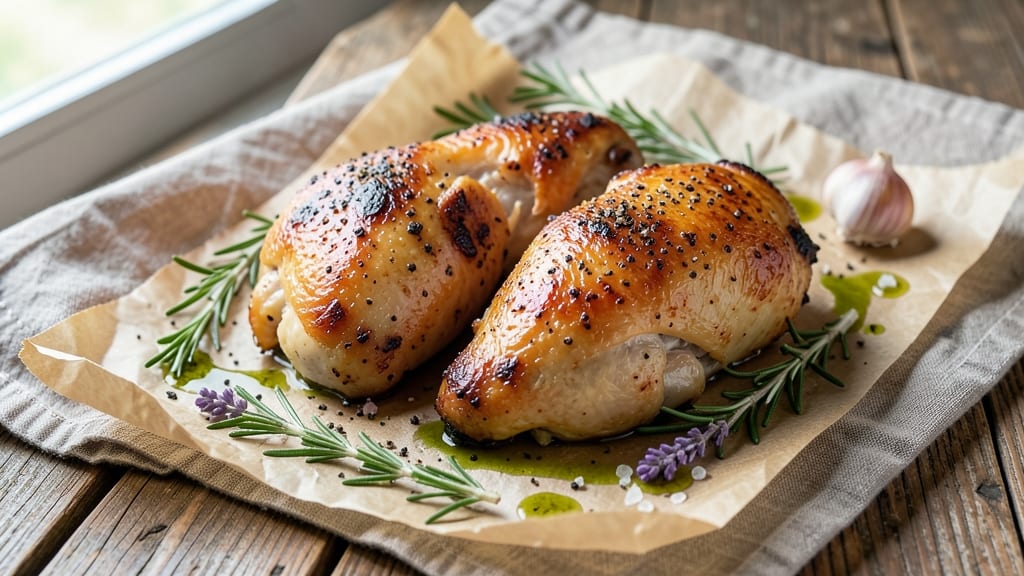
A baked chicken in parchment paper recipe transforms simple weeknight dinners into restaurant-worthy meals with minimal effort. The parchment creates a sealed environment that locks in juices while allowing the skin to crisp beautifully—no basting required.
This technique guarantees tender, flavorful chicken with golden-brown skin that holds up to any side dish.
The secret lies in proper seasoning and precise timing. You'll start with a simple dry rub or marinade, then fold the chicken in parchment with aromatics like garlic and herbs. The high heat of the oven steams the chicken gently, creating its own basting liquid while the parchment prevents drying.
It's the kind of method that makes even busy weeknights feel special.
What you'll end up with is chicken that's perfectly cooked through with crispy, caramelized skin—no thermometer needed. The parchment technique ensures every bite stays juicy while developing rich, savory flavors. This method works beautifully with thighs, breasts, or even whole chicken, making it versatile enough for any meal.
The best part? Cleanup is effortless. Simply remove the chicken from the parchment and discard—no sticky pans or messy drippings. Serve with roasted vegetables or a fresh salad for a complete, foolproof dinner that impresses without the fuss.
Ingredients for baked chicken in parchment paper
Juicy, crisp-skinned chicken with restaurant-quality results—just ten simple ingredients transform weeknight cooking.
| Ingredient | Amount | Notes |
|---|---|---|
| Chicken Thighs, Bone-In, Skin-On 🍗 | 1 ½ lb | Evenly sized for consistent cooking |
| Extra-Virgin Olive Oil 🫒 | 2 tbsp | High-quality, fruity variety preferred |
| Diamond Crystal Kosher Salt 🧂 | 1 tbsp | Coarse grain for better texture |
| Freshly Ground Black Pepper 🌶️ | 1 tsp | Freshly cracked for optimal flavor |
| Garlic Cloves 🧄 | 4 cloves | Peeled and smashed for intense flavor |
| Fresh Rosemary 🌿 | ¼ cup | Finely chopped, stems removed |
| Fresh Thyme 🌿 | ⅛ cup | Leaves only, stems discarded |
| Unsalted Butter 🧈 | 2 tbsp | Cold, cubed for crispy skin |
| Lemon Juice 🍋 | 1 tbsp | Freshly squeezed for brightness |
| Heavy Cream 🥛 | ¼ cup | For enhanced moisture and richness |
| Parchment Paper 📄 | 1 sheet | Heavy-duty for easy handling |
The chicken thighs are the foundation—bone-in and skin-on ensures maximum flavor and moisture retention. Look for thighs with a thick layer of fat around the bone for extra richness. Most grocery stores carry them in the meat section, but for the best quality, visit a local butcher who can trim excess fat if needed. The rosemary and thyme should be vibrant green with a strong aroma; wilted herbs indicate old stock. Freshly ground black pepper and Diamond Crystal kosher salt elevate the seasoning—never use pre-ground pepper, as it loses potency quickly.
No fresh herbs? Dried rosemary and thyme work at one-third the amount, but fresh delivers superior flavor. Substitute lemon zest for juice if needed, though the acidity will differ slightly. For extra crispiness, swap the heavy cream for whole milk—it won’t be as rich but still works well. The parchment paper must be heavy-duty; standard sheets may tear under the weight of the chicken. If you’re short on time, pre-cut the herbs while watching TV—it takes less than five minutes.
Store any unused fresh herbs wrapped in damp paper towels in a sealed container for up to 5 days. The chicken thighs can be refrigerated for 2 days before cooking, while the unsalted butter keeps for 3 months in the fridge. The parchment-wrapped chicken reheats beautifully—simply bake at 350°F for 15 minutes to restore crispiness. For meal prep, cook an extra whole chicken and portion the thighs into individual servings for easy grab-and-go lunches.
Why You'll Love This Recipe
- No-Fuss Setup: I swear by this method—just rub the thighs with olive oil, garlic, and salt, then fold them into parchment like a lazy burrito. No bowls, no mess, no stress. The skin-on thighs crisp up perfectly without flipping or basting.
- Garlic-Kissed Magic: That raw garlic tucked under the skin? It melts into the meat while the skin stays crackling, creating a flavor so rich it’s like someone seasoned it for hours. Honestly, I’ve never had chicken this juicy with so little effort.
- Weeknight to Potluck: Same recipe works whether I’m feeding myself after a long day or packing it for a picnic. The parchment keeps everything contained—no drippy pans, no lost crumbs—so it’s just as good cold as it is hot. (Yes, even on a Tuesday night.)
- Budget-Friendly Leftovers: Bone-in, skin-on thighs stretch my grocery budget further than boneless breasts ever did, and they reheat like a dream. I’ll make a double batch, store half, and still crave the leftovers days later. The crispy skin stays intact—no sad, rubbery chicken here.
Step-by-step instructions for juicy parchment-baked chicken
Master this technique for restaurant-quality results without a single pan to wash.
Prepare the Chicken for Maximum Flavor and Crisp
Pat the 1.5 lb chicken thighs completely dry with paper towels—this is non-negotiable for crispy skin. I press firmly on each thigh to remove all moisture from the skin and cavity. Season immediately with the 1 tablespoon Diamond Crystal Kosher Salt and 1 teaspoon Freshly Ground Black Pepper, rubbing it into every surface including the cavity.
Place the thighs skin-side up on a wire rack set over a baking sheet. This elevation is crucial—it allows hot air to circulate underneath, preventing soggy skin. Let them rest at room temperature for 30 minutes while you prep the aromatics. The cold butter will melt beautifully against the warm chicken later.
Create the Herb-Infused Butter Mixture
In a small bowl, combine the 2 tablespoon Unsalted Butter (cold and cubed), 4 cloves Garlic Cloves (peeled and smashed), 0.25 cup Fresh Rosemary (finely chopped), and 0.125 cup Fresh Thyme (leaves only). Mix gently with a fork until the herbs are evenly distributed through the butter. This mixture will create an aromatic crust and keep the meat impossibly moist.
Spread this herb butter mixture evenly over the skin of each chicken thigh, pressing gently to adhere. The butter should melt slightly from the warmth of the chicken, creating a flavorful barrier that will baste the meat during baking. Save any remaining butter mixture for finishing the dish if desired.
Assemble the Parchment Paper Packages
Cut the 1 sheet Parchment Paper into four 12x12-inch squares. Place one chicken thigh on each square, skin-side up. Drizzle each thigh with 1 teaspoon Lemon Juice—this brightens the flavor and helps prevent the skin from over-browning. Add 1 tablespoon Heavy Cream to each package, then fold the parchment up around the thighs to create sealed packets.
Fold the parchment tightly to form airtight seals, leaving about 1 inch of space at the top. This creates a self-basting effect—the steam from the cream and juices will render fat and baste the chicken continuously during cooking. The sealed packages also prevent the chicken from drying out.
Bake to Juicy Perfection
Preheat your oven to 400°F. Place the sealed parchment packages on a baking sheet (for easy transfer) and bake for 45 minutes. After 30 minutes, carefully open one package and check the internal temperature—it should read 165°F at the thickest part of the thigh. If not, continue baking for another 5-10 minutes until fully cooked.
The chicken is done when the skin is deep golden brown and crispy, and the juices run clear when pierced with a meat thermometer. The parchment will be slightly steamed from the moisture inside, but that's exactly what we want for tender, juicy meat. Let the packages rest for 5 minutes before opening to allow the juices to redistribute.
Finish and Serve with Crispy Skin
Carefully open the parchment packages and transfer the chicken to a serving platter. The skin should be crispy and golden, with juices pooling beneath. Drizzle any accumulated juices from the packages over the chicken and serve immediately. The self-basting technique ensures each bite is juicy and flavorful with perfectly crisp skin.
For an extra touch, sprinkle with additional Fresh Rosemary and Fresh Thyme leaves. The parchment method delivers restaurant-quality results with minimal effort—no flipping, no basting, just pure, juicy chicken every time.
Pro Tips For Making Baked Chicken In Parchment Paper
- CRANK THE OVEN HIGH FIRST: Start your chicken thighs at 450°F for the first 15 minutes—yes, even with parchment. That initial blast renders fat aggressively and crisps the skin before it softens into a golden blanket. I used to skip this, and my chicken ended up greasy instead of crispy.
- SALT THE SKIN LIKE IT’S A SALTY SNACK: Generously coat the skin with kosher salt before you even think about oil—about 1 teaspoon per thigh. Let it sit for 10 minutes while you prep the rest; it’ll pull out moisture and create a better crust. After burning three batches with rushed salting, I finally learned: patience here = flavor later.
- STEAM THE GARLIC: Instead of mincing raw garlic into the oil, crush the cloves and let them sit in the hot oil for 30 seconds before adding the chicken. This softens them slightly and prevents a bitter bite. (Yes, it looks weird, but it works—my grandmother swore by it, and I’ve never gone back.)
- PUNCTURE THE PARCHMENT: Make 2-3 small slits in the parchment before sealing—just enough to let steam escape. Without them, your chicken will turn into a soggy science experiment. I learned this the hard way when my first attempt turned into a greasy, limp mess. Trust me, a few tiny cuts save the day.
Serving suggestions for baked chicken in parchment paper
Classic Side Pairings
Roasted seasonal vegetables like carrots, Brussels sprouts, or asparagus balance the richness of the chicken beautifully. Toss them in 2 tablespoons olive oil, ½ teaspoon salt, and ¼ teaspoon black pepper, then roast at 400°F for 20-25 minutes until caramelized.
The parchment method keeps the chicken juicy, so you’ll want sides that add texture contrast. 🥕
Fresh Salad Complements
A bright arugula salad with lemon vinaigrette cuts through the richness. Toss 4 cups arugula with 2 tablespoons olive oil, 1 tablespoon lemon juice, ½ teaspoon Dijon mustard, and ¼ cup shaved Parmesan.
Add ½ cup toasted pine nuts for crunch. The acidity in the dressing mirrors the lemon in the chicken, creating a cohesive bite.
Starch Options
For a heartier meal, serve with garlic mashed potatoes or crispy roasted potatoes. For the potatoes, toss 1.5 lbs baby potatoes in 2 tablespoons olive oil, 1 teaspoon garlic powder, and ½ teaspoon paprika, then roast at 425°F for 30 minutes until golden.
The parchment method’s crispy skin pairs perfectly with creamy or crispy starches.
Sauce Elevations
Drizzle the chicken with homemade chimichurri or balsamic glaze for extra depth. For chimichurri, blend 1 cup parsley, 3 garlic cloves, 2 tablespoons red wine vinegar, ½ cup olive oil, and ½ teaspoon red pepper flakes.
The bold flavors complement the herb-infused butter without overpowering it. 🌿
Beverage Matchups
A crisp Sauvignon Blanc or Pinot Grigio enhances the dish’s herbaceous notes. For beer lovers, a Belgian witbier like Hoegaarden adds citrusy brightness. Avoid heavy reds—they’ll clash with the lemon and herbs. The parchment method’s clean presentation makes it perfect for wine pairings.
Nutrition facts
Frequently asked questions
Why does baking chicken in parchment paper keep it so juicy?
The parchment creates a sealed environment that traps steam and natural juices, effectively basting the chicken from within. The heavy cream and lemon juice added inside generate moisture that circulates around the meat, preventing dryness. This self-basting method guarantees tender results with minimal effort.
Can I use chicken breasts instead of thighs in this recipe?
Yes, but with adjustments. Chicken breasts cook faster and are more prone to drying out. Use bone-in, skin-on breasts and reduce baking time to 30-35 minutes at 375°F. Add 2 tablespoons extra heavy cream per package to compensate for their lower fat content. Check doneness at 165°F.
What if my parchment packages leak during baking?
Leaks happen when the parchment isn't sealed tightly enough. Fold the edges more securely, leaving only ½ inch of opening at the top. Place the packages on a wire rack over a baking sheet to catch any drips. If leaks occur, simply pat the chicken dry before serving—it won't affect flavor or safety.
How do I make this recipe ahead of time?
Prepare the chicken and assemble the parchment packages up to 12 hours ahead, then refrigerate. Bake directly from cold at 400°F for 55-60 minutes, adding 10 extra minutes to account for the cold start. For make-ahead meals, cook completely, then refrigerate the sealed packages for up to 2 days. Reheat at 350°F for 15 minutes.
Can I use foil instead of parchment paper?
Foil works but loses the crispy skin advantage. Parchment allows better browning and crisping while trapping moisture. If using foil, add 1 extra tablespoon butter per package to compensate for less steam circulation. The texture won't be quite as perfect, but it's still a viable backup method.