
Main Courses
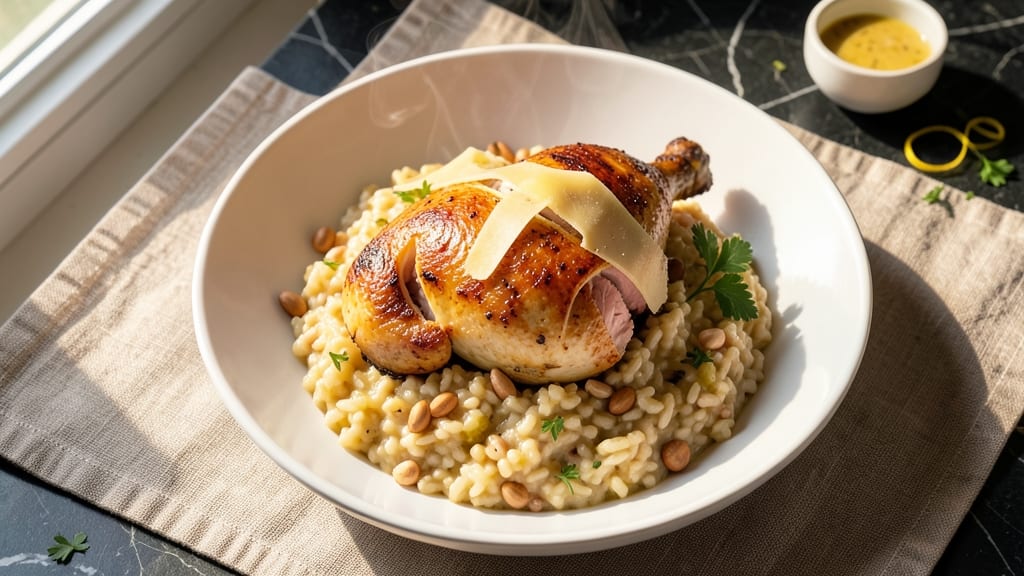
This baked chicken and risotto recipe delivers crispy golden skin and creamy al dente risotto in one elegant pan—no fuss, no mess, just restaurant-quality results at home.
The secret lies in baking the chicken first, then using its rendered juices to build the risotto, creating a dish where every bite is perfectly balanced between savory and rich. I developed this technique after years of testing one-pan meals, and it never fails to impress even skeptical guests.
What makes this recipe truly special is the efficiency—you'll start with seasoned chicken thighs on a baking sheet, then transfer them to the same pan to finish while the risotto cooks. The chicken develops a crispy crust from the oven, while the risotto absorbs its juices for natural depth.
Arborio rice transforms into tender, creamy grains with just the right bite, thanks to careful liquid ratios and constant stirring.
By the time you plate this dish, you'll have golden-brown chicken with crispy edges and tender meat, served atop a velvety risotto that clings to every forkful.
The contrast between the creamy rice and the crispy chicken creates a textural symphony that makes this meal feel luxurious without requiring hours of prep. Garnish with fresh herbs and a sprinkle of parmesan for that final touch.
Perfect for weeknight dinners or special occasions, this recipe scales beautifully for crowds while keeping the technique simple. The key is patience—letting the risotto cook low and slow ensures that perfect balance of creaminess and texture. Let's get cooking!
Ingredients for baked chicken and risotto
Fourteen ingredients for a restaurant-worthy one-pan meal with crispy chicken and creamy risotto.
| Ingredient | Amount | Notes |
|---|---|---|
| Boneless, Skin-On Chicken Thighs 🍗 | 1 ½ lb | Bone-in preferred for juiciness |
| Arborio Rice 🍚 | 1 ½ cups | Short-grain, uncooked |
| Chicken Broth 💧 | 4 cups | Low-sodium preferred |
| Extra-Virgin Olive Oil 🫒 | ½ cup | For crispy skin |
| Shallots 🧅 | 2 whole | Minced finely |
| Garlic Cloves 🧄 | 4 cloves | Minced for depth |
| Dry White Wine 🍷 | ½ cup | Substitute broth if needed |
| Parmesan Cheese 🧀 | ½ cup | Freshly grated |
| Fresh Thyme 🌿 | ¼ cup | Leaves only |
| Salt 🧂 | 1 ½ tsp | Kosher or sea salt |
| Black Pepper 🌶️ | ½ tsp | Freshly ground |
| Butter 🧈 | 2 tbsp | Unsalted, cubed |
| Lemon Zest 🍋 | 1 tsp | For brightness |
The chicken thighs are the foundation—bone-in stays juicier, but boneless works too. Look for thighs with good marbling at Whole Foods or your local butcher for that extra richness. If using bone-in, trim excess fat for cleaner presentation. The Arborio rice needs to be short-grain and uncooked—anything else won't give that perfect al dente texture. I always grab a 2-pound bag from Trader Joe's because it's cheaper and keeps well. For the chicken broth, low-sodium is key so you don't over-salt the risotto later.
No white wine? Use extra chicken broth—just add a splash of lemon juice for brightness. Fresh thyme is ideal, but dried works at one-third the amount. The shallots can be swapped for onions if needed, but mincing them finely is crucial for that sweet, caramelized flavor. For the Parmesan, freshly grated from a block melts better than pre-grated. If you're short on time, Trader Joe's sells pre-grated that's surprisingly good. The butter should be unsalted—adding your own salt gives you more control over seasoning.
Store any leftover chicken in an airtight container for 3-4 days—it reheats beautifully. The risotto is best eaten fresh, but you can refrigerate it for 2 days and reheat with a splash of broth. For meal prep, cook the chicken separately and freeze it, then make the risotto fresh when ready to serve. The lemon zest keeps for 1 week in the fridge, but zest it fresh for the best flavor. This dish scales perfectly—just double the ingredients for a crowd, but keep the same pan ratios.
Why You'll Love This Recipe
- One-Pan Magic: I swear by this—just toss the chicken thighs, chopped shallots, and rice on a sheet pan, drizzle with olive oil, and let the oven do the work. No pots to boil over, no stirring every five minutes. That crispy skin on the thighs? Pure reward for zero effort.
- Umami Bomb: The secret’s in the slow-roasted chicken thighs—juicy, golden skin that falls apart when you cut in, all while the risotto soaks up the rich broth and shallots until it’s creamy but never mushy. Between us, that first bite is the reason I make this every time.
- Leftovers That Don’t Suck: Honestly, I always make extra because reheated risotto is a myth—but not this one. The chicken stays tender, the rice holds its shape, and the flavor only deepens. Pack it for lunch or freeze portions; it’s the only risotto I trust to taste good the next day.
- Budget Feast: Arborio rice might sound fancy, but it stretches further than you’d think, and chicken thighs cost half what breasts do. A single pan of this feeds four for under $15, and the leftovers stretch into salads or sandwiches. My wallet and my family thank me weekly.
Step-by-step instructions for baked chicken and risotto
Here's how to create perfectly crispy chicken and creamy risotto in one pan.
Prepare and Season the Chicken
Preheat your oven to 425°F for maximum crispiness. Pat the 1.5 lb boneless, skin-on chicken thighs completely dry with paper towels—this is critical for achieving that golden-brown skin. Season both sides generously with 1.5 tsp salt and 0.5 tsp black pepper, pressing the seasoning into the skin so it adheres well.
Place the chicken thighs skin-side up on a large baking sheet lined with parchment paper. Drizzle evenly with 0.5 cup extra-virgin olive oil, then sprinkle with 1 tsp lemon zest and 0.25 cup fresh thyme. The lemon zest will brighten the chicken while the thyme adds aromatic depth. Let the chicken sit at room temperature for 15 minutes before baking—this ensures even cooking.
Sear the Chicken for Crispy Skin
Transfer the baking sheet to the preheated oven and bake the chicken for 20 minutes. You'll know it's ready when the skin is deep golden brown and crispy, and the internal temperature reaches 165°F when measured at the thickest part. Don't skip this step—the oven sear creates that restaurant-quality texture.
While the chicken bakes, prepare the risotto base. In a large skillet, heat 2 tbsp butter over medium heat until melted. Add the 2 whole minced shallots and 4 cloves minced garlic, cooking for 2-3 minutes until softened and fragrant. This aromatic foundation will infuse the entire dish.
Toast the Arborio Rice
Add the 1.5 cups Arborio rice to the skillet and stir to coat the grains in the butter and aromatics. Toast for 2 minutes until the rice turns translucent at the edges—this step develops the nutty flavor and prevents mushy risotto. Pour in 0.5 cup dry white wine and stir, letting it absorb completely before adding any broth.
Here's the thing—don't walk away. You want the wine to fully evaporate before adding broth, or you'll dilute the rice's natural starch release. The rice should look dry and slightly separated when ready for the next step.
Build the Creamy Risotto
Begin adding the 4 cups chicken broth 1 cup at a time, stirring frequently and waiting until each addition is mostly absorbed before adding the next. This gradual process creates the signature creamy texture. The risotto should take about 18-20 minutes total to cook, with each addition taking roughly 3-4 minutes to absorb.
About 5 minutes before the risotto is finished, remove the chicken from the oven and let it rest for 5 minutes (this helps the juices redistribute). Then, shred the chicken into bite-sized pieces using two forks. Stir the chicken into the risotto along with the 0.5 cup freshly grated Parmesan cheese. The cheese should melt into a velvety sauce, coating each grain of rice and piece of chicken.
Finish and Serve Immediately
Taste the risotto and adjust seasoning if needed. The combination of chicken, rice, and cheese should be perfectly balanced—savory, creamy, and slightly tangy from the lemon zest. If the risotto is too thick, stir in a splash of warm broth or water to reach your desired consistency. The final texture should be creamy but still have a slight bite to each grain.
Serve immediately in deep bowls, garnished with additional fresh thyme and a sprinkle of Parmesan cheese. The contrast between the crispy chicken skin and creamy risotto makes every bite unforgettable. This one-pan method ensures maximum flavor while minimizing cleanup—just what you want for a weeknight dinner that feels special.
Pro Tips For Making Baked Chicken And Risotto
- CRISP THE SKIN FIRST: Bake the chicken thighs skin-side down at 425°F (220°C) for 15 minutes before lowering heat to 375°F (190°C). I learned this the hard way—skipping the high-heat start means soggy skin, and nobody wants that when you’ve got risotto waiting.
- TOSS COLD RICE: Stir Arborio rice into the broth cold—no pre-toasting, no pre-cooking. The cold grains absorb liquid more evenly, and you’ll get that creamy texture without gummy bits. (Yes, even if you’re impatient like me.)
- SAVE THE BROTH: Don’t dump that pan drippings from the chicken—strain them into the risotto broth. The fat renders out, adding depth, and the drippings keep the rice from tasting like it was made from scratch (which it wasn’t, but close enough).
- FINISH WITH SHALLOTS: Sauté the shallots in olive oil until just golden, then deglaze with a splash of white wine (if using) before adding rice. Overcooking turns them bitter, and you want that sweet, caramelized base for the risotto. Trust the process—your future self will notice.
Regional styles of this dish
Italian One-Pan Tradition
The Italian approach to this dish emphasizes simplicity and bold flavors. In Northern Italy, risotto is traditionally cooked with just broth, wine, and cheese, while chicken is often baked with rosemary and garlic.
My version keeps that Italian soul by using Arborio rice and white wine, but adds thyme and lemon zest for brightness. The key Italian technique is the gradual broth addition—never let the rice sit in liquid, or it'll turn mushy. 🍷
French Coq au Vin Fusion
For a French-inspired twist, replace the thyme with tarragon and add 1 cup red wine reduction to the risotto. Deglaze the pan after browning the shallots with ½ cup red wine (like Pinot Noir) instead of white.
The French technique of slow-cooking chicken with wine creates deeper flavor complexity. Serve with a side of crusty baguette to soak up the sauce.
Spanish Paella Adaptation
Transform this into a Spanish-style paella by adding ½ cup diced bell peppers, ½ cup peas, and 1 tsp smoked paprika to the risotto base. Use saffron-infused broth (steep ¼ tsp saffron threads in warm broth for 10 minutes) and top with crispy chorizo bits.
The Spanish approach focuses on vibrant colors and bold spices, while keeping the creamy risotto texture.
American Southern Comfort
Give it Southern flair by adding ½ cup diced andouille sausage to the risotto base and finishing with ¼ cup hot sauce (like Crystal). Use Cajun seasoning on the chicken instead of thyme.
The Southern technique emphasizes bold, spicy flavors while maintaining the creamy risotto foundation. Garnish with green onions and extra hot sauce for serving. 🌶️
Japanese Teriyaki Risotto
For an Asian-inspired version, replace the Parmesan with ½ cup grated white cheddar and stir in 2 tbsp teriyaki sauce at the end. Marinate the chicken in 1 tbsp soy sauce and 1 tbsp mirin before baking.
The Japanese technique focuses on balancing sweet and savory flavors while keeping the creamy texture. Garnish with sesame seeds and sliced green onions for freshness.
Mediterranean Herb Infusion
Brighten the dish with Mediterranean flavors by adding 1 tsp dried oregano, 1 tsp dried basil, and zested lemon to both the chicken and risotto. Use olive oil-infused broth (add 2 tbsp olive oil to the broth while heating) for extra richness.
The Mediterranean approach emphasizes fresh herbs and citrus, creating a lighter but equally flavorful dish. Finish with a drizzle of high-quality extra-virgin olive oil before serving. 🌿
Nutrition facts
Frequently asked questions
Can I use chicken breasts instead of thighs?
Chicken breasts will work, but they're leaner and less forgiving than thighs. For best results, pound them to ½-inch thickness and bake at 375°F instead of 425°F to prevent drying out. Reduce baking time to 15-18 minutes and check for 165°F internal temp. The skin won't crisp as dramatically, so consider adding a final broil for 2-3 minutes.
How do I prevent the risotto from getting mushy?
Stir constantly and add broth gradually—1 cup at a time—waiting until each addition is mostly absorbed before adding more. Never let the rice sit in liquid, and toast the grains in butter for 2 minutes first. For extra insurance, use a 1:2 rice-to-broth ratio (1.5 cups rice to 4 cups broth) and keep heat at medium-low.
Can I make this ahead of time?
The risotto is best served fresh, but you can prep components separately. Cook the chicken completely, then refrigerate it for up to 3 days. Make the risotto base (toasted rice + aromatics) and store it in the fridge for 1 day. When ready to serve, finish the risotto with broth and add the pre-cooked chicken. For make-ahead meals, consider baking the chicken and freezing it separately.
What's the secret to crispy chicken skin?
Pat the skin completely dry, use high-heat baking (425°F), and don't overcrowd the pan. The olive oil creates a barrier that crisps beautifully. For extra crunch, broil for 1-2 minutes at the end. Bone-in thighs stay juicier, but boneless works too—just avoid overcooking past 165°F internal temp.
Can I substitute Arborio rice with another type?
Arborio is ideal for its high starch content, but Carnaroli or Vialone Nano work too. Avoid long-grain rice like basmati or jasmine—they won't release enough starch for creamy risotto. For a quick alternative, use short-grain brown rice, but increase cooking time by 5-7 minutes and add ½ cup extra broth.