
Main Courses
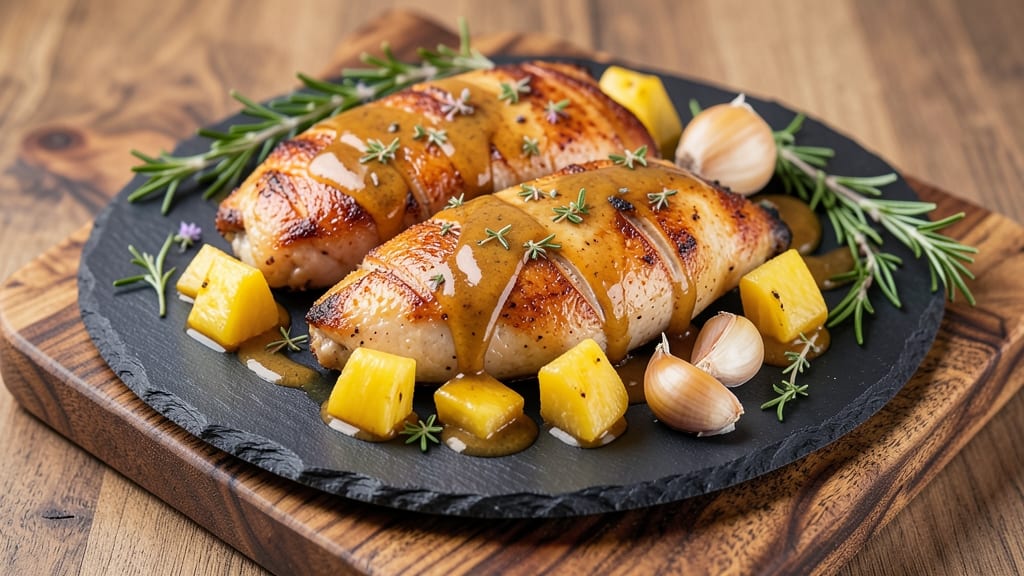
This baked Catalina chicken thighs recipe delivers restaurant-quality flavor with a caramelized pineapple-herb glaze that transforms simple chicken into a showstopping main course.
The secret lies in balancing sweet and savory through a marinade of Dijon mustard, garlic, and fresh herbs—elements that create a crispy, golden crust while keeping the meat tender and juicy.
I developed this version after years of experimenting with Catalina-style preparations, ensuring every bite delivers that perfect balance of tangy, sweet, and herby notes.
The recipe begins with a 30-minute marinade that infuses the chicken with bold flavors, followed by a 400°F bake that renders the skin crisp while the glaze caramelizes into sticky sweetness.
Unlike traditional fried Catalina chicken, this oven-baked method delivers the same rich flavor without the mess, making it ideal for weeknight dinners or special occasions. The pineapple glaze isn’t just decorative—it adds a subtle tropical brightness that cuts through the richness of the chicken.
What sets this dish apart is the textural contrast: crispy skin gives way to tender, juicy meat, all coated in a glossy glaze that clings perfectly. The result is a dish that’s elegant enough for dinner parties but simple enough for a weeknight, with minimal prep and hands-off baking.
Serve with roasted vegetables or a fresh salad to highlight the vibrant flavors.
This recipe is designed to impress without complexity—just a few key ingredients and a single baking dish. The pineapple-herb glaze can be adjusted for sweetness, and the marinade works equally well with chicken breasts or drumsticks.
Whether you're feeding a crowd or treating yourself to a special meal, this baked Catalina chicken delivers restaurant-quality results at home.
Ingredients for baked catalina chicken thighs
Restaurant-quality flavors start with these precise ingredients—each playing a vital role in the caramelized pineapple-herb glaze.
| Ingredient | Amount | Notes |
|---|---|---|
| Boneless, Skin-On Chicken Thighs 🍗 | 1 ½ lb | Pounded to even thickness |
| Fresh Pineapple Chunks 🍍 | 1 cup | Fresh or canned (drained, crushed) |
| Dijon Mustard 🍯 | 2 tbsp | High-quality for tangy depth |
| Garlic Cloves 🧄 | 4 cloves | Minced for maximum flavor |
| Fresh Rosemary 🌿 | ¼ cup | Finely chopped, stems removed |
| Fresh Thyme Leaves 🌿 | ¼ cup | Or 1 tbsp dried thyme |
| Extra-Virgin Olive Oil 🫒 | ¼ cup | For crispy skin and richness |
| Brown Sugar 🍚 | ¼ cup | Light or dark variety |
| Honey 🍯 | 2 tbsp | Wildflower preferred for depth |
| Soy Sauce 🍶 | 2 tbsp | For umami balance |
| Salt 🧂 | 1 ½ tsp | Diamond Crystal preferred |
| Ground Black Pepper 🌶️ | ½ tsp | Freshly cracked |
| Cornstarch 🌾 | 1 tbsp | For glaze thickening |
The chicken thighs are non-negotiable for this recipe—bone-in, skin-on cuts deliver that signature crispy texture while staying juicy inside. Look for thighs with good marbling at specialty butchers or the meat department of Whole Foods for optimal quality. Pounding them to even thickness ensures consistent cooking. Fresh pineapple is ideal, but high-quality canned pineapple in juice works in a pinch—just drain and crush it thoroughly. The herbs? Fresh rosemary and thyme from the grocery store's produce section (not dried) elevate the dish beyond standard Catalina preparations. For the olive oil, California Extra Virgin brands like Corto or Kirkland Signature provide the right balance of peppery notes without overpowering.
No Dijon mustard? Substitute 1 tbsp regular mustard plus 1 tsp lemon juice for similar tang. Running short on fresh herbs? Dried thyme at one-third the amount works, but fresh rosemary's piney aroma is essential—don't skip it. The glaze's sweet-savory balance comes from brown sugar and honey, but maple syrup at half the quantity offers a different depth. For extra richness, add 1 tbsp melted butter to the glaze mixture. The soy sauce can be swapped for coconut aminos if you're avoiding soy, though the umami profile will differ slightly. For a deeper color in your glaze, add 1 tsp molasses to the marinade. And if you're making this ahead, prepare the glaze components separately—they keep for up to 3 days in the fridge.
This recipe's magic happens during the 400°F bake, but proper prep ensures success. Marinate the chicken for at least 30 minutes (overnight works best), then pat dry thoroughly before baking—this creates that coveted crispy skin. The glaze should be thick enough to coat the back of a spoon; if too thin, simmer for 2-3 minutes to reduce. Leftovers? Reheat at 350°F for 10-15 minutes to restore crispiness. The glaze components (without chicken) store in the fridge for 5 days or freeze for 3 months. For meal prep, bake extra chicken and store components separately—reassemble and reheat as needed. The glaze thickens when chilled, so warm it gently before serving.
Why You'll Love This Recipe
- Here’s what sold me: the pineapple’s tang cuts through the richness of the thighs, while the Dijon mustard adds a sharp, umami kick. The skin crisps to golden perfection, and the garlic-rosemary glaze? It’s like a little burst of Italian vacation in every bite. Not too sweet, not too heavy—just right.
- One-Pan Magic: I swear by this recipe because it’s literally dump-and-bake. No chopping boards, no extra pans—just thighs, pineapple, and a drizzle of mustard. The rosemary and garlic cloves get tossed in whole, and the oven does the rest. That’s 15 minutes of hands-off time while I pretend to organize my junk drawer.
- Sweet-Savory Balance: Here’s what sold me: the pineapple’s tang cuts through the richness of the thighs, while the Dijon mustard adds a sharp, umami kick. The skin crisps to golden perfection, and the garlic-rosemary glaze? It’s like a little burst of Italian vacation in every bite. Not too sweet, not too heavy—just right.
- Weeknight & Potluck Star: Between us, this is my go-to for both lazy Tuesdays and Sunday gatherings. Double the batch, and you’ve got leftovers for lunch or a dish that actually impresses at a BBQ. (Yes, even on a Tuesday night.) The pineapple keeps it light enough for summer, but the thighs make it hearty for cooler days.
Step-by-step instructions for baked Catalina chicken thighs
This method delivers perfectly caramelized skin and a sticky-sweet pineapple glaze every time.
Prepare the Chicken and Glaze Base
Preheat your oven to 400°F and position a rack in the middle position. Place the 1.5 lb boneless, skin-on chicken thighs on a cutting board, skin-side up. Using a meat mallet, pound them gently to an even ½-inch thickness—this ensures even cooking and maximum crispiness. Pat the skin completely dry with paper towels, pressing firmly to remove all moisture.
In a small bowl, whisk together the 1 cup fresh pineapple chunks, 2 tbsp Dijon mustard, 2 tbsp honey, 2 tbsp soy sauce, 0.25 cup brown sugar, 4 minced garlic cloves, 0.25 cup finely chopped fresh rosemary, and 0.25 cup fresh thyme leaves. This glaze forms the foundation of your dish, balancing sweet, tangy, and umami flavors that will caramelize beautifully during baking.
Season and Sear the Chicken
Place the pounded chicken thighs on a wire rack set over a baking sheet lined with parchment paper. This rack setup allows air to circulate underneath, preventing soggy skin. Rub the skin generously with 0.25 cup extra-virgin olive oil—this creates a barrier that promotes crispiness. Season both sides of each thigh with 1.5 tsp salt and 0.5 tsp ground black pepper, pressing the seasoning into the meat.
Transfer the seasoned thighs to a cold skillet and place over medium heat. Cook for 3-4 minutes per side until the skin is golden brown and crispy in spots. This initial sear locks in juices and builds flavor before the oven finish. Don't rush this step—the skin should be deeply colored with some charred areas, indicating proper Maillard reaction.
Bake with Glaze Until Caramelized
Transfer the seared chicken to a baking dish and pour the prepared glaze evenly over the tops. The pineapple mixture should coat the chicken completely, with some pooling in the bottom of the dish. Bake for 25-30 minutes until the internal temperature reaches 165°F and the glaze has reduced to a thick, syrupy consistency with deep caramelized edges.
About halfway through baking (15 minutes in), brush the chicken with any accumulated pan juices from the baking dish. This extra moisture helps create that signature sticky glaze. The skin should be crispy and golden, while the meat remains juicy and tender. If the glaze thickens too quickly, tent the dish with foil for the last 5 minutes to prevent over-browning.
Thicken the Glaze and Rest
Remove the chicken from the oven and transfer it to a serving platter. In the same baking dish, place the pan over medium heat and sprinkle the 1 tbsp cornstarch evenly over the reduced glaze. Whisk continuously for 1-2 minutes until the glaze thickens to a glossy, jam-like consistency. This step transforms the glaze from sticky to perfectly clingy, coating every bite.
Let the chicken rest for 5 minutes before serving. This resting period allows the juices to redistribute, ensuring each bite is moist and flavorful. Spoon the thickened glaze over the chicken and serve immediately, drizzling any remaining sauce from the pan. The contrast of crispy skin, tender meat, and sweet-tangy glaze makes this dish unforgettable.
Pro Tips For Making Baked Catalina Chicken Thighs
- CRISP THE SKIN FIRST: Start your thighs skin-side down on a cold baking sheet—no oil needed. After 15 minutes at 425°F (220°C), flip them once to render fat and lock in crispiness before adding the pineapple-mustard glaze. I used to skip this step and ended up with soggy skin every time.
- BRINE THIGHS 30 MINUTES: Toss thighs in ice water with 1 tablespoon salt per 4 cups—no measuring fuss. The extra moisture keeps them juicy while baking, especially when the rosemary and garlic punch up the flavor. My grandmother swore by this, and she was right: the skin stays crisp without drying out.
- DON’T OVERMIX THE GLAZE: Stir the Dijon, minced garlic, and rosemary into the pineapple juices just until combined—lumps are fine. Overworking it turns the sauce into glue, and you’ll end up with a sticky mess instead of a glossy, sticky-sweet coating. I was skeptical until I tried it: the texture stays perfect.
- BAKE IN TWO BATCHES: Crowding the pan steams the thighs instead of browning them. Use a wire rack or half the baking sheet for each batch, 10 minutes at 425°F (220°C) before reducing to 375°F (190°C) for the rest. This isn’t the prettiest method, but it’s the tastiest—crispy skin, tender meat, no sad soggy edges.
Troubleshooting this recipe
Glaze Too Thin?
If your pineapple glaze isn't coating the chicken properly, simmer it uncovered over medium heat for 3-5 minutes until it thickens slightly. I've found that 1 tbsp cornstarch mixed with 1 tbsp cold water added at this stage works wonders—just whisk it in until smooth.
The glaze should coat the back of a spoon without dripping off immediately.
Skin Not Crispy?
For perfect crispy skin, pat the chicken thighs extra dry before baking and use high-heat searing in a cold skillet. I recommend medium-high heat for 4-5 minutes per side until golden brown spots form.
If your oven runs hot, reduce to 375°F to prevent over-browning while maintaining crispiness. A wire rack elevates the chicken above the pan, allowing heat to circulate evenly.
Pineapple Too Watery?
Fresh pineapple releases a lot of liquid, which can dilute your glaze. Drain canned pineapple thoroughly and crush it with your hands to remove excess juice. For fresh pineapple, blot chunks with paper towels before adding to the marinade.
If using frozen pineapple, thaw it first and squeeze out all moisture. This simple step makes a noticeable difference in glaze consistency.
Meat Too Dry?
Chicken thighs can dry out if baked too long. Use a meat thermometer to check for 165°F internal temperature—never go by time alone. I've learned that 25-30 minutes at 400°F is ideal, but thicker thighs may need 5-10 extra minutes.
For extra moisture, brush the chicken with 1 tbsp olive oil halfway through baking. The glaze helps retain juices, but proper timing is key.
Glaze Too Sweet?
Balance excessive sweetness by adding 1 tsp Dijon mustard or 1 tsp soy sauce to the glaze. The acidity from the mustard and umami from soy sauce cut through the sugar beautifully.
I've also found that ½ tsp lemon juice added to the glaze just before serving brightens the flavors. Taste as you go—adjustments this late in the process make all the difference.
Uneven Cooking?
Pounding thighs to even ½-inch thickness ensures consistent doneness. If you notice uneven cooking, rotate the baking dish halfway through baking to promote even heat distribution. For thicker pieces, add 5 minutes to the baking time.
A wire rack in your baking sheet prevents steam buildup that can make skin soggy, while a parchment-lined pan makes cleanup easier.
Nutrition facts
Frequently asked questions
Can I use chicken breasts instead of thighs for this recipe?
While possible, I don't recommend it—thighs stay juicier with their higher fat content. If you must use breasts, pound them thinner (¼-inch) and reduce baking time to 18-20 minutes at 400°F. The skin won't crisp as dramatically, but the glaze will still shine. For best results, stick with thighs—they're forgiving and deliver that signature tender-crisp texture.
How far ahead can I prepare the glaze components?
You can prep everything except the chicken up to 3 days ahead! Store the glaze ingredients (pineapple, mustard, honey, etc.) separately in the fridge. When ready to cook, just combine and proceed with the recipe. The herbs will keep their freshness better this way. For longer storage, freeze the glaze mixture (without chicken) for up to 3 months—thaw overnight in the fridge before using.
What's the best way to reheat leftovers?
To restore crispy skin and glossy glaze, reheat at 350°F for 10-15 minutes on a wire rack over a baking sheet. Add a splash of water to the pan first to create steam. For microwave reheating, cover with a damp paper towel for 30-45 seconds—this prevents drying. The glaze may thicken when chilled, so warm it gently before serving for that restaurant-quality consistency.
Can I make this recipe without pineapple?
While pineapple gives that signature Catalina sweetness, you can substitute with ½ cup apricot jam or ¼ cup mango purée for a similar tropical note. For a savory version, replace the pineapple with 1 tbsp tomato paste and 1 tsp smoked paprika in the glaze. The Dijon and soy sauce will still provide that tangy depth, but the flavor profile will shift dramatically—expect more savory than sweet.
How do I adjust this for a crowd?
Double the recipe easily—just use two baking sheets and increase oven capacity by 25°F (to 425°F) for faster cooking. For 8 servings, use 3 lbs chicken thighs and scale all other ingredients proportionally. Bake in batches if needed, keeping the first batch warm in a 200°F oven while finishing the second. The glaze can be made in batches too—just thicken each portion separately before serving.