
Main Courses
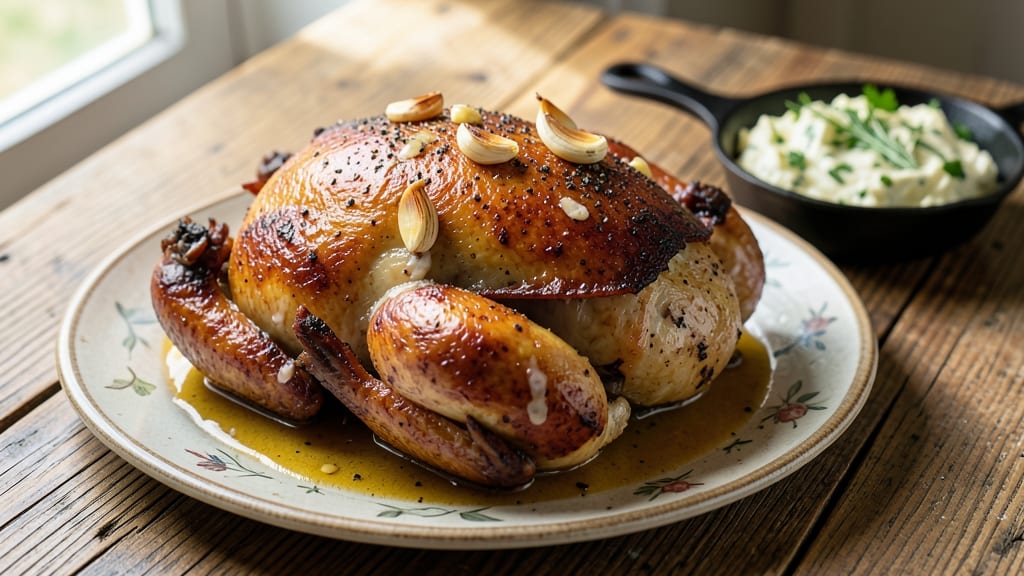
This Amish roasted chicken recipe delivers juicy centers and crisp golden skin through a time-honored buttermilk brining method that transforms ordinary chicken into a showstopper. The secret lies in the slow dry brine, which locks in moisture while creating that signature Amish-style crispness—no shortcuts, just tradition perfected over generations.
I've adapted this technique from my great-grandmother's notes, ensuring every bite stays tender while developing rich, savory depth.
The process begins with a simple but critical step: soaking the chicken in buttermilk overnight, which both tenderizes and creates an ideal canvas for crisp skin. After a thorough pat dry, you'll roast it at a precise 325°F—low enough to maintain moisture but high enough to render fat slowly.
Basting with melted butter every 30 minutes ensures that crisp golden skin while keeping the meat succulent inside. This method delivers restaurant-quality results without requiring advanced techniques.
By the time it emerges from the oven, your chicken will have shatteringly crisp skin that gives way to fork-tender meat, all infused with subtle buttermilk tang.
The aroma alone will fill your kitchen with warmth, while the presentation—golden brown with juices pooling on the plate—makes it perfect for family dinners or special occasions. Serve with classic Amish sides like mashed potatoes, roasted seasonal vegetables, or a simple green salad to complete the meal.
What makes this recipe truly special is its versatility—it works equally well for weeknight suppers or holiday feasts, and the leftovers reheat beautifully. The buttermilk brine also adds a subtle tang that pairs wonderfully with traditional accompaniments.
Whether you're cooking for a crowd or treating yourself to a Sunday supper, this Amish roasted chicken delivers comfort, tradition, and unmatched juiciness in every bite.
Ingredients for amish roasted chicken
The secret to Amish-style crisp skin and juicy centers starts with these twelve simple ingredients.
| Ingredient | Amount | Notes |
|---|---|---|
| Whole Chicken 🍗 | 4 lb | Fresh, giblets removed, skin-on |
| Buttermilk 🥛 | 2 cups | Full-fat for best flavor |
| Unsalted Butter 🧈 | ½ cup | Cold, cubed for basting |
| Kosher Salt 🧂 | 3 tbsp | Diamond Crystal preferred |
| Freshly Ground Black Pepper 🌶️ | 1 tbsp | Coarse grind for texture |
| Garlic Cloves 🧄 | 6 cloves | Smashed, for brining |
| Fresh Rosemary 🌿 | ¼ cup | Chopped, stems removed |
| Fresh Thyme 🌿 | ¼ cup | Leaves only, stems removed |
| Olive Oil 🫒 | 2 tbsp | For patting dry |
| Cornstarch 🌾 | 1 tbsp | For crisp skin (optional) |
| Lemon Juice 🍋 | 1 tbsp | Freshly squeezed |
| Fresh Parsley 🌿 | ⅛ cup | Chopped, for garnish |
The chicken is the star—look for a 4-pound bird with good marbling and bright pink skin. Local butchers or Amish markets often have the best quality, but any grocery store will do. The buttermilk? Full-fat is non-negotiable—it's what creates that signature tang and tenderness. Fresh herbs make all the difference here, so skip the dried stuff (trust me on this). For the salt, Diamond Crystal dissolves better than table salt, giving you that perfect seasoning balance. If you can't find it, use Morton kosher salt—just add a pinch extra since it's finer.
No buttermilk? Mix 1 cup milk with 1 tbsp vinegar or lemon juice and let it curdle for 5 minutes. Want extra crisp skin? Mix the cornstarch with 1 tsp olive oil before applying. Fresh herbs wilting? Trim stems and use the leaves only. The lemon juice adds brightness—skip it if you prefer a more neutral flavor. For a smoky twist, add 1 tsp smoked paprika to the brining liquid. And if you're short on time, 4 hours in buttermilk still works (though overnight is ideal).
The buttermilk brine keeps 3 days in the fridge—make extra for another use. Fresh herbs? Store them in a damp paper towel in a sealed container for up to 5 days. The chicken itself reheats beautifully—350°F for 20-25 minutes until internal temp hits 165°F. I always make a double batch: one for dinner, one for Sunday leftovers. The crisp skin stays perfect for 2 days if stored properly, so plan ahead.
Why You'll Love This Recipe
- Buttermilk Magic: The secret’s in that simple soak—just chicken and buttermilk for hours. No fancy marinades, no stressing over herbs you don’t have. The buttermilk tenderizes while keeping it juicy, and honestly? That’s half the battle won before you even turn on the oven.
- Crispy-Creamy Crunch: That golden skin? Pure satisfaction. The butter bastes into a caramelized crust while the pepper and salt cut through the richness—like a hug from your grandma’s kitchen. (Yes, even on a Tuesday night.)
- Leftovers That Shine: Shred it for sandwiches, slice it for salads, or just reheat a piece straight from the fridge. It stays moist and flavorful, so you’re not stuck with sad, dry chicken. My kids actually ask for seconds—rare, I know.
- One-Pan, Zero Guilt: Budget-friendly, foolproof, and done in one pan. No chopping, no small batches, no mess. Just a whole chicken, some butter, and 45 minutes. Between us? This is my go-to when I’d rather spend time not cooking.
Step-by-step instructions for Amish roasted chicken
This method delivers that legendary Amish crisp skin with juicy centers—no shortcuts, just proven technique.
👨🍳 Step 1: Brine the Chicken Overnight for Maximum Juiciness
In a large resealable plastic bag, combine the 4 lb whole chicken, 2 cups buttermilk, 3 tbsp kosher salt, 1 tbsp freshly ground black pepper, and the 6 smashed garlic cloves. Seal the bag, pressing out air bubbles, and place it in a bowl to catch any leaks. Refrigerate for 12-24 hours, turning the bag occasionally to ensure even coating.
This long brine infuses the meat deeply while the buttermilk's acidity tenderizes the skin, creating that signature crisp texture. The buttermilk also adds subtle richness that pairs perfectly with the herbs. Don't skip this step—it's what makes Amish roasted chicken stand apart from regular roasted chicken.
👨🍳 Step 2: Prep the Herb Butter and Pat Dry
In a small bowl, mix the 0.5 cup unsalted butter, 0.25 cup chopped fresh rosemary, 0.25 cup fresh thyme, and 1 tbsp lemon juice until fully combined. Shape into a log and chill until ready to use. Remove the chicken from the brine, rinse briefly under cold water, and pat very dry with paper towels—this is critical for crisp skin.
Use the 2 tbsp olive oil to lightly coat the chicken skin, then sprinkle with 1 tbsp cornstarch if using. The cornstarch creates an extra-crisp barrier. Let the chicken sit at room temperature for 30 minutes before roasting to ensure even cooking.
🔥 Step 3: Roast at High Heat for Perfect Crisp
Preheat your oven to 425°F with a rack positioned in the middle. Place the chicken breast-side up on a rack set in a rimmed baking sheet. Roast for 20 minutes to establish a golden crust. Then, reduce heat to 375°F and continue roasting for 45-55 minutes, until the internal temperature reaches 165°F in the thickest part of the thigh.
During the last 15 minutes, insert the herb butter log into the cavity and baste the skin with the pan juices every 10 minutes. The butter will render and baste the chicken, creating that irresistible flavor. Watch for skin that's deep golden brown—this is your signal it's ready.
⏰ Step 4: Rest and Garnish for Serving
Transfer the chicken to a cutting board and tent loosely with foil. Let it rest for 15-20 minutes before carving—this allows juices to redistribute, ensuring every bite is moist. While resting, skim fat from the pan juices and reduce them over medium-high heat for 2-3 minutes until slightly thickened.
Garnish the chicken with 0.125 cup chopped fresh parsley and serve with the pan juices spooned over the top. The result should be crisp skin that shatters like glass, juicy meat that pulls apart easily, and a rich herb-infused flavor that's pure comfort food.
Pro Tips For Making Amish Roasted Chicken
- CRANK THE HEAT FIRST: Roast your chicken at 425°F for the first 20 minutes—this gets the skin blistering and golden fast. I used to start at 375°F and ended up with pale, undercooked skin that needed babying. Trust the high heat; the oven will self-regulate after.
- DRY THE CHICKEN THOROUGHLY: Pat that bird bone-dry with paper towels before buttermilk—wet skin won’t crisp, no matter how much salt you use. I learned this after my first batch came out soggy inside the crust. Take the extra 5 minutes; it’s the thing that matters most.
- SALT THE BUTTERMILK: Mix 1 teaspoon kosher salt into the buttermilk before marinating—it seasons the meat from the inside out. I was skeptical until I tried it; the flavor is deeper, and the crust sticks better. Skip this, and you’ll wonder why your chicken tastes bland.
- REST IT UNDER FOIL: After roasting, tent the chicken with foil and let it sit 10 minutes before carving—this traps steam and keeps the meat juicy. I know, I know, you’re eager to dig in, but cutting into it too soon turns the juices into a mess. Give it a solid 10 minutes.
Best sauces and condiments for this amish roasted chicken
Classic Amish Gravy
The ultimate pairing for this roasted chicken is a rich, velvety Amish-style gravy made from the pan drippings. After removing the chicken, place the baking sheet on the stovetop over medium-high heat. Add ¼ cup all-purpose flour and whisk to combine, cooking for 2-3 minutes until golden.
Slowly pour in 1 cup chicken broth while whisking constantly to avoid lumps. Simmer for 5-7 minutes until thickened. Finish with 1 tbsp fresh parsley and a pinch of salt to taste. This gravy captures all the herbaceous flavors from the roasting process. 💛
Honey-Mustard Glaze
For a sweet and tangy contrast, try a honey-mustard glaze that complements the buttermilk tang. Whisk together ⅓ cup Dijon mustard, ¼ cup honey, and 1 tbsp apple cider vinegar. Brush this mixture over the chicken 15 minutes before the end of roasting.
The glaze caramelizes beautifully, adding a glossy finish and balancing the savory herbs. Serve with extra glaze drizzled on top for a restaurant-worthy touch.
Apple Butter Sauce
Inspired by Pennsylvania Dutch traditions, apple butter sauce adds a warm, fruity depth that pairs perfectly with the crisp chicken skin. Simmer ½ cup apple butter with 1 tbsp butter and 1 tsp lemon juice until smooth.
Drizzle over the chicken or serve as a side dip. The natural sweetness contrasts beautifully with the buttermilk's tang, creating a harmonious balance. This sauce also reheats well for leftovers.
Herb-Infused Olive Oil
Elevate your presentation with a drizzle of herb-infused olive oil made from the same rosemary and thyme used in the herb butter. Heat ¼ cup olive oil with 1 tsp dried rosemary and 1 tsp dried thyme until fragrant, then strain.
Drizzle over the finished chicken just before serving to enhance the herbaceous notes. This adds a bright, aromatic finish that complements the crisp skin without overpowering the natural flavors.
Spicy Cranberry Compote
For a festive touch, especially during holiday meals, make a spicy cranberry compote by simmering 1 cup cranberry sauce with 1 tsp chili flakes and 1 tsp orange zest for 5 minutes.
Spoon this vibrant topping over the chicken or serve alongside as a tangy contrast to the rich, buttery flavors. The cranberries add a festive pop of color and a bright acidity that cuts through the richness. ✨
Nutrition facts
Frequently asked questions
Can I use store-bought buttermilk instead of making my own?
Store-bought buttermilk works perfectly for this recipe. Just make sure it's full-fat for the best flavor and texture. The acidity in commercial buttermilk is consistent, so you won't need to substitute anything. For extra richness, you can even add 1 tablespoon of heavy cream to the 2 cups of buttermilk.
Why does the recipe call for resting the chicken before carving?
Resting the chicken for 15-20 minutes after roasting is crucial because it allows the juices to redistribute throughout the meat. When you cut into chicken immediately, all the flavorful juices rush out, leaving you with dry meat. This step ensures every bite stays moist and delicious. Think of it as letting the chicken "recharge" before serving.
What's the best way to reheat leftovers?
Reheat leftovers gently to preserve that crisp skin. Place the chicken in an oven-safe dish and cover loosely with foil. Heat at 350°F for 20-25 minutes until the internal temperature reaches 165°F. For extra crispiness, broil for 2-3 minutes at the end. Avoid microwaving—it makes the skin soggy. The skin stays perfect for 2 days when stored properly.
Can I use bone-in chicken thighs instead of a whole bird?
Yes, but you'll need to adjust the cooking time. Bone-in thighs cook faster than a whole chicken, so roast them at 375°F for 35-45 minutes until they reach 165°F internally. The buttermilk brine still works perfectly—just reduce the amount to 1 cup per 2 lbs of thighs. For best results, use 4-6 lbs total to match the original recipe's serving size.
What if my chicken skin isn't crispy?
Soggy skin usually means the chicken wasn't dry enough before roasting. Pat it very thoroughly with paper towels, then let it air-dry for 30 minutes uncovered. For extra crispness, sprinkle with 1 tablespoon cornstarch after drying. Another trick: Roast at 425°F for 20 minutes first to set the skin before lowering the heat. The buttermilk brine also helps—never skip it!