
Main Courses
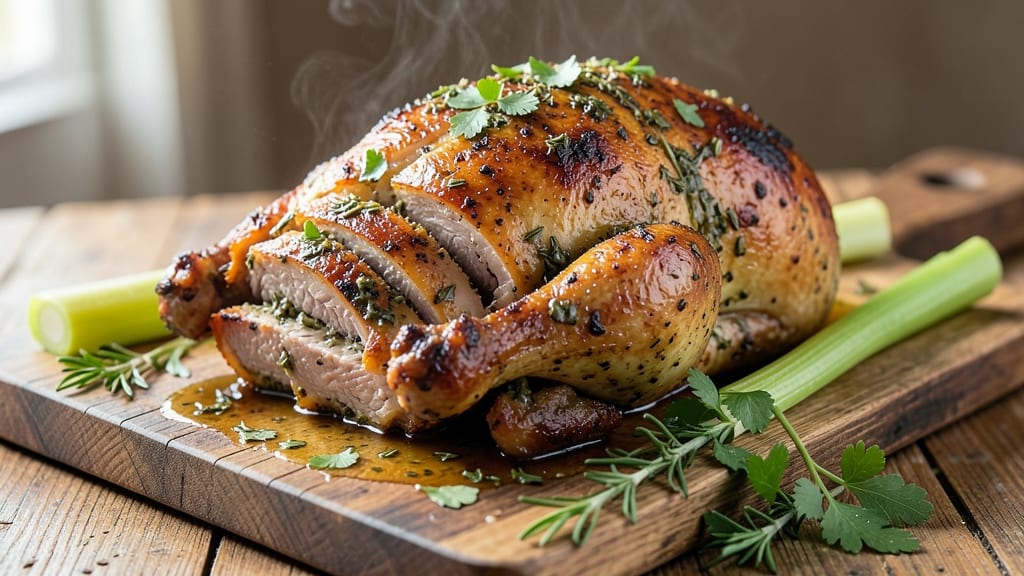
Alton Brown's whole roast chicken recipe delivers crispy skin and a juicy core with a celery herb crust that's impossible to resist. This method transforms a simple bird into a showstopper with minimal effort—no dry, rubbery results here.
The secret lies in precise timing, proper brining, and basting techniques that elevate home cooking to restaurant quality.
What sets this recipe apart is the celery herb crust, which adds texture and depth without overpowering the chicken's natural flavor. Alton's approach ensures the bird stays moist inside while developing a golden, crackling exterior.
The process is straightforward but requires attention to detail—like checking internal temperature and letting the chicken rest properly.
By the time you carve into this bird, you'll have perfectly golden skin, tender meat that falls apart easily, and a crust packed with celery and herb flavor.
The aroma alone will have everyone gathering at the table. This isn't just another roast chicken—it's a foolproof method that delivers professional results every time.
Serve with classic sides like roasted vegetables or a fresh salad to complete the meal. The crust holds up beautifully, making it perfect for sharing or saving leftovers. Let's get started on a chicken that will impress even the most critical guests.
Ingredients for alton brown whole roast chicken
Six ingredients transform a simple chicken into a restaurant-quality showstopper with crispy skin and juicy perfection.
| Ingredient | Amount | Notes |
|---|---|---|
| Whole Chicken (3-4 lbs) 🍗 | 3 ½ lb | Fresh, preferably organic, air-chilled |
| Celery Stalks 🥬 | 4 whole | Fresh, trimmed and chopped |
| Fresh Thyme Sprigs 🌿 | 1 tbsp | Leaves only, finely chopped |
| Fresh Rosemary Sprigs 🌿 | 1 tbsp | Leaves only, finely chopped |
| Fresh Parsley Sprigs 🌿 | 1 tbsp | Leaves only, finely chopped |
| Garlic Cloves 🧄 | 4 cloves | Peeled and minced |
| Kosher Salt 🧂 | 1 ½ tbsp | Diamond Crystal preferred |
| Black Peppercorns 🌶️ | 1 tsp | Freshly cracked |
| Unsalted Butter 🧈 | ½ cup | Cold, cubed |
| Olive Oil 🫒 | 2 tbsp | Extra-virgin, for basting |
| Lemon Juice 🍋 | 2 tbsp | Freshly squeezed |
| All-Purpose Flour 🌾 | ¼ cup | For crust adhesion |
| Water 💧 | 1 cup | For brining solution |
The chicken size matters—3-4 lbs is ideal for six servings, giving you a balance of crispy skin and juicy meat. Look for air-chilled, organic birds at Whole Foods or your local butcher; they hold up better during roasting. The celery herb crust is where the magic happens—fresh herbs (thyme, rosemary, parsley) make all the difference. If you can't find fresh, dried works at one-third the amount, but trust me, the fresh stuff elevates this dish. The garlic should be freshly minced—pre-minced jars have lost their punch. For the butter, Plugrá or Land O'Lakes unsalted work perfectly, but avoid salted versions.
No fresh herbs? Dried thyme, rosemary, and parsley are fine in a pinch, but reduce to one-third the amount—dried is more concentrated. Running short on celery? Swap in fresh parsley or chives for a milder flavor. The diamond crystal kosher salt is crucial—it dissolves better than table salt, giving you more control over seasoning. For the butter, if you're out, olive oil or ghee works in a bind, though butter gives that unmatched richness. The lemon juice can be substituted with white wine vinegar if needed, but fresh is always better. Pre-minced garlic? Freshly chop your own—it makes a noticeable difference.
This chicken reheats beautifully—350°F for 20-25 minutes covered with foil brings it back to perfection. Store leftovers in the fridge for up to 4 days or freeze for 3 months for later meals. The crust stays crispy if you reheat it uncovered for the last 5 minutes. For a foolproof presentation, let the chicken rest 15 minutes before carving—this ensures juices redistribute, keeping every bite moist. If you're prepping ahead, brine the chicken overnight in the fridge for even more flavor and juiciness.
Why You'll Love This Recipe
- No Chopping Chaos: I swear by this method—just toss in whole celery stalks, herb sprigs, and a chicken. The celery adds moisture without me dicing anything. My hands stay clean while the kitchen smells like a French countryside.
- Herb-Packed Magic: That combo of rosemary, thyme, and parsley? It’s like a flavor bomb that turns plain chicken into something restaurant-worthy. The crispy skin and juicy meat make every bite worth it—no dryness in sight.
- Leftovers That Shine: Roast a chicken once, eat it three ways. Shred for sandwiches, toss into salads, or reheat slices for quick breakfasts. Honestly, I plan my meals around this recipe just for the leftovers.
- Budget-Friendly Feast: A single chicken feeds my family for days—no takeout splurges needed. The herbs are fresh but cheap (I buy them in bunches), and the celery stretches the flavor without breaking the bank. Win-win.
Step-by-step instructions for alton brown's whole roast chicken
This method delivers a juicy core with a crispy celery herb crust—no shortcuts, just precision.
Prepare the Celery Herb Crust
Trim the 4 whole celery stalks and chop them into ¼-inch pieces. In a food processor, pulse the celery until finely minced—think more like a paste than coarse chunks. Add the 1 tablespoon fresh thyme sprigs, 1 tablespoon fresh rosemary sprigs, 1 tablespoon fresh parsley sprigs, 4 cloves garlic, 1.5 tablespoons kosher salt, and 1 teaspoon black peppercorns. Pulse until everything is finely combined and the mixture resembles a coarse herb paste.
Transfer this mixture to a bowl and stir in the 0.5 cup unsalted butter and 2 tablespoons olive oil until fully incorporated. The butter should coat the herbs evenly, creating a sticky, malleable paste. This is your crust—it needs to adhere tightly to the chicken for maximum crispiness. If the mixture seems too dry, add 1 teaspoon water at a time until it holds together when pressed between your fingers.
Brine the Chicken for Maximum Juiciness
In a large bowl, combine the 1 cup water and 2 tablespoons lemon juice. Dissolve 1 tablespoon kosher salt in the water-lemon mixture (save the remaining salt for later). Submerge the 3.5 lb whole chicken in the brine, ensuring it's fully covered. Place the bowl in the refrigerator and brine for at least 4 hours, or up to 12 hours for deeper flavor penetration.
Brining ensures the chicken stays juicy from edge to edge, even after roasting. The acidity from the lemon juice also helps tenderize the meat slightly. Don't skip this step—it's what guarantees that fork-tender core you're after. When ready, remove the chicken from the brine, pat it completely dry with paper towels, and let it sit at room temperature for 30 minutes before roasting.
Apply the Crust and Roast
Preheat your oven to 425°F. Place the chicken on a wire rack set inside a rimmed baking sheet. Spread the celery herb butter crust evenly over the entire surface of the chicken, pressing it firmly into the skin. Use your fingers to work the crust into every nook—under the wings, between the legs, and even inside the cavity. This ensures even cooking and maximum crispiness.
Roast the chicken for 45 minutes, then reduce the oven temperature to 375°F. Continue roasting for another 45-60 minutes, or until the internal temperature reaches 165°F when measured at the thickest part of the thigh. The crust should be deep golden brown and crispy, with the skin pulling away from the meat slightly. If the crust starts browning too quickly, tent the chicken loosely with foil to prevent burning.
Rest and Serve
Transfer the chicken to a cutting board and tent it loosely with foil. Let it rest for 15-20 minutes before carving. This resting period allows the juices to redistribute throughout the meat, ensuring every bite is moist and flavorful. During this time, you can make a simple pan sauce by deglazing the baking sheet with 2 tablespoons lemon juice and 1 tablespoon water, then whisking in 0.25 cup all-purpose flour to thicken.
Carve the chicken against the grain for tender slices. The crust should be crispy enough to hold its shape, while the meat underneath remains juicy and tender. Serve immediately with the pan sauce drizzled over the top and any accumulated juices from the roasting pan. This dish delivers on both promises—crispy crust and juicy core—every single time.
Pro Tips For Making Alton Brown Whole Roast Chicken
- Preheat Pan First: Alton’s method relies on a screaming-hot pan to render fat and build flavor—skip this, and you’ll end up with a dull, greasy mess. I learned this the hard way after my first batch tasted like it was cooked in a lukewarm skillet. Get that pan smoking hot before the chicken even touches it.
- Tie Those Legs: Loose legs mean uneven cooking and a chicken that looks like it’s doing the flamingo. Secure them with twine (or skewers in a pinch) so they don’t flop into the pan juices. My grandmother swore by this, and she was right: the thighs stay juicy, and the skin crisps properly.
- Don’t Rush the Pan Time: The recipe calls for 12–15 minutes in the pan—stick to it. I was skeptical until I tried it, but that extra time lets the skin render fat and develop a deep, golden crust. Cutting it short gives you a pale, soggy bottom, and no one wants that.
- Save the Parsley for Last: The parsley in the pan is for flavor, but the sprigs tucked under the skin are for show. Add them after the chicken goes into the oven so they stay bright green and fragrant. I skip this when I’m lazy, but the dish is noticeably better when I don’t.
Flavor customization for this alton brown whole roast chicken
Herb Variations
Swap the celery herb crust for fresh sage and thyme for a classic Italian-inspired flavor. Use 2 tbsp chopped fresh sage and 1 tbsp chopped thyme instead of parsley, and add 1 tsp grated lemon zest to the crust.
This combo creates a fragrant, earthy profile that pairs beautifully with roasted potatoes. 🌿
For a Mediterranean twist, replace rosemary with 1 tbsp chopped oregano and add 1 tsp ground coriander to the crust. The oregano brings a bright, citrusy note that complements the lemon juice in the brine. Garnish with toasted pine nuts before serving for extra crunch.
Spice Infusions
Add ½ tsp smoked paprika and ¼ tsp cayenne pepper to the crust for a smoky kick. This works especially well with a honey-mustard glaze drizzled on top during the last 10 minutes of roasting. The heat balances the sweetness beautifully. 🌶️
For a warm, aromatic variation, infuse the butter with 1 tsp ground cumin and ½ tsp cinnamon before mixing with the herbs. This Middle Eastern-inspired crust pairs perfectly with roasted eggplant or couscous on the side. The spices add depth without overpowering the chicken's natural flavor.
Sweet and Savory
Mix 1 tbsp honey or maple syrup into the crust for a caramelized finish. Roast the chicken as directed, then brush with an extra 1 tbsp honey during the last 15 minutes for a sticky, glossy crust.
This works especially well with apple slices stuffed inside the cavity before roasting. 🍯
For a brown sugar and mustard twist, stir 1 tbsp brown sugar and 1 tsp Dijon mustard into the crust. The sugar caramelizes during roasting, creating a crispy, slightly sweet exterior that contrasts with the savory meat. This variation is a crowd-pleaser for holiday dinners.
Global Flavors
Transform the crust into a Japanese-inspired version by adding 1 tbsp grated ginger and 1 tsp soy sauce to the herb mixture. Serve with steamed jasmine rice and miso-glazed carrots for a full flavor experience. The umami from the soy sauce enhances the chicken's natural taste. 🍶
For a Mexican-inspired twist, swap the herbs for 1 tbsp chopped cilantro, ½ tsp ground cumin, and ¼ tsp chili powder. Add 1 tbsp lime juice to the brine and serve with black beans and corn tortillas.
The bright, zesty flavors make this a refreshing summer dish.
Nutrition facts
Frequently asked questions
Why does Alton Brown's method use brining?
The 4-hour brine (water + lemon juice + salt) ensures the chicken stays juicy from edge to edge. The salt dissolves into the meat, while the acidity from lemon tenderizes it slightly. Skipping this step risks dryness, especially in larger birds. Think of it as pre-seasoning the entire piece for perfect flavor distribution.
Can I use a smaller chicken (2-3 lbs) for this recipe?
Yes, but adjust cooking times! A 2-3 lb chicken will cook 20-30 minutes faster—check internal temp at 165°F (thigh). Reduce oven temp to 350°F after the initial 30 minutes to prevent overcooking. The crust may crisp faster, so tent with foil if needed.
What's the best way to check doneness without overcooking?
Use a meat thermometer—insert it into the thickest part of the thigh (avoid touching bone). Remove at 160°F and let it rest 5-10 minutes—it'll rise to 165°F while resting. Never rely on color or time alone; chicken can dry out quickly if overcooked.
How do I fix a chicken that's browning too fast?
If the crust burns before the chicken's done, tent loosely with foil (don't seal completely) and reduce oven temp to 350°F. Return to roast until 165°F. For extra insurance, baste with olive oil every 15 minutes to create a protective barrier. The crust will crisp up again when uncovered at the end.
Can I make this recipe in a convection oven?
Yes! Reduce oven temp by 25°F (use 375°F instead of 400°F) and cut cooking time by 10-15%—convection cooks faster. Monitor closely after 30 minutes** and tent with foil if browning too quickly. The crust may crisp faster, so baste occasionally for even color.